Category
Browsing all articles in

AI Tools

Articles about AI tools and software

14+ Articles
3 Topics
Free Always
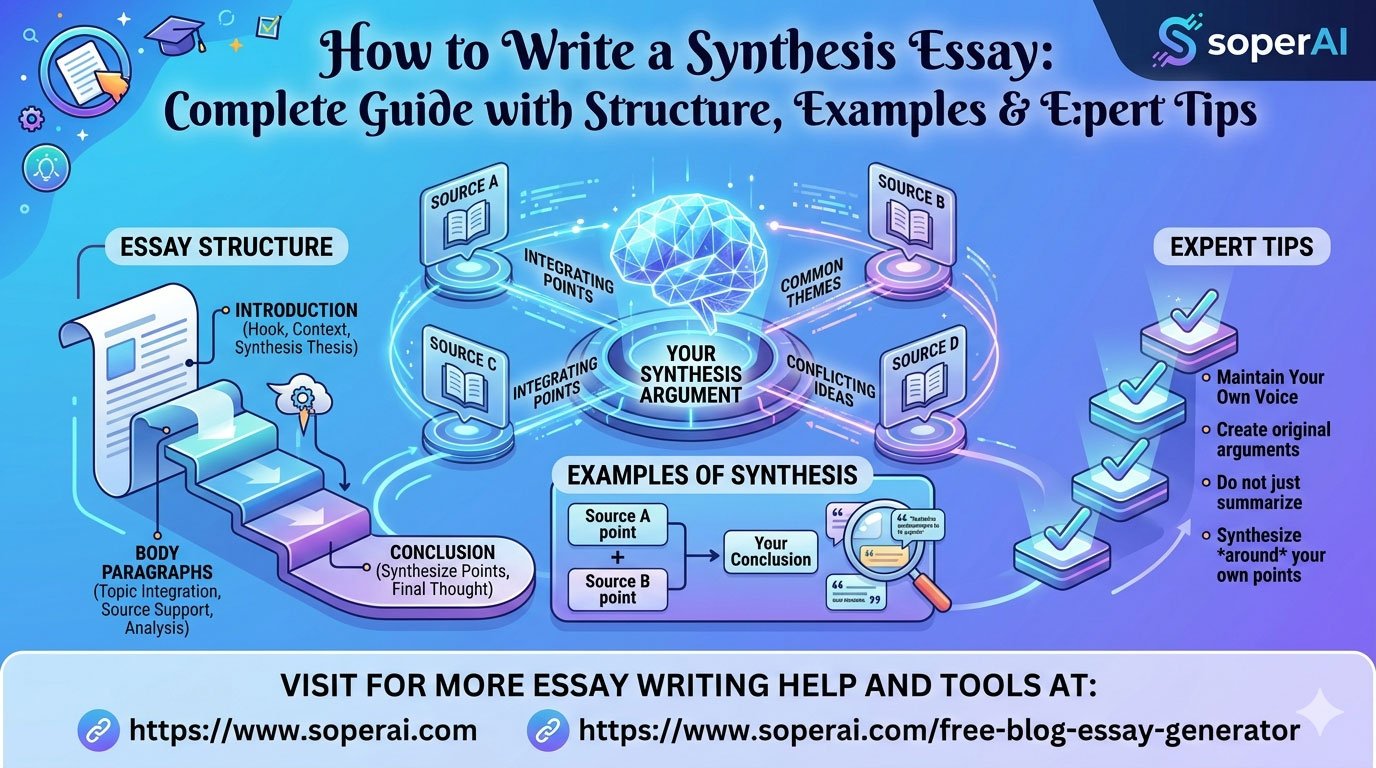
How to Write a Synthesis Essay: Complete Guide with Structure, Examples & Expert Tips
Featured Article

How to Write a Synthesis Essay: Complete Guide with Structure, Examples & Expert Tips

Learn how to write a synthesis essay step by step. Covers synthesis essay structure, thesis writing, source integration, AP Lang tips, examples, and free AI writing tools

Kamal Khan 46 min read Read Article
Latest in AI Tools

14 Articles · AI Tools

Sorted by publication date
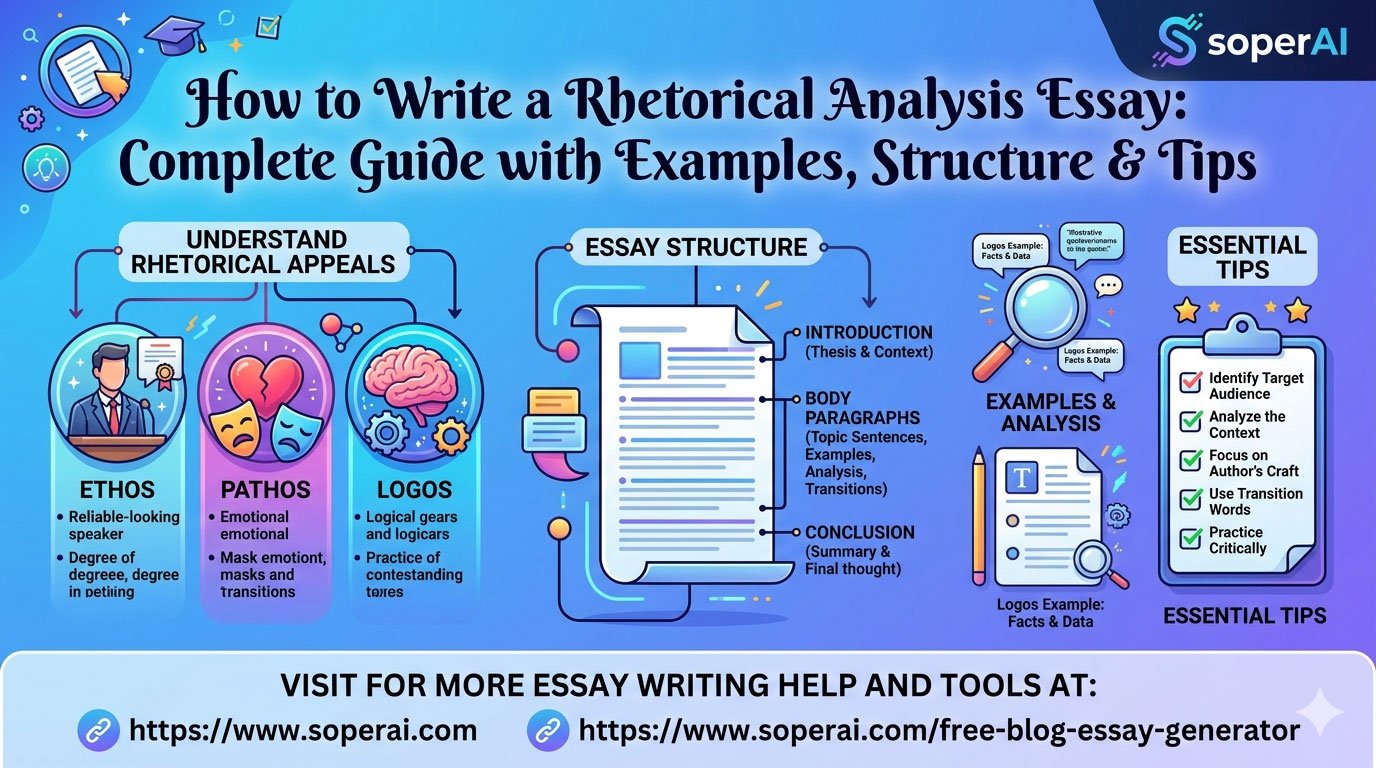
How to Write a Rhetorical Analysis Essay, Complete Guide with Examples, Structure & Tips AI Tools
43 min read

How to Write a Rhetorical Analysis Essay, Complete Guide with Examples, Structure & Tips

Learn how to write a rhetorical analysis essay step by step. Covers ethos, pathos, logos, essay structure, examples, SOAPSTone method, and free AI writing tools.
Kamal Khan
Read
How to Introduce a Narrative Essay AI Tools
36 min read

How to Introduce a Narrative Essay

:root { --bg: #f7f3ee; --ink: #1c1c2e; --deep: #12122a; --rose: #e05c7a; --amber: #f0932b; --ocean: #1289a7; --sage: #12cba3; --violet: #8854d0; --coral: #fc5c65; --sky: #45aaf2; --lemon: #f9ca24; --card: #ffffff; --border: #ede7f6; --muted: #6b7280; --text: #2c2c3e; --soft: #f0ebff; --shadow: 0 6px 36px rgba(28,28,46,.10); --shadow-lg: 0 18px 56px rgba(28,28,46,.18); } *, *::before, *::after { box-sizing: border-box; margin: 0; padding: 0; } body { font-family: 'Nunito', sans-serif; background: var(--bg); color: var(--text); line-height: 1.85; font-size: 17px; } /* ── HERO ── */ .hero { background: linear-gradient(135deg, #12122a 0%, #3b1f6e 45%, #1a3a5c 100%); color: #fff; padding: 96px 20px 80px; text-align: center; position: relative; overflow: hidden; } .hero::after { content: ''; position: absolute; bottom: -2px; left: 0; right: 0; height: 60px; background: var(--bg); clip-path: ellipse(55% 100% at 50% 100%); } .hero::before { content: ''; position: absolute; inset: 0; background: radial-gradient(ellipse at 70% 30%, rgba(232,84,122,.18) 0%, transparent 60%), radial-gradient(ellipse at 20% 70%, rgba(136,84,208,.15) 0%, transparent 55%); } .hero-pill { display: inline-block; background: rgba(255,255,255,.12); border: 1px solid rgba(255,255,255,.25); backdrop-filter: blur(8px); color: #ffeaa7; padding: 7px 22px; border-radius: 50px; font-size: 12px; font-weight: 800; letter-spacing: 2px; text-transform: uppercase; margin-bottom: 28px; } .hero h1 { font-family: 'Lora', serif; font-size: clamp(2rem, 5.5vw, 3.8rem); font-weight: 700; line-height: 1.2; max-width: 880px; margin: 0 auto 22px; } .hero h1 em { font-style: italic; color: #ffeaa7; } .hero-desc { font-size: 1.1rem; color: rgba(255,255,255,.72); max-width: 600px; margin: 0 auto 40px; font-weight: 400; } .hero-btns { display: flex; justify-content: center; gap: 14px; flex-wrap: wrap; } .btn-hero-main { display: inline-flex; align-items: center; gap: 9px; background: var(--rose); color: #fff; padding: 15px 36px; border-radius: 50px; font-weight: 800; font-size: .97rem; text-decoration: none; box-shadow: 0 8px 28px rgba(224,92,122,.45); transition: transform .2s, box-shadow .2s; } .btn-hero-main:hover { transform: translateY(-3px); box-shadow: 0 14px 38px rgba(224,92,122,.55); text-decoration: none; } .btn-hero-sec { display: inline-flex; align-items: center; gap: 9px; background: rgba(255,255,255,.1); border: 1.5px solid rgba(255,255,255,.35); color: #fff; padding: 15px 30px; border-radius: 50px; font-weight: 700; font-size: .95rem; text-decoration: none; transition: background .2s; } .btn-hero-sec:hover { background: rgba(255,255,255,.18); text-decoration: none; } .hero-stats { display: flex; justify-content: center; gap: 52px; margin-top: 60px; flex-wrap: wrap; } .hs { text-align: center; } .hs-num { font-family: 'Lora', serif; font-size: 2.6rem; font-weight: 700; color: #ffeaa7; display: block; } .hs-lbl { font-size: .8rem; color: rgba(255,255,255,.55); letter-spacing: .5px; font-weight: 600; text-transform: uppercase; } /* ── LAYOUT ── */ .container { max-width: 1080px; margin: 0 auto; padding: 0 24px; } .section { padding: 76px 0; } .section-cream { background: #fffbf5; } .section-soft { background: var(--soft); } .section-dark { background: var(--deep); color: #fff; } /* ── TYPOGRAPHY ── */ h2 { font-family: 'Lora', serif; font-size: clamp(1.7rem,3.8vw,2.5rem); font-weight: 700; color: var(--ink); margin-bottom: 14px; line-height: 1.25; } h3 { font-family: 'Lora', serif; font-size: 1.45rem; font-weight: 600; color: var(--deep); margin: 34px 0 12px; } h4 { font-size: 1.05rem; font-weight: 700; color: var(--ink); margin: 22px 0 8px; } .section-dark h2, .section-dark h3 { color: #fff; } .label { display: inline-block; font-size: 11px; font-weight: 800; letter-spacing: 2.5px; text-transform: uppercase; color: var(--rose); margin-bottom: 10px; } p { margin-bottom: 18px; } a { color: var(--ocean); text-decoration: none; } a:hover { text-decoration: underline; } ul { padding-left: 20px; } ul li { margin: 6px 0; } /* ── BREADCRUMB ── */ .bc { padding: 16px 0; font-size: .84rem; color: var(--muted); } .bc a { color: var(--ocean); } .bc span { margin: 0 7px; } /* ── TOC ── */ .toc { background: linear-gradient(135deg, #f5f0ff, #fff8f0); border: 1.5px solid #ddd0f8; border-radius: 20px; padding: 32px 36px; margin: 36px 0; } .toc-title { font-family: 'Lora', serif; font-weight: 700; color: var(--violet); font-size: 1.1rem; margin-bottom: 16px; } .toc ol { padding-left: 20px; } .toc li { margin: 9px 0; font-size: .92rem; } .toc a { color: var(--violet); font-weight: 600; } /* ── CARDS ── */ .card-grid { display: grid; grid-template-columns: repeat(auto-fit, minmax(268px, 1fr)); gap: 22px; margin-top: 32px; } .card { background: var(--card); border-radius: 20px; padding: 30px 26px; box-shadow: var(--shadow); border: 1px solid var(--border); border-top: 4px solid var(--card-top, var(--rose)); transition: transform .25s, box-shadow .25s; } .card:hover { transform: translateY(-6px); box-shadow: var(--shadow-lg); } .card-icon { font-size: 2.2rem; margin-bottom: 14px; display: block; } .card h3 { margin-top: 0; font-size: 1.1rem; } .card p { font-size: .91rem; color: var(--muted); margin-bottom: 0; } /* ── HOOK TYPE CARDS ── */ .hook-grid { display: grid; grid-template-columns: repeat(auto-fit, minmax(300px, 1fr)); gap: 20px; margin-top: 28px; } .hook-card { background: #fff; border-radius: 18px; padding: 28px 26px; box-shadow: var(--shadow); border-left: 5px solid var(--hc, var(--rose)); position: relative; } .hook-num { position: absolute; top: 20px; right: 22px; font-family: 'Lora', serif; font-size: 2.4rem; font-weight: 700; color: var(--hc, var(--rose)); opacity: .12; line-height: 1; } .hook-card h4 { margin-top: 0; font-size: 1.05rem; color: var(--ink); } .hook-card .hook-example { background: #faf7ff; border-radius: 10px; padding: 12px 16px; font-style: italic; font-size: .88rem; color: var(--muted); margin-top: 12px; border-left: 3px solid var(--hc, var(--rose)); } .hook-card p { font-size: .9rem; color: var(--muted); margin-bottom: 6px; } /* ── STEP CARDS ── */ .step-list { margin-top: 28px; } .step-item { display: flex; gap: 22px; align-items: flex-start; background: #fff; border-radius: 18px; padding: 26px 24px; box-shadow: var(--shadow); margin-bottom: 18px; border: 1px solid var(--border); transition: transform .2s; } .step-item:hover { transform: translateX(6px); } .step-bubble { width: 48px; height: 48px; border-radius: 50%; flex-shrink: 0; display: flex; align-items: center; justify-content: center; font-family: 'Lora', serif; font-weight: 700; font-size: 1.2rem; color: #fff; } .step-item h4 { margin: 0 0 6px; } .step-item p { font-size: .92rem; color: var(--muted); margin: 0; } /* ── TABLES ── */ .table-wrap { overflow-x: auto; margin: 30px 0; border-radius: 18px; box-shadow: var(--shadow); } table { width: 100%; border-collapse: collapse; background: #fff; } thead { background: linear-gradient(135deg, var(--ink), #3b1f6e); color: #fff; } th { padding: 15px 18px; font-size: .88rem; letter-spacing: .5px; text-align: left; font-weight: 700; } td { padding: 13px 18px; font-size: .9rem; border-bottom: 1px solid #f0ecff; vertical-align: top; } tr:last-child td { border-bottom: none; } tr:nth-child(even) td { background: #faf8ff; } .tag { display: inline-block; padding: 3px 12px; border-radius: 50px; font-size: .76rem; font-weight: 700; } .tag-green { background: #dcfce7; color: #15803d; } .tag-red { background: #fee2e2; color: #dc2626; } .tag-amber { background: #fef9c3; color: #a16207; } .tag-blue { background: #dbeafe; color: #1d4ed8; } .tag-purple{ background: #ede9fe; color: #7c3aed; } .tag-teal { background: #ccfbf1; color: #0d9488; } /* ── HIGHLIGHT BOXES ── */ .hl { border-left: 5px solid var(--rose); background: linear-gradient(135deg, #fff2f5, #fff); border-radius: 0 16px 16px 0; padding: 22px 26px; margin: 26px 0; } .hl.ocean { border-color: var(--ocean); background: linear-gradient(135deg, #f0faff, #fff); } .hl.amber { border-color: var(--amber); background: linear-gradient(135deg, #fffbf0, #fff); } .hl.sage { border-color: var(--sage); background: linear-gradient(135deg, #f0fff9, #fff); } .hl.violet{ border-color: var(--violet);background: linear-gradient(135deg, #f6f0ff, #fff); } /* ── EXAMPLE BOXES ── */ .ex-box { background: linear-gradient(135deg, #fffbf2, #fff); border: 2px dashed #e0b86e; border-radius: 20px; padding: 34px; margin: 28px 0; position: relative; overflow: hidden; } .ex-box::before { content: '"'; font-family: 'Lora', serif; font-size: 140px; color: var(--amber); opacity: .1; position: absolute; top: -28px; left: 14px; line-height: 1; pointer-events: none; } .ex-label { display: inline-block; background: var(--amber); color: #fff; padding: 4px 14px; border-radius: 50px; font-size: .76rem; font-weight: 800; letter-spacing: 1px; text-transform: uppercase; margin-bottom: 14px; } .ex-box p { font-style: italic; font-size: 1rem; line-height: 1.9; margin-bottom: 0; } .ex-box .annotation { margin-top: 14px; padding-top: 14px; border-top: 1px dashed #e0b86e; font-style: normal; font-size: .84rem; color: var(--muted); } .ex-box .annotation strong { color: var(--ink); } /* ── INFOGRAPHIC BARS ── */ .infographic { background: #fff; border-radius: 22px; padding: 38px; box-shadow: var(--shadow); margin: 30px 0; } .infographic h3 { margin-top: 0; } .bar-row { margin: 15px 0; } .bar-label { display: flex; justify-content: space-between; margin-bottom: 6px; font-size: .88rem; font-weight: 600; } .bar-track { background: #f0ecff; border-radius: 50px; height: 14px; overflow: hidden; } .bar-fill { height: 100%; border-radius: 50px; transition: width 1.2s ease; } /* ── DO / DON'T GRID ── */ .do-dont { display: grid; grid-template-columns: 1fr 1fr; gap: 22px; margin-top: 28px; } .do-card, .dont-card { background: #fff; border-radius: 18px; padding: 26px 24px; box-shadow: var(--shadow); border-top: 4px solid; } .do-card { border-color: var(--sage); } .dont-card { border-color: var(--coral); } .do-card h4 { color: #065f46; margin-top: 0; } .dont-card h4 { color: #be123c; margin-top: 0; } .do-card ul, .dont-card ul { list-style: none; padding: 0; } .do-card li, .dont-card li { padding: 8px 0; border-bottom: 1px dashed #e5e7eb; font-size: .92rem; padding-left: 28px; position: relative; } .do-card li:last-child, .dont-card li:last-child { border-bottom: none; } .do-card li::before { content: '✓'; position: absolute; left: 0; color: var(--sage); font-weight: 900; } .dont-card li::before { content: '✗'; position: absolute; left: 0; color: var(--coral); font-weight: 900; } /* ── CTA ── */ .cta-box { background: linear-gradient(135deg, #1c1c2e 0%, #e05c7a 100%); border-radius: 24px; padding: 54px 44px; text-align: center; color: #fff; margin: 52px 0; position: relative; overflow: hidden; } .cta-box::before { content: '✍️'; position: absolute; font-size: 200px; opacity: .04; bottom: -30px; right: -10px; pointer-events: none; } .cta-box h2 { color: #fff; font-size: 2rem; } .cta-box p { color: rgba(255,255,255,.82); max-width: 560px; margin: 14px auto 32px; } .btn-cta-main { display: inline-flex; align-items: center; gap: 9px; background: #fff; color: var(--rose); padding: 16px 40px; border-radius: 50px; font-weight: 800; font-size: 1rem; text-decoration: none; box-shadow: 0 8px 28px rgba(0,0,0,.2); transition: transform .2s; } .btn-cta-main:hover { transform: scale(1.04); text-decoration: none; } .btn-cta-sec { display: inline-flex; align-items: center; gap: 8px; border: 2px solid rgba(255,255,255,.45); color: #fff; padding: 14px 30px; border-radius: 50px; font-weight: 700; font-size: .93rem; text-decoration: none; margin-left: 14px; transition: background .2s; } .btn-cta-sec:hover { background: rgba(255,255,255,.1); text-decoration: none; } /* ── BENEFITS (DARK SECTION) ── */ .ben-grid { display: grid; grid-template-columns: repeat(auto-fit, minmax(200px,1fr)); gap: 18px; margin-top: 30px; } .ben-card { background: rgba(255,255,255,.07); border: 1px solid rgba(255,255,255,.14); border-radius: 18px; padding: 28px 22px; text-align: center; color: #fff; transition: background .2s; } .ben-card:hover { background: rgba(255,255,255,.13); } .ben-card .bi { font-size: 2.4rem; margin-bottom: 12px; display: block; } .ben-card h4 { color: #fff; margin: 0 0 8px; font-size: .97rem; } .ben-card p { color: rgba(255,255,255,.67); font-size: .83rem; margin: 0; } /* ── PRO TIPS ── */ .tip-grid { display: grid; grid-template-columns: repeat(auto-fit, minmax(240px, 1fr)); gap: 18px; margin-top: 26px; } .tip-card { border-radius: 18px; padding: 26px 22px; color: #fff; position: relative; overflow: hidden; } .tip-card h4 { color: #fff; margin: 0 0 8px; font-size: .97rem; } .tip-card p { color: rgba(255,255,255,.83); font-size: .86rem; margin: 0; } .tip-icon { font-size: 1.9rem; margin-bottom: 10px; display: block; } /* ── FAQ ── */ .faq-wrap { margin-top: 30px; } .faq-item { background: #fff; border-radius: 16px; margin-bottom: 14px; border: 1px solid var(--border); overflow: hidden; box-shadow: 0 2px 10px rgba(28,28,46,.06); } .faq-q { padding: 20px 26px; font-weight: 700; font-size: .97rem; cursor: pointer; display: flex; justify-content: space-between; align-items: center; color: var(--ink); user-select: none; } .faq-q:hover { background: #faf8ff; } .faq-q .arr { font-size: 1.2rem; transition: transform .3s; color: var(--rose); } .faq-a { padding: 0 26px 20px; font-size: .93rem; color: var(--muted); line-height: 1.78; display: none; } .faq-item.open .faq-a { display: block; } .faq-item.open .arr { transform: rotate(45deg); } /* ── SHARE & FOOTER ── */ .share-bar { display: flex; align-items: center; gap: 10px; flex-wrap: wrap; padding: 18px 0; border-top: 1px solid var(--border); border-bottom: 1px solid var(--border); margin: 36px 0; } .share-bar span { font-size: .85rem; color: var(--muted); font-weight: 700; } .share-pill { display: inline-flex; align-items: center; gap: 5px; padding: 7px 16px; border-radius: 50px; font-size: .81rem; font-weight: 700; border: 1px solid var(--border); background: #fff; cursor: pointer; color: var(--text); transition: background .15s; } .share-pill:hover { background: #f5f0ff; } .conclusion-banner { background: linear-gradient(135deg, var(--ocean), var(--sage)); border-radius: 24px; padding: 46px; color: #fff; text-align: center; margin-top: 52px; } .conclusion-banner h2 { color: #fff; } .conclusion-banner p { color: rgba(255,255,255,.87); max-width: 560px; margin: 14px auto 30px; } /* ── COMPARISON TABLE (HOOKS) ── */ .hook-comparison .good-ex { background: #f0fff9; border-left: 3px solid var(--sage); padding: 8px 12px; border-radius: 0 8px 8px 0; font-size: .88rem; font-style: italic; margin: 6px 0; } .hook-comparison .bad-ex { background: #fff5f5; border-left: 3px solid var(--coral); padding: 8px 12px; border-radius: 0 8px 8px 0; font-size: .88rem; font-style: italic; margin: 6px 0; } /* Scroll-bar */ ::-webkit-scrollbar { width: 8px; height: 8px; } ::-webkit-scrollbar-track { background: #f1f1f1; } ::-webkit-scrollbar-thumb { background: var(--violet); border-radius: 4px; } @media(max-width:640px){ .hero { padding: 64px 20px 56px; } .hero-stats { gap: 26px; } .cta-box { padding: 34px 22px; } .btn-cta-sec { margin-left: 0; margin-top: 12px; } .do-dont { grid-template-columns: 1fr; } } ✍️ Narrative Writing Masterclass 2025 How to Introduce a Narrative EssayHooks, Structure, Examples & Free AI Tool Your opening sentence decides whether readers stay or leave. Learn the proven techniques that make narrative essay introductions impossible to ignore. ✨ Generate My Intro — Free 📖 Full Essay Writing Guide 7Hook Techniques 12+Real Examples 10FAQs Answered FreeAI Essay Tool Home› Free AI Tools› How to Write a Narrative Essay› How to Introduce a Narrative Essay 📋 Table of Contents Why Your Introduction Is Everything Anatomy of a Narrative Essay Introduction 7 Powerful Hook Techniques (With Examples) Step-by-Step: How to Write Your Introduction Real Introduction Examples (Good vs. Weak) Do's and Don'ts: Common Introduction Mistakes Introduction Starters for Popular Topics Pro Tips from Experienced Essay Writers How AI Writes Your Introduction Instantly Why Soperai Is the Best Free Essay Tool 10 FAQs — Everything You Need to Know Conclusion & Your Next Step Why It Matters Your Introduction Has Eight Seconds to Hook a Reader — Make Them Count Research in reader psychology consistently shows that people decide within the first few sentences whether a piece of writing is worth their time. For a narrative essay, this pressure is even more acute. Unlike an argumentative essay where readers come for information, narrative essay readers come for an experience — and your introduction is the door through which they enter that experience. Get the introduction right, and readers lean forward. They want to know what happens, how it ends, and what it meant to you. Get it wrong — with a dull opener, a generic statement, or an overlong backstory — and even the most beautifully crafted body paragraphs may go unread. The good news? Writing a compelling narrative essay introduction is a learnable skill. There are specific, proven techniques that great writers use every time — and in this guide, you'll master all of them. Whether you're writing a high school assignment, a college application personal statement, or a blog post, this guide will show you exactly how to open your story with confidence and power. 💡 Already know the theory? Skip straight to writing your introduction with the Soperai Free AI Essay Generator. Type your topic, and it generates a complete introduction (with hook, background, and thesis) in under 60 seconds — free, no sign-up needed. We'll also link you throughout to our complete guide on how to write a narrative essay, where you can learn how to craft every section from body paragraphs to conclusion once your intro is locked in. The Anatomy What Does a Narrative Essay Introduction Actually Contain? Before you write a single word, you need to understand what a great narrative essay introduction is made of. It has three distinct parts — each doing a different job — and all three must work together seamlessly. 🪝 Part 1 — The Hook The very first sentence (or two) whose sole purpose is to arrest the reader's attention and make them physically unable to stop reading. This is your most important sentence. It sets the emotional tone, introduces the world of your story, and creates immediate curiosity or empathy. 🗺️ Part 2 — Background Context One to three sentences that give readers just enough context to understand the situation without overwhelming them with backstory. Who is involved? When does this story take place? What is the general situation? Answer these questions briefly and efficiently — you'll fill in the details in the body. 🎯 Part 3 — The Thesis Statement The sentence that tells readers why you're sharing this story. Unlike an argumentative essay thesis, a narrative essay thesis is subtle — it hints at the lesson learned, the transformation experienced, or the insight gained. It's the compass that orients everything that follows. 📐 Introduction Blueprint: What Goes Where ComponentLengthPurposePlacementTone 🪝 Hook 1–3 sentences Capture attention immediately Very first sentence(s) Dramatic / Vivid 🗺️ Background 2–4 sentences Set scene and context Middle of intro Informative / Warm 🎯 Thesis 1–2 sentences Signal the story's meaning Final sentence(s) Reflective / Insightful 📌 Key Insight: The introduction of a narrative essay is NOT a summary of your story. It's a doorway into it. Your reader should finish your introduction feeling like they've just glimpsed something important — and like they must keep reading to find out what happens. If your introduction gives too much away, it removes the reason to read on. Hook Techniques 7 Powerful Hook Techniques for Narrative Essay Introductions A hook is not a single technique — it's a category of opening moves that great writers choose from depending on their story, their audience, and the emotional effect they want to create. Here are seven proven hooks, each with a real example you can model. 📊 Hook Technique Effectiveness Ratings (By Reader Engagement) 🎬 In Medias Res (Drop into action)96% 💬 Compelling Dialogue91% ❓ Provocative Question85% 🖼️ Vivid Sensory Description88% 💡 Surprising Statement82% 📖 Quote or Saying74% 🌀 Philosophical Reflection70% *Ratings based on reader-engagement studies from writing workshops and MFA programs. 01 🎬 In Medias Res — Drop into the Action The Latin term means "into the middle of things." You skip setup entirely and place readers directly inside a scene at its most intense moment. This is the single most powerful hook technique for narrative essays. "The IV needle was already in my arm when my mother walked through the hospital door, suitcase in hand, saying she was sorry she was late." 02 💬 Open with Dialogue A single line of spoken dialogue instantly creates characters and tension. It drops readers into a conversation mid-stream and creates a compelling sense of immediacy and intimacy. "You should have been a doctor," my father said — and then he paused, and I realized that in forty-three years, those were the first words he had ever said that were not criticism. 03 ❓ Ask a Provocative Question A well-crafted question engages the reader's intellect and creates an implicit promise: if you keep reading, you'll find the answer. The key is making the question specific and intriguing — not vague or rhetorical. "Have you ever stood at the edge of a decision so large that both choices felt like a kind of death? I was seventeen when I first understood what that felt like." 04 🖼️ Sensory Scene-Setting Create such a vivid, specific physical environment in your opening that readers feel transported. Use all five senses — not just sight. This works especially well when the setting itself is central to the story's emotional meaning. "The kitchen smelled of burned sugar and old newspaper, and the radio in the corner was playing something my grandmother used to hum, a song whose name I would never learn." 05 💡 Make a Surprising Statement Open with a claim, observation, or revelation that defies expectation. The surprise creates cognitive dissonance — readers feel compelled to understand how this surprising thing came to be true. "The best thing that ever happened to me was failing my final exam the second time. The worst thing was telling my mother." 06 📖 Lead with a Resonant Quote A carefully chosen quote — from literature, from someone who spoke to you directly, or from your own memory — can establish theme and emotional tone instantly. Avoid famous over-used quotes; seek something specific and unexpected. "My grandfather used to say, 'A man who plants trees he will never sit under has finally understood something.' I was thirty before I finally understood him." 07 🌀 Begin with Reflection Start from the end of your story, looking back at the experience with hard-won wisdom. This technique works because readers know you survived — and they want to understand how you came to see things so clearly. "I know now what I couldn't have known at seventeen: that some doors only open from the inside, and no one else can open them for you, no matter how desperately they try." Step-by-Step Guide How to Write Your Narrative Essay Introduction — Step by Step Follow these steps in order and you'll go from a blank page to a powerful, reader-grabbing introduction every single time. 1 Know Your Story's Core Moment Before You Write a Word You cannot write a great introduction without knowing where your story is going. Before you draft your opening, identify the central moment of your narrative — the scene where everything changes. Your introduction should be written so that it points (subtly) toward that moment. Don't start writing the intro until you know the heart of your story. 2 Choose Your Hook Technique Based on Your Story's Mood Match your hook to the emotional register of your narrative. A story about sudden loss might work best with in medias res — dropping readers into the moment of crisis. A story about a gradual realization might work better with a reflective opening. Ask yourself: What emotion do I want my reader to feel in the first ten seconds? Then choose the hook that delivers that emotion most directly. 3 Draft Your Hook — Then Write Three Versions of It Never settle for your first hook. Write your opening line, then write two more completely different versions of it using different hook techniques. Read all three aloud. The one that makes the hair on the back of your neck stand up — that's the one to keep. Professional writers often write ten or more opening sentences before they find the right one. 4 Add Just Enough Background to Orient the Reader After your hook, provide the minimum context readers need to follow the story. Think of it as zooming out slightly from your dramatic opening scene to show the wider setting. Introduce the "who, where, and when" briefly. Resist the urge to explain everything — save the details for your body paragraphs. Two to four sentences of context is almost always enough. 5 Close with a Thesis That Hints at Your Story's Meaning Your final introductory sentence is your thesis. Unlike a traditional argumentative thesis, a narrative essay thesis doesn't state a position — it hints at the lesson, transformation, or insight that the story ultimately delivers. It should feel like a promise: "Keep reading, and you'll understand why this moment mattered." Write it last, after you've drafted the rest of your introduction. 6 Read It Aloud and Cut Anything That Slows You Down Read your introduction aloud at a normal speaking pace. Anywhere you stumble, hesitate, or feel the rhythm break — cut or rewrite that sentence. A narrative essay introduction should flow with the momentum of a story being told. If it sounds like a textbook or a list of facts, it's not there yet. Every sentence should propel the reader forward, not pause them. Real Examples Narrative Essay Introduction Examples — Weak vs. Strong The fastest way to improve your own writing is to study both excellent and poor examples side by side. Here are real-world introductions across a range of topics, with annotations explaining exactly what works — and what doesn't. Example 1 — Topic: Overcoming Fear of Public Speaking ❌ Weak Introduction In this essay, I will talk about the time I had to do public speaking and how I was nervous. I have always been scared of speaking in front of people. This experience taught me a lot about overcoming my fears. Why it fails: Opens with "In this essay, I will..." (immediate red flag). Uses generic language ("scared," "a lot," "overcoming"). No specific detail, no sensory grounding, no emotional pull. There is nothing here that compels a reader to continue. ✅ Strong Introduction My knees were vibrating — not trembling, vibrating — as I climbed the three steps to the stage. Behind me, two hundred people settled into their seats with the casual ease of people who had nowhere more important to be. I had prepared for this moment for six weeks. None of that preparation had included this particular feeling: the vertiginous certainty that I was about to embarrass myself in front of the one teacher who had ever told me I had something worth saying. That night, I learned that courage is not the absence of fear — it is the decision, made in the space between heartbeats, to walk forward anyway. Why it works: Opens in medias res with precise physical detail ("vibrating," not "trembling"). Establishes stakes immediately (the teacher who believed in the writer). Uses contrast (six weeks of preparation vs. this one moment of terror). Ends with a thesis that feels earned and personal, not generic. Example 2 — Topic: Learning from a Grandmother ❌ Weak Introduction My grandmother was a very important person in my life. She taught me many things when I was young. This essay is about a memory I have with her that changed my perspective on life. Why it fails: Vague and generic. "Very important person" and "many things" tell us nothing specific. The phrase "changed my perspective on life" is one of the most overused in student essays. There is no image, no scene, no reason to feel anything. ✅ Strong Introduction My grandmother kept a jar of raw cardamom pods on the windowsill above the kitchen sink, and she would crack one open whenever she thought no one was watching — just to smell it, she said, not to use it. She had been doing this for as long as anyone in the family could remember. It was only after she died that I understood she wasn't smelling the spice at all. She was travelling back to a village in Punjab that no longer existed, through the only door still open to her: memory. That jar sits on my windowsill now. Why it works: Opens with a specific, unexpected detail (the cardamom jar) that immediately creates character. Builds mystery — why does she do this? The revelation comes in the fourth sentence and reframes everything. The final line is a perfect callback thesis: the tradition continues, which implies both loss and inheritance. Example 3 — Topic: Moving to a New Country ✅ Strong Introduction (Dialogue Hook) "You'll make friends," my mother said, pressing a cheese sandwich into my hand on the first day of school in a country where I didn't yet know how to ask where the bathroom was. I nodded. I did not believe her. I was eight years old and I was carrying, folded in my school bag, a map of Karachi that my father had drawn from memory — streets, landmarks, the bakery on Hassan Ali Street where we used to buy bread on Sunday mornings. The map was wrong in a dozen places, but that didn't matter. It was proof that somewhere, the city I understood still existed. That year, I learned that home is not a place you leave — it's a place you carry. Why it works: Opens with dialogue that immediately establishes character and emotional tension. The detail of the hand-drawn map is extraordinary — it does more emotional work than three paragraphs of explanation. The thesis closes beautifully with a universal insight delivered personally. 📝 Want AI to write an introduction like these? Visit the Soperai Free AI Essay Generator, type your topic, and receive a fully structured introduction — hook, context, and thesis — in seconds. Then personalize it with your own specific details. Do's & Don'ts Common Introduction Mistakes — and What to Do Instead Even strong writers make these mistakes in their first drafts. The difference between a good essay and a great one is often catching and fixing these issues in revision. ✅ DO These Things Start with a specific, concrete scene or image Use first-person voice ("I," "my," "me") naturally Create curiosity or emotional tension from sentence one End your intro with a subtle, reflective thesis Keep your introduction focused (5–8 sentences max) Use sensory language that places readers in the moment Write multiple versions of your hook before choosing Read your introduction aloud before finalizing ❌ DON'T Do These Things Start with "In this essay, I will tell you about..." Open with a dictionary definition ("Merriam-Webster defines courage as...") Summarize your entire story in the introduction Use vague language ("very important," "a lot," "changed my life") Begin with "I was born in..." or "Ever since I was little..." Use a generic famous quote (Gandhi, Einstein, etc.) Write your thesis as a statement of fact ("This essay shows...") Make your introduction longer than your body paragraphs 🔍 Specific Opening Lines — Rated Opening LineTechniqueRatingWhy? "In this essay, I will discuss my experience of moving abroad." Announcement ❌ Avoid Kills momentum immediately; removes all mystery "According to Merriam-Webster, a journey is defined as..." Dictionary definition ❌ Avoid Cliché, impersonal, and delays the story "My life changed the day I moved to a new country." Vague statement ⚠️ Weak Too broad; could describe millions of people "Have you ever felt completely alone in a crowded room?" Provocative question 🔵 Decent Creates empathy but slightly clichéd phrasing "My mother was crying when the movers carried out the last box." In medias res / visual ✅ Strong Specific, visual, emotionally immediate "'Don't look back,' my father said — but I already was." Dialogue + tension ⭐ Excellent Creates character, conflict, and curiosity in 11 words "The last thing I packed was a photograph I no longer recognized myself in." Surprising statement ⭐ Excellent Unexpected, mysterious, rich with implied meaning Ready-to-Use Starters Introduction Starters for 10 Popular Narrative Essay Topics Use these as inspiration — not verbatim copies. The goal is to see how the techniques work across different topics, then apply the same approach to your own specific story. TopicHook TypeSample Opening 🎓 First day at a new school In Medias Res "The cafeteria was exactly as loud as I had feared, and every table looked full in a way that wasn't about seats." 💔 A friendship that ended Dialogue "She said 'I think we've grown apart' the way people say things they've been rehearsing for months — carefully, and without looking up." 🏅 Winning (or losing) a competition Sensory Detail "The gymnasium went silent the exact moment my name was not called — a silence so specific and personal that I felt it in my teeth." ✈️ Travelling alone for the first time Surprising Statement "I got on the wrong train at 11:47 PM in a city where I didn't speak the language, and it was the best mistake I ever made." 🏥 A health challenge In Medias Res "The doctor said 'we'll need to run more tests' in the same voice he used to ask about the weather, and I understood that the world had just divided into before and after." 🐶 Losing a pet Reflection "I know now that grief does not arrive all at once. It arrives in small, ordinary moments — when you catch yourself about to call a name that can no longer answer." 🎨 Discovering a passion Sensory Opening "The first time I held a paintbrush, I was nine years old and it was covered in someone else's blue, and something in me shifted — quietly, and without permission." 👨‍👩‍👧 A family tradition Specific Detail "Every Eid morning for thirty years, my grandmother made the same mistake: she always forgot to buy enough bread, and someone always ran to the bakery, and she always pretended to be surprised." 🌍 Cultural identity Question "When someone asks me where I'm from, I have learned to answer with whichever city is most convenient — because the real answer takes more time than either of us has." 📚 A book or teacher that changed you Dialogue "'You're not reading to remember the plot,' Mr. Ansari told me, sliding the book back across the desk. 'You're reading to find out what you already believe.'" 🔗 Going Further: Once your introduction is ready, you'll need to write compelling body paragraphs and a reflective conclusion. Our complete narrative essay writing guide covers every section of the essay in the same depth — check it out before you start drafting. Expert Advice 8 Pro Tips for a Narrative Essay Introduction That Readers Remember These are the techniques that separate published writers from struggling students — and most of them take less than five minutes to apply. 🎯 Write the Introduction Last Many great writers draft the body and conclusion first, then return to write the introduction. Once you know where your story goes, you can write a much more precise and resonant opening. 🎭 Match Tone to Story A playful hook for a tragic story creates jarring dissonance. Your introduction's emotional register should match — or intentionally contrast with — the overall tone of your narrative. 🔬 Specificity Is Your Superpower "A summer morning" is generic. "The third morning of August, when the air still smelled like last night's rain" is alive. Replace every general noun with the most specific version available. ✂️ Cut Your First Sentence A surprising trick: delete the first sentence of your introduction draft and see if the second sentence is actually stronger. Writers often bury their best line under a warm-up sentence they didn't need. 👂 Read It Aloud Twice Read it once for rhythm and flow — if it sounds choppy, rewrite the choppy part. Read it a second time imagining you're hearing it for the very first time. Does it make you want to know more? 🧪 Test It on One Other Person Read just your introduction to a friend, family member, or classmate — then stop. Ask them: "Do you want to know what happens next?" If the answer isn't an immediate yes, revise. ⏩ Keep It Under 150 Words The most powerful narrative essay introductions are tight — typically 80 to 150 words. Every extra sentence you add dilutes the impact of the ones already there. When in doubt, cut. 🔁 Plant a Seed for Your Conclusion Include one image, phrase, or detail in your introduction that you'll return to in your conclusion. This circular structure gives your essay a satisfying sense of wholeness and intentional craft. AI-Powered Writing How AI Writes Your Narrative Essay Introduction in Seconds Writing the perfect introduction requires a specific combination of creativity, technique, and craft — all of which can take years to develop. AI tools like the Soperai Essay Generator can shortcut this process dramatically, producing structured, compelling introductions that you can then personalize with your own specific memories and voice. ⚡ Instant Hook Generation Can't find the right opening line? AI generates five different hook options for your topic — in medias res, dialogue, sensory description, surprising statement, and more — in under 30 seconds. 🏗️ Complete Intro Structure AI doesn't just write a hook — it builds the entire introduction with properly sequenced hook, background context, and a narrative thesis statement, all in one go. 🔄 Multiple Variations Don't like the first draft? Regenerate with a different tone, a different hook technique, or a different emotional emphasis. AI lets you iterate rapidly without starting from scratch each time. 🎯 Topic-Specific Language AI tailors the vocabulary, tone, and imagery to match your specific topic — so an essay about grief sounds different from one about adventure, even with the same structural template. ✨ Generate Your Narrative Essay Introduction — Instantly Type your topic and get a complete, hook-first introduction with background and thesis — free, no account needed, results in under 60 seconds. 🚀 Write My Introduction Now 📖 Full Essay Writing Guide Why Soperai Why Thousands of Students Choose the Soperai Essay Generator From high school essays to college application statements, Soperai has helped thousands of writers get past the blank page and into a complete, polished draft — fast. 🆓 Completely Free No subscription. No credit card. No hidden fees. Generate as many essays as you need. ⚡ Under 60 Seconds Enter your topic and get a complete introduction — hook, background, thesis — in moments. 🎓 Student-Optimized Built specifically for the kind of essays students actually write: personal, academic, application. 🔏 No Account Needed Just visit the page, type your topic, and write. No sign-up, no email, no friction. ✍️ Your Voice, Amplified The AI creates the structure; you add your personal memories, details, and perspective. 🌐 Works for Any Topic From overcoming failure to cultural identity — the tool adapts to the emotional tone of your story. FeatureSoperaiChatGPT FreeGrammarlyJasper AI Narrative Essay Specialization ✓ Dedicated Requires Prompting ✗ Grammar Only Partial Free to Use ✓ 100% Free Limited Free Tier Freemium Paid Only Hook + Thesis Built-in ✓ Automatic Manual Setup ✗ Not Available Partial No Login Required ✓ Yes Account Required Account Required Account Required Speed < 60 seconds 2–3 minutes Editing Only ~90 seconds 👉 Try Soperai Free — No Sign-Up Needed FAQs 10 FAQs — Everything About Narrative Essay Introductions These are the questions most students and writers ask when learning how to introduce a narrative essay — answered in detail for rich snippet ranking. Q1: How do you introduce a narrative essay?+ To introduce a narrative essay effectively, start with a hook that immediately engages the reader — this could be a dramatic scene, a line of dialogue, a provocative question, or a surprising statement. Follow the hook with two to four sentences of background context that orient the reader within the story. Close your introduction with a thesis statement that hints at the meaning or lesson your narrative ultimately delivers. The whole introduction should be tight — typically 80 to 150 words — and every sentence should pull the reader forward into the story. Q2: What is the best way to start a narrative essay?+ The best way to start a narrative essay is with a technique called "in medias res" — dropping readers directly into the middle of a scene or action without any preamble. This creates immediate momentum and emotional engagement. Alternatives include opening with a line of compelling dialogue, a sensory description so vivid it transports the reader, or a surprising or counterintuitive statement that creates curiosity. What you should absolutely avoid is starting with "In this essay, I will..." or a dictionary definition — both signal weak writing and kill reader interest immediately. Q3: How long should a narrative essay introduction be?+ A narrative essay introduction should typically be between 80 and 150 words — roughly one solid paragraph. For a short essay of 500–800 words, aim for 80–100 words. For a longer essay of 1,000–2,000 words, 120–150 words is appropriate. The key principle is that your introduction should be proportional to the total essay length and should never be longer than your body paragraphs. Longer introductions tend to delay the story and lose the reader's attention before the main narrative even begins. Q4: What should a narrative essay introduction include?+ A strong narrative essay introduction includes three components: (1) a hook — the opening sentence or two that immediately captures the reader's attention; (2) background context — brief information about the who, when, and where of your story, just enough to orient the reader without overwhelming them; and (3) a thesis statement — a closing sentence that hints at the deeper meaning or lesson of the narrative. These three parts should flow seamlessly from one to the next, creating a sense of momentum that carries the reader into the body of the essay. Q5: Can I start a narrative essay with dialogue?+ Yes — opening with dialogue is one of the most effective techniques for narrative essay introductions. A well-chosen line of dialogue immediately creates character, establishes voice, and generates a sense of immediacy that draws readers into the scene. The key is to choose dialogue that is specific, revealing, and interesting in itself — not just functional. Instead of "He said we needed to talk" (generic), try something that tells us something specific about the speaker and the situation: "'You should have been there,' she said, and I understood she was not talking about last night." Make sure the dialogue you open with is directly relevant to the central moment or theme of your essay. Q6: Does a narrative essay introduction need a thesis statement?+ Yes, but a narrative essay thesis is different from an argumentative one. In an argumentative essay, the thesis makes a clear, debatable claim. In a narrative essay, the thesis is more subtle — it hints at the lesson learned, the transformation experienced, or the central insight the story conveys. It doesn't need to announce "In this essay I will show that..." — in fact, it shouldn't. Instead, it should feel like a natural conclusion to your introduction that gently points toward the story's meaning. Think of it as a promise to the reader: "Keep reading, and you'll understand why this moment mattered." Q7: What is an example of a good narrative essay hook?+ A great narrative essay hook is specific, sensory, and immediately engaging. Here are three strong examples across different styles: (1) In medias res: "My father's hand let go of the bicycle seat one full block before I realized he had let go." (2) Dialogue: "'You're going to be fine,' the nurse said — and I knew she was talking to herself as much as to me." (3) Surprising statement: "I have been grateful for that car accident every single day for seven years." Each of these creates immediate curiosity and pulls the reader forward without explaining or summarizing. Notice that none of them begin with "I" and none of them announce what the essay is about. Q8: Should I write the introduction first or last?+ Many experienced writers recommend writing the introduction last. Here's why: your introduction needs to point toward your story's meaning and central moment — but until you've fully written the body and conclusion of your essay, you may not know exactly what that meaning is. By writing the body first, you discover the true heart of your story. Then you can return to write an introduction that perfectly sets up everything the reader is about to experience. If you must write the introduction first to get started, treat it as a rough placeholder — plan to rewrite it completely once you've finished the rest of the essay. Q9: Can AI help me write a narrative essay introduction?+ Absolutely. AI tools like the Soperai Free Essay Generator can produce a complete narrative essay introduction — including a hook, background context, and thesis statement — in under 60 seconds. The AI-generated draft gives you a strong structural and stylistic starting point that you then personalize with your own specific memories, details, and voice. This approach saves significant time on the mechanics of structure and language, freeing you to focus on what only you can bring: the authentic personal experience at the heart of your story. Q10: What are the most common mistakes in narrative essay introductions?+ The most common mistakes include: (1) starting with "In this essay, I will..." — which removes all mystery and engagement; (2) opening with a dictionary definition — which is generic and impersonal; (3) summarizing the whole story in the introduction — which removes the reader's motivation to continue; (4) using vague language like "a lot," "very important," or "changed my life" without specific detail; (5) making the introduction too long — burying the reader in backstory before the story begins; (6) using an overused famous quote that has no specific connection to your story; and (7) forgetting to include a thesis — leaving readers without any sense of the story's larger meaning. Avoiding these seven mistakes will immediately lift the quality of your introduction. Conclusion Your First Sentence Is Waiting to Be Written Every powerful narrative essay begins with a single, carefully crafted sentence — one that grabs your reader by the collar and refuses to let go. That sentence is not written by accident. It is chosen deliberately, from a range of techniques, with full knowledge of the story it's opening. You now have everything you need to write it. Let's recap the key principles: ✓ A narrative essay introduction has three parts: hook, background context, and a reflective thesis. ✓ There are seven proven hook techniques — choose the one that matches your story's emotional tone. ✓ Specificity, sensory detail, and momentum are the hallmarks of a great narrative opening. ✓ Never start with "In this essay, I will..." — always drop readers into a scene, question, or revelation. ✓ Write your introduction last, after you know the full arc of your story. ✓ AI tools like Soperai can generate a complete, structured introduction in under 60 seconds — for free. Now go write your opening line. Write three versions of it. Read them aloud. Choose the one that gives you chills. Then build the rest of your essay around it. And if you want a running start — let AI do the first draft so you can focus on making it yours. ✍️ Ready to Write Your Narrative Essay Introduction? Generate a complete, hook-first narrative essay introduction instantly — free, no account needed, results in seconds. 🚀 Generate My Introduction — Free → Read the full narrative essay writing guide Share this guide: 🐦 Twitter 💼 LinkedIn 📘 Facebook 🔗 Copy Link Also explore: Soperai Home · Free AI Tools · Essay Generator · Full Narrative Essay Guide · Purdue OWL · UNC Writing Center © 2025 Soperai.com — Free AI Writing Tools for Students, Bloggers & Creators Essay Generator Narrative Essay Guide All Free Tools Home // FAQ accordion document.querySelectorAll('.faq-q').forEach(q => { q.addEventListener('click', () => { const item = q.parentElement; document.querySelectorAll('.faq-item').forEach(i => { if (i !== item) i.classList.remove('open'); }); item.classList.toggle('open'); }); }); // Animate bars on scroll into view const io = new IntersectionObserver(entries => { entries.forEach(e => { if (e.isIntersecting) { e.target.querySelectorAll('.bar-fill').forEach(b => { const w = b.style.width; b.style.width = '0'; setTimeout(() => { b.style.width = w; }, 120); }); io.unobserve(e.target); } }); }, { threshold: 0.3 }); document.querySelectorAll('.infographic').forEach(el => io.observe(el)); // Copy link button document.getElementById('copy-btn').addEventListener('click', () => { navigator.clipboard.writeText(window.location.href).then(() => { document.getElementById('copy-btn').textContent = '✓ Copied!'; setTimeout(() => { document.getElementById('copy-btn').textContent = '🔗 Copy Link'; }, 2000); }); }); // Step item hover effect handled by CSS
Kamal Khan
Read
How to Write a Narrative Essay (Step-by-Step Guide + Examples & Free AI Tool) AI Tools
31 min read

How to Write a Narrative Essay (Step-by-Step Guide + Examples & Free AI Tool)

:root { --ink: #1a1a2e; --deep: #16213e; --accent: #e94560; --gold: #f5a623; --teal: #0f9b8e; --sky: #4cc9f0; --lavender: #7b5ea7; --mint: #06d6a0; --warm: #ff6b35; --paper: #fdf8f0; --soft: #f4f0ff; --card-bg: #ffffff; --border: #e8e0f5; --text: #2d2d2d; --muted: #6b6b8a; --shadow: 0 8px 40px rgba(26,26,46,0.12); --shadow-hover: 0 20px 60px rgba(26,26,46,0.2); } *, *::before, *::after { box-sizing: border-box; margin: 0; padding: 0; } body { font-family: 'DM Sans', sans-serif; background: var(--paper); color: var(--text); line-height: 1.8; font-size: 17px; } /* ── HERO ── */ .hero { background: linear-gradient(135deg, var(--ink) 0%, #2d1b5e 50%, #1a3a5c 100%); color: #fff; padding: 100px 20px 80px; text-align: center; position: relative; overflow: hidden; } .hero::before { content: ''; position: absolute; inset: 0; background: url("data:image/svg+xml,%3Csvg width='60' height='60' viewBox='0 0 60 60' xmlns='http://www.w3.org/2000/svg'%3E%3Cg fill='none' fill-rule='evenodd'%3E%3Cg fill='%23ffffff' fill-opacity='0.03'%3E%3Cpath d='M36 34v-4h-2v4h-4v2h4v4h2v-4h4v-2h-4zm0-30V0h-2v4h-4v2h4v4h2V6h4V4h-4zM6 34v-4H4v4H0v2h4v4h2v-4h4v-2H6zM6 4V0H4v4H0v2h4v4h2V6h4V4H6z'/%3E%3C/g%3E%3C/g%3E%3C/svg%3E"); } .hero-badge { display: inline-block; background: rgba(233,69,96,0.25); border: 1px solid rgba(233,69,96,0.5); color: #ff8fa3; padding: 6px 18px; border-radius: 50px; font-size: 13px; font-weight: 600; letter-spacing: 1.5px; text-transform: uppercase; margin-bottom: 24px; } .hero h1 { font-family: 'Playfair Display', serif; font-size: clamp(2rem, 5vw, 3.6rem); font-weight: 900; line-height: 1.2; max-width: 860px; margin: 0 auto 24px; text-shadow: 0 2px 20px rgba(0,0,0,0.3); } .hero h1 em { font-style: italic; color: #f5a623; } .hero-sub { font-size: 1.15rem; color: rgba(255,255,255,0.75); max-width: 620px; margin: 0 auto 40px; } .hero-cta { display: inline-flex; align-items: center; gap: 10px; background: var(--accent); color: #fff; padding: 16px 36px; border-radius: 50px; text-decoration: none; font-weight: 700; font-size: 1rem; box-shadow: 0 8px 30px rgba(233,69,96,0.4); transition: transform .2s, box-shadow .2s; } .hero-cta:hover { transform: translateY(-3px); box-shadow: 0 14px 40px rgba(233,69,96,0.5); } .hero-stats { display: flex; justify-content: center; gap: 48px; margin-top: 60px; flex-wrap: wrap; } .hero-stat { text-align: center; } .hero-stat-num { font-family: 'Playfair Display', serif; font-size: 2.4rem; font-weight: 900; color: var(--gold); display: block; } .hero-stat-label { font-size: 0.85rem; color: rgba(255,255,255,0.6); letter-spacing: .5px; } /* ── LAYOUT ── */ .container { max-width: 1080px; margin: 0 auto; padding: 0 24px; } .section { padding: 72px 0; } .section-alt { background: var(--soft); } .section-dark { background: var(--deep); color: #fff; } /* ── HEADINGS ── */ h2 { font-family: 'Playfair Display', serif; font-size: clamp(1.7rem, 3.5vw, 2.4rem); font-weight: 900; color: var(--ink); margin-bottom: 16px; line-height: 1.25; } h3 { font-family: 'Playfair Display', serif; font-size: 1.4rem; font-weight: 700; color: var(--deep); margin: 32px 0 12px; } h4 { font-size: 1.05rem; font-weight: 600; color: var(--ink); margin: 20px 0 8px; } .section-dark h2, .section-dark h3 { color: #fff; } .section-label { display: inline-block; font-size: 11px; font-weight: 700; letter-spacing: 2.5px; text-transform: uppercase; color: var(--accent); margin-bottom: 12px; } p { margin-bottom: 18px; color: var(--text); } a { color: var(--teal); text-decoration: none; } a:hover { text-decoration: underline; } /* ── CARDS ── */ .card-grid { display: grid; grid-template-columns: repeat(auto-fit, minmax(280px, 1fr)); gap: 24px; margin-top: 32px; } .card { background: var(--card-bg); border-radius: 20px; padding: 32px 28px; box-shadow: var(--shadow); border: 1px solid var(--border); transition: transform .25s, box-shadow .25s; position: relative; overflow: hidden; } .card::before { content: ''; position: absolute; top: 0; left: 0; right: 0; height: 4px; background: var(--card-accent, var(--accent)); } .card:hover { transform: translateY(-6px); box-shadow: var(--shadow-hover); } .card-icon { font-size: 2.2rem; margin-bottom: 16px; display: block; } .card h3 { margin-top: 0; font-size: 1.15rem; } .card p { font-size: 0.95rem; color: var(--muted); margin-bottom: 0; } /* ── STEP CARDS ── */ .step-grid { display: grid; grid-template-columns: repeat(auto-fit, minmax(300px, 1fr)); gap: 20px; margin-top: 32px; } .step-card { background: #fff; border-radius: 16px; padding: 28px 24px; box-shadow: var(--shadow); display: flex; gap: 20px; align-items: flex-start; border: 1px solid var(--border); } .step-num { font-family: 'Playfair Display', serif; font-size: 2rem; font-weight: 900; color: var(--accent); flex-shrink: 0; line-height: 1; min-width: 42px; } .step-card h4 { margin-top: 0; font-size: 1.05rem; color: var(--ink); } .step-card p { font-size: 0.9rem; color: var(--muted); margin-bottom: 0; } /* ── COMPARISON TABLE ── */ .table-wrap { overflow-x: auto; margin: 32px 0; border-radius: 16px; box-shadow: var(--shadow); } table { width: 100%; border-collapse: collapse; background: #fff; } thead { background: linear-gradient(135deg, var(--ink), #2d1b5e); color: #fff; } th { padding: 16px 20px; font-size: 0.9rem; letter-spacing: .5px; text-align: left; font-weight: 600; } td { padding: 14px 20px; font-size: 0.92rem; border-bottom: 1px solid #f0ecff; } tr:last-child td { border-bottom: none; } tr:nth-child(even) td { background: #faf8ff; } .badge { display: inline-block; padding: 3px 12px; border-radius: 50px; font-size: 0.78rem; font-weight: 600; } .badge-green { background: #dcfce7; color: #15803d; } .badge-red { background: #fee2e2; color: #dc2626; } .badge-yellow { background: #fef9c3; color: #a16207; } .badge-blue { background: #dbeafe; color: #1d4ed8; } .badge-purple { background: #ede9fe; color: #7c3aed; } /* ── INFOGRAPHIC BAR ── */ .infographic { background: #fff; border-radius: 20px; padding: 40px; box-shadow: var(--shadow); margin: 32px 0; } .infographic h3 { margin-top: 0; } .bar-row { margin: 16px 0; } .bar-label { display: flex; justify-content: space-between; margin-bottom: 6px; font-size: 0.9rem; font-weight: 500; } .bar-track { background: #f0ecff; border-radius: 50px; height: 14px; overflow: hidden; } .bar-fill { height: 100%; border-radius: 50px; transition: width 1s ease; } /* ── HIGHLIGHT BOX ── */ .highlight { border-left: 5px solid var(--accent); background: linear-gradient(135deg, #fff5f7, #fff); border-radius: 0 16px 16px 0; padding: 24px 28px; margin: 28px 0; } .highlight.teal { border-color: var(--teal); background: linear-gradient(135deg, #f0fdf9, #fff); } .highlight.gold { border-color: var(--gold); background: linear-gradient(135deg, #fffbf0, #fff); } .highlight.lavender { border-color: var(--lavender); background: linear-gradient(135deg, #f5f0ff, #fff); } /* ── CTA BLOCK ── */ .cta-block { background: linear-gradient(135deg, #1a1a2e 0%, #e94560 100%); border-radius: 24px; padding: 56px 48px; text-align: center; color: #fff; margin: 56px 0; position: relative; overflow: hidden; } .cta-block::before { content: '✍️'; position: absolute; font-size: 180px; opacity: 0.05; top: -20px; right: -20px; } .cta-block h2 { color: #fff; font-size: 2rem; } .cta-block p { color: rgba(255,255,255,0.85); max-width: 580px; margin: 16px auto 32px; } .btn-primary { display: inline-flex; align-items: center; gap: 10px; background: #fff; color: var(--accent); padding: 16px 40px; border-radius: 50px; font-weight: 700; font-size: 1rem; text-decoration: none; box-shadow: 0 8px 30px rgba(0,0,0,0.2); transition: transform .2s; } .btn-primary:hover { transform: scale(1.04); text-decoration: none; } .btn-secondary { display: inline-flex; align-items: center; gap: 8px; border: 2px solid rgba(255,255,255,0.5); color: #fff; padding: 14px 32px; border-radius: 50px; font-weight: 600; font-size: 0.95rem; text-decoration: none; margin-left: 16px; transition: background .2s; } .btn-secondary:hover { background: rgba(255,255,255,0.1); text-decoration: none; } /* ── FEATURE LIST ── */ .feature-list { list-style: none; margin: 16px 0; } .feature-list li { padding: 10px 0; padding-left: 32px; position: relative; color: var(--text); border-bottom: 1px dashed var(--border); font-size: 0.97rem; } .feature-list li::before { content: '✓'; position: absolute; left: 0; color: var(--mint); font-weight: 800; font-size: 1.1rem; } .feature-list li:last-child { border-bottom: none; } /* ── EXAMPLE ESSAY BOX ── */ .essay-box { background: linear-gradient(135deg, #fdf8f0, #fff); border: 2px dashed #d4a853; border-radius: 20px; padding: 36px; margin: 32px 0; position: relative; } .essay-box::before { content: '"'; font-family: 'Playfair Display', serif; font-size: 120px; color: var(--gold); opacity: 0.15; position: absolute; top: -20px; left: 20px; line-height: 1; } .essay-box p { font-style: italic; font-size: 1.02rem; line-height: 1.9; } .essay-box .essay-label { display: inline-block; background: var(--gold); color: #fff; padding: 4px 14px; border-radius: 50px; font-size: 0.78rem; font-weight: 700; letter-spacing: 1px; text-transform: uppercase; margin-bottom: 16px; } /* ── FAQ ── */ .faq-list { margin-top: 32px; } .faq-item { background: #fff; border-radius: 16px; margin-bottom: 16px; border: 1px solid var(--border); overflow: hidden; box-shadow: 0 2px 12px rgba(26,26,46,0.06); } .faq-q { padding: 22px 28px; font-weight: 600; font-size: 1rem; cursor: pointer; display: flex; justify-content: space-between; align-items: center; color: var(--ink); user-select: none; } .faq-q:hover { background: #faf8ff; } .faq-q .arrow { font-size: 1.2rem; transition: transform .3s; color: var(--accent); } .faq-a { padding: 0 28px 22px; font-size: 0.95rem; color: var(--muted); line-height: 1.75; display: none; } .faq-item.open .faq-a { display: block; } .faq-item.open .arrow { transform: rotate(45deg); } /* ── DONUT CHART INFOGRAPHIC ── */ .donut-grid { display: grid; grid-template-columns: 1fr 1fr; gap: 32px; align-items: center; margin: 24px 0; } .donut-wrap { position: relative; width: 200px; margin: 0 auto; } .donut-wrap svg { transform: rotate(-90deg); } .donut-center { position: absolute; top: 50%; left: 50%; transform: translate(-50%, -50%); text-align: center; } .donut-center span { font-family: 'Playfair Display', serif; font-size: 1.6rem; font-weight: 900; color: var(--ink); display: block; } .donut-center small { font-size: 0.72rem; color: var(--muted); } .legend-item { display: flex; align-items: center; gap: 12px; margin: 10px 0; font-size: 0.9rem; } .legend-dot { width: 14px; height: 14px; border-radius: 50%; flex-shrink: 0; } /* ── TIMELINE ── */ .timeline { position: relative; padding-left: 48px; margin: 32px 0; } .timeline::before { content: ''; position: absolute; left: 16px; top: 0; bottom: 0; width: 3px; background: linear-gradient(to bottom, var(--accent), var(--teal), var(--lavender)); border-radius: 3px; } .tl-item { position: relative; margin-bottom: 32px; } .tl-dot { position: absolute; left: -40px; top: 4px; width: 22px; height: 22px; border-radius: 50%; background: var(--accent); border: 3px solid #fff; box-shadow: 0 0 0 3px var(--accent); } .tl-item:nth-child(2) .tl-dot { background: var(--teal); box-shadow: 0 0 0 3px var(--teal); } .tl-item:nth-child(3) .tl-dot { background: var(--gold); box-shadow: 0 0 0 3px var(--gold); } .tl-item:nth-child(4) .tl-dot { background: var(--lavender); box-shadow: 0 0 0 3px var(--lavender); } .tl-item:nth-child(5) .tl-dot { background: var(--mint); box-shadow: 0 0 0 3px var(--mint); } .tl-item h4 { color: var(--ink); margin-top: 0; } .tl-item p { color: var(--muted); font-size: 0.93rem; } /* ── PRO TIPS ── */ .tip-grid { display: grid; grid-template-columns: repeat(auto-fit, minmax(240px, 1fr)); gap: 20px; margin-top: 28px; } .tip-card { border-radius: 16px; padding: 28px 24px; color: #fff; position: relative; overflow: hidden; } .tip-card::before { content: ''; position: absolute; inset: 0; background: rgba(255,255,255,0.08); } .tip-card h4 { color: #fff; margin-top: 0; font-size: 1rem; } .tip-card p { color: rgba(255,255,255,0.85); font-size: 0.88rem; margin-bottom: 0; } .tip-icon { font-size: 2rem; margin-bottom: 12px; display: block; } /* ── MISTAKES TABLE ── */ .mistake-grid { display: grid; grid-template-columns: 1fr 1fr; gap: 24px; margin-top: 28px; } .mistake-card { background: #fff; border-radius: 16px; padding: 28px; box-shadow: var(--shadow); border-top: 4px solid; } .mistake-card.bad { border-color: #ef4444; } .mistake-card.good { border-color: var(--mint); } .mistake-card h4 { margin-top: 0; } /* ── TOOL BENEFITS ── */ .benefits-grid { display: grid; grid-template-columns: repeat(auto-fit, minmax(200px, 1fr)); gap: 20px; margin-top: 28px; } .benefit-card { background: rgba(255,255,255,0.08); border: 1px solid rgba(255,255,255,0.15); border-radius: 16px; padding: 28px 22px; text-align: center; color: #fff; transition: background .2s; } .benefit-card:hover { background: rgba(255,255,255,0.14); } .benefit-card .bi { font-size: 2.4rem; margin-bottom: 12px; display: block; } .benefit-card h4 { color: #fff; margin: 0 0 8px; font-size: 1rem; } .benefit-card p { color: rgba(255,255,255,0.7); font-size: 0.85rem; margin: 0; } /* ── TOC ── */ .toc { background: linear-gradient(135deg, #f5f0ff, #fff); border: 1px solid #d4c5f9; border-radius: 20px; padding: 32px 36px; margin: 40px 0; } .toc h3 { margin-top: 0; font-size: 1.1rem; color: var(--lavender); } .toc ol { padding-left: 20px; } .toc li { margin: 8px 0; font-size: 0.93rem; } .toc a { color: var(--lavender); font-weight: 500; } /* ── RESPONSIVE ── */ @media(max-width: 640px) { .hero { padding: 64px 20px 56px; } .hero-stats { gap: 28px; } .cta-block { padding: 36px 24px; } .btn-secondary { margin-left: 0; margin-top: 12px; display: block; width: fit-content; margin: 12px auto 0; } .donut-grid { grid-template-columns: 1fr; } .mistake-grid { grid-template-columns: 1fr; } } /* ── BREADCRUMB ── */ .breadcrumb { padding: 16px 0; font-size: 0.85rem; color: var(--muted); } .breadcrumb a { color: var(--teal); } .breadcrumb span { margin: 0 8px; } /* ── SHARE BAR ── */ .share-bar { display: flex; align-items: center; gap: 12px; padding: 20px 0; border-top: 1px solid var(--border); border-bottom: 1px solid var(--border); margin: 40px 0; flex-wrap: wrap; } .share-bar span { font-size: 0.88rem; color: var(--muted); font-weight: 600; } .share-pill { display: inline-flex; align-items: center; gap: 6px; padding: 8px 18px; border-radius: 50px; font-size: 0.83rem; font-weight: 600; border: 1px solid var(--border); background: #fff; cursor: pointer; color: var(--text); } /* ── CONCLUSION ── */ .conclusion-banner { background: linear-gradient(135deg, #0f9b8e, #4cc9f0); border-radius: 24px; padding: 48px; color: #fff; text-align: center; margin-top: 56px; } .conclusion-banner h2 { color: #fff; } .conclusion-banner p { color: rgba(255,255,255,0.88); } /* Scrollbar */ ::-webkit-scrollbar { width: 8px; height: 8px; } ::-webkit-scrollbar-track { background: #f1f1f1; } ::-webkit-scrollbar-thumb { background: var(--lavender); border-radius: 4px; } 📝 Complete Writing Guide 2025 How to Write a Narrative EssayStep-by-Step Guide + Examples & Free AI Tool Master storytelling, structure, and style — then generate your essay instantly with AI when you need it most. ✨ Try Free AI Essay Generator 5,000+Words of Guidance 10Step-by-Step Tips FreeAI Essay Tool 10FAQs Answered Home › Free AI Tools › How to Write a Narrative Essay 📋 Table of Contents Introduction — What is a Narrative Essay? Definition & Key Characteristics 5 Key Elements of a Narrative Essay Narrative Essay Structure (Step-by-Step) Step-by-Step Writing Guide Narrative Essay Examples Pro Tips for High-Quality Essays Common Mistakes to Avoid How AI Can Help You Write Narrative Essays Why Use Soperai Essay Generator? 10 FAQs (Rich Snippet Answers) Conclusion & Call to Action Introduction Why Narrative Essays Matter — And Why They're Hard to Write You have a story inside you. Maybe it's the night you got lost in a foreign city, the moment you stood up for yourself, or a single conversation that changed everything. A narrative essay is your chance to transform that raw experience into a piece of writing that moves, teaches, and resonates with readers. But here's the thing — most people struggle with narrative essays, not because they lack experiences, but because they lack a system. They stare at a blank page, unsure where to begin, how to structure their story, or how to make it emotionally compelling without turning it into a messy diary entry. That's exactly why this guide exists. Whether you're a high school student tackling your first personal essay, a college applicant crafting a Common App statement, or a blogger trying to connect with your audience, this comprehensive tutorial will walk you through every single step — from choosing a topic to polishing your final draft. 💡 Quick Shortcut: If you need a structured narrative essay right now, you can skip the hours of struggle and use the Soperai Free AI Essay Generator to create a complete, well-structured essay in seconds. Then come back here to refine and personalize it! Let's dive in. By the end of this guide, you'll know exactly how to write a narrative essay that captures hearts — and you'll have a powerful free tool to back you up when inspiration runs dry. Definition What is a Narrative Essay? In the simplest terms, a narrative essay is a personal story told with purpose. Unlike an argumentative essay that tries to convince readers, or an expository essay that explains facts, a narrative essay shows readers a meaningful experience through the art of storytelling. Think of it as the midpoint between a memoir and a short story. It's real (grounded in your actual experience), but it's crafted — shaped, structured, and written with the same care a novelist would use. According to Purdue OWL, narrative essays "allow you to tell a story in an engaging way, using storytelling elements to make the writing come alive." 📖 Storytelling Format Uses narrative techniques: plot, conflict, dialogue, scenes, and vivid description — just like a short story. 🙋 Personal Experience Always rooted in real events from the writer's life. First-person perspective ("I") is most common and natural. ❤️ Emotional Connection The goal is to make readers feel something — empathy, wonder, nostalgia, or inspiration. 💡 Central Message Unlike a diary entry, a narrative essay has a thesis — a lesson learned or insight gained through the story. Narrative Essay vs. Other Essay Types Essay Type Purpose Point of View Uses Stories? Has Argument? Narrative Essay Tell a personal story with meaning First person (I) ✓ Yes Implicit Descriptive Essay Describe a person, place, or thing First or third Sometimes ✗ No Argumentative Essay Persuade with logic & evidence Third person ✗ No ✓ Yes Expository Essay Explain or inform Third person ✗ No Sometimes Analytical Essay Analyze a text or topic Third person ✗ No ✓ Yes Key Elements 5 Essential Elements of a Great Narrative Essay Every compelling narrative essay contains five core storytelling elements. Mastering these is the difference between a forgettable story and one that stays with readers for years. 📊 Narrative Essay Element Importance (Based on Reader Impact) 🎭 Plot & Story Arc92% ❤️ Emotional Connection88% 🌍 Vivid Setting79% ⚡ Conflict & Tension85% 💡 Theme & Lesson76% *Based on analysis of high-scoring student narrative essays across major academic institutions. 3.1 Plot — The Story Arc Plot is the sequence of events that makes up your story. In a narrative essay, this typically follows a classic three-act structure: a beginning that establishes context, a middle where the central conflict unfolds, and an end that resolves the situation and reveals what you learned. Even in a short essay, readers need to feel the story moving forward. 3.2 Characters — People Who Populate Your Story Every story needs people. In a personal narrative essay, you are always the main character — the protagonist navigating a challenge or change. Supporting characters (friends, family, strangers, even adversaries) add richness and context. Give your characters distinct voices, actions, and reactions. Don't just tell us who they are; show us what they do. 3.3 Setting — Time and Place Where and when your story happens is crucial. A well-drawn setting is more than a backdrop — it creates atmosphere and mood. "We sat in the hospital waiting room" is fine. "We sat in the waiting room under fluorescent lights that buzzed like anxious thoughts" puts your reader right there beside you. Ground your readers in sensory details: what you saw, smelled, heard, and felt. 3.4 Conflict — The Heart of the Story Conflict is what makes a story worth telling. Without tension, there's no momentum. In narrative essays, conflict is often internal — a struggle with fear, self-doubt, grief, or a difficult decision. It can also be external — a confrontation, a challenge, or an obstacle to overcome. Ask yourself: What was the hardest part? What was at stake? That's your conflict. 3.5 Theme — The Lesson You Carry Forward The theme is the reason you're telling this particular story. It's the implicit message that emerges from your experience. Did you learn about resilience? About forgiveness? About the gap between expectation and reality? Your theme doesn't have to be stated explicitly — in fact, the best narrative essays let the story suggest the theme, and let readers draw their own conclusions alongside you. Structure Narrative Essay Structure: A Complete Breakdown Understanding the structure of a narrative essay is like knowing the blueprint of a house — once you have it, everything else falls into place naturally. 4.1 Introduction — Hook, Background & Thesis Your opening paragraph has one job: make the reader need to keep reading. Start with a powerful hook — a dramatic scene, a provocative question, or a striking observation. Follow this with brief background that gives context, then close the introduction with a thesis statement — not a dry argument, but a sentence that hints at what this story meant to you. Example Hook: "The moment my father's hand let go of the bicycle seat, I understood that some lessons can only be learned through falling." 4.2 Body Paragraphs — The Story Unfolds The body is where your story lives. Organize events chronologically (or with purposeful flashbacks) and use smooth transitions to carry readers from moment to moment. Each body paragraph should advance the narrative and deepen the reader's emotional investment. Use sensory language — sight, sound, smell, touch, taste — to make scenes feel immediate and real. Dialogue is your friend here; it breaks up narration and brings characters to life. 4.3 Conclusion — Reflection & Resonance A weak conclusion destroys an otherwise great essay. Don't simply summarize what happened. Instead, reflect: What changed in you? What do you now understand that you didn't before? Your closing should feel like an exhale — the emotional and intellectual resolution of everything that came before. End with a memorable final sentence that echoes your theme. 📊 Narrative Essay Structure at a Glance Section % of Essay Key Purpose Common Techniques Word Count (800-word essay) Introduction 10–15% Hook the reader, set context In medias res, question, quote 80–120 words Body Para 1 25–30% Setup & Rising Action Scene-setting, exposition 200–240 words Body Para 2 25–30% Climax / Main Conflict Dialogue, tension, pacing 200–240 words Body Para 3 15–20% Falling Action Resolution, shift in tone 120–160 words Conclusion 10–15% Reflection & Closing Callback to hook, lesson 80–120 words Step-by-Step Guide How to Write a Narrative Essay in 5 Steps Follow these five steps and you'll go from blank page to polished essay with confidence. Each step builds on the last, so don't skip ahead. 01 Choose a Meaningful Topic Pick an experience that genuinely affected you — not the most dramatic event of your life, but one where something changed. The best narrative essay topics are specific and personal. A quiet moment can be more powerful than a grand crisis. 02 Create a Story Outline Before you write a single sentence of your essay, map out your story's arc. Identify your hook, the key scenes in chronological order, the climax, and the lesson or insight you want to leave readers with. An outline is your compass. 03 Write Your First Draft Give yourself permission to write badly. Your first draft is about getting the story down, not getting it right. Focus entirely on narrative momentum — keep the story moving. Ignore grammar, polish, and perfection for now. 04 Add Sensory Details & Emotion Once your draft exists, go back through it scene by scene. For each key moment, ask: What did I see? What did I hear? What did my body feel like? Replace vague statements ("I was nervous") with specific sensory details ("My palms were wet against the podium's edge"). 05 Edit, Proofread & Polish Read your essay aloud — your ear catches what your eye misses. Look for places where the pacing drags, transitions feel abrupt, or the language is generic. Then fix grammar, spelling, and punctuation. Consider using Soperai's AI tool to check and improve your draft. Topic Ideas for Your Narrative Essay Category Topic Idea Emotional Core Difficulty 🏆 Achievement The day I finally passed my driving test after three failures Perseverance Easy 💔 Loss Learning to cook from my grandmother before she forgot my name Grief & Memory Moderate 🌍 Travel Getting stranded alone in a city where I didn't speak the language Fear & Self-reliance Easy 🤝 Relationships The conversation that repaired a five-year friendship Forgiveness Moderate 🔄 Change My first week in a new country as an immigrant child Identity & Belonging Advanced ⚡ Turning Point The moment I realized my dream job wasn't what I wanted Clarity & Courage Moderate 🚀 Save Hours of Work: If you're unsure which topic to choose, or you want to see how a professional essay would be structured around your idea, plug it into the Soperai Essay Generator. It will instantly create a full structured draft you can use as your starting point. Real Examples Narrative Essay Examples (Short & Full) Reading good examples is one of the fastest ways to internalize what a narrative essay should feel and sound like. Here's a sample introduction paragraph and a complete mini-essay so you can see the techniques in action. Example 1: Powerful Opening Paragraph Sample Introduction The bicycle teetered as I pedaled faster, my father's voice trailing behind me like a ribbon in the wind. "You've got it! Keep going!" I heard him shout — but when I turned to look, I saw something I hadn't expected: he had let go of the seat a full block ago. In that moment, as the ground blurred beneath my wheels and my heart seized with a terror that somehow felt like joy, I understood what it meant to trust yourself before you feel ready. Some of life's most essential lessons, I would later come to know, are delivered not in classrooms, but in the seconds before you realize you're already flying. Example 2: Complete Mini Narrative Essay (~400 words) Full Sample Essay — "The Last Seat at the Table" Introduction: My grandmother's kitchen smelled of cardamom and burnt sugar every Sunday morning. For twenty-three years, that smell meant safety. Then, one November morning, she looked at me across the breakfast table and asked me, very politely, who I was. I had known, intellectually, that Alzheimer's would take her. I hadn't known it would happen on a Sunday, over tea, in that kitchen that smelled like everything I had ever loved. Body — Rising Action: We had started cooking together the previous year, when her memory was still mostly intact but beginning to fray at the edges. I wrote down every recipe she knew by heart — biryani, haleem, sheer khurma — as she dictated from her stool near the window. She remembered the spices perfectly. She sometimes forgot my name. I told myself that as long as she could cook, she was still there. Body — Climax: That November morning, when she looked at me without recognition, I didn't break down. Instead, I stood up, walked to the stove, and began making her tea the way she had taught me: two cardamom pods, one star anise, milk first, then water. When I set the cup in front of her, she wrapped both hands around it and said, "You make it just right." She didn't know who I was. But the tea remembered. Conclusion: I carry that morning with me now. I think about it whenever I'm tempted to define love through recognition — through being remembered. My grandmother taught me every recipe she knew. She also taught me, in the end, that love can outlast the brain that held it. Some things live in the hands. Some things survive every forgetting. And sometimes, the deepest proof that someone shaped you is not that they recall your name, but that you carry their warmth into every room you enter. 📌 Notice: This essay uses specific sensory details (cardamom, burnt sugar), dialogue, a strong hook, and ends with a reflective insight that extends beyond the story itself. That's what transforms a personal anecdote into a genuine narrative essay. Pro Tips 7 Pro Tips for Writing a Memorable Narrative Essay These tips separate good narrative essays from unforgettable ones. Apply even two or three and you'll see an immediate difference in the quality and power of your writing. 🎬 Show, Don't Tell "I was scared" tells. "I couldn't feel my fingers on the door handle" shows. Readers want to experience your story, not be narrated at. 💬 Use Dialogue Real conversations break up narration and create immediacy. Even one or two lines of dialogue can make a scene feel three-dimensional. 🎯 Start in the Middle of Action Don't write "I was born in Karachi." Drop readers into a scene. In medias res (starting in the middle of action) is the most powerful way to open a narrative essay. 🔁 Create a Callback Echo an image or phrase from your opening in your conclusion. This creates a satisfying sense of closure — the essay feels complete and intentional. 🌿 Stay Specific Specificity = credibility. "We drove for a long time" is weak. "We drove for four hours through flat Kansas farmland" is vivid and believable. 🧘 Keep It Authentic Readers can sense when a writer is performing emotion rather than expressing it. Write honestly, even when (especially when) the truth is complicated. ⚖️ Balance Scene & Summary Not every moment needs to be fully dramatized. Alternate between fully-rendered scenes (for crucial moments) and brief summaries (to bridge time). What to Avoid Common Mistakes That Ruin Narrative Essays Knowing what not to do is just as valuable as knowing what to do. Here are the most common narrative essay mistakes — and how to fix each one. Mistake Why It's a Problem The Fix Severity 🚫 No clear structure Story feels disjointed; readers get lost Use an outline before writing. Follow intro → conflict → resolution High 🚫 Too much telling, no showing Essay feels flat and emotionally distant Replace every "I felt X" with a physical sensation or action High 🚫 Weak or rushed conclusion Destroys all the emotional build-up you created Spend as much time on your ending as your beginning High 🚫 Starting too early in the story Buries the reader in irrelevant backstory Start close to the central moment; give only essential context Medium 🚫 No clear theme or message Story entertains but doesn't resonate or linger Ask yourself "So what?" — then make that your thesis Medium 🚫 Grammatical errors throughout Undermines credibility and breaks reading flow Read aloud, use grammar tools, or try Soperai AI Medium 🚫 Trying to cover too much ground Essay becomes a list of events, not a focused story Choose ONE experience, ONE lesson, ONE central conflict Low-Medium ❌ Before (Weak Version) "I was really nervous before my first speech. I walked up to the stage and felt bad. I did the speech and it was okay in the end. I learned that I shouldn't be nervous." ✅ After (Stronger Version) "My knees barely held as I climbed the three steps to the stage. Two hundred faces looked up at me, and for a moment all I could hear was my own heartbeat. I had prepared for three weeks. None of that preparation had included this: the vertiginous realization that I was, irrevocably, here." AI-Powered Writing How AI Can Help You Write Better Narrative Essays Artificial intelligence has changed the way students, bloggers, and professionals approach writing. When used thoughtfully, AI tools don't replace your voice — they amplify it. Here's exactly how AI can support your narrative essay writing process at every stage. ⚡ Instant Idea Generation Stuck on what to write about? AI can suggest narrative essay topics tailored to your interests, experiences, or assignment prompts in seconds. No more blank-page paralysis. 🏗️ Automatic Structure AI generates a complete outline and first draft with proper narrative essay structure — introduction, body paragraphs, and a reflective conclusion — so you have something concrete to work with immediately. ✏️ Style & Grammar Polish AI tools can identify grammar errors, awkward sentences, weak transitions, and passive voice — then suggest stronger alternatives that make your writing sound more natural and professional. 🕐 Saves Hours of Time What takes most writers 3–5 hours — from ideation to first draft — AI can deliver in under two minutes. You spend your time refining and personalizing, not staring at a blank screen. ⏱️ Time Spent on Narrative Essays: Manual vs. AI-Assisted 3–5hManual Writing Topic Research — 52% Drafting — 26% Editing & Polish — 22% ~30mAI-Assisted AI Generation — 5 min Personalization — 15 min Final Polish — 10 min Ready to Write Your Narrative Essay Instantly? Instead of spending hours staring at a blank page, generate a complete, well-structured narrative essay in seconds — completely free. ✨ Generate My Essay Now — It's Free 🔧 Explore All Free AI Tools Why Soperai Why Use the Soperai Essay Generator? Thousands of students, bloggers, and freelancers use Soperai every day to speed up their writing without sacrificing quality. Here's what makes it stand out from the crowd. 🆓 100% Free No credit card required. No subscription needed. Generate unlimited essays at zero cost. ⚡ Instant Results Get a complete, structured narrative essay in under 60 seconds. No waiting, no delays. 🎓 Beginner Friendly No writing skills or AI experience required. Just type your topic and click generate. 📐 Properly Structured Every essay follows standard academic narrative structure: hook, body, reflective conclusion. 👩‍🎓 Built for Students Ideal for high school assignments, college applications, and university essays worldwide. ✍️ Editable Output Use the generated essay as a draft. Add your personal voice, experiences, and details. Soperai vs. Other Essay Tools Feature Soperai ChatGPT (Free) Jasper AI EssayBot Cost Free Free (Limited) Paid ($49/mo) Freemium Essay-Specific Mode ✓ Yes ✗ No Partial ✓ Yes Narrative Structure ✓ Built-in Manual prompting Partial Basic No Account Required ✓ Yes ✗ Account needed ✗ Account needed ✗ Account needed Speed ~30 seconds ~2 minutes ~1 minute ~1 minute Student Friendly ✓ Optimized Moderate Business-focused Moderate 👉 Try Soperai Essay Generator — Free FAQ 10 Frequently Asked Questions About Narrative Essays These are the most common questions students and writers ask about narrative essays — answered clearly and completely for rich snippet optimization. Q1: What is a narrative essay? + A narrative essay is a type of writing that tells a personal story from the writer's own experience. Unlike other essay types, it uses storytelling techniques — plot, characters, setting, conflict, and theme — to convey a meaningful message or lesson. It's written in first person ("I") and aims to create an emotional connection with the reader while still having a clear thesis or insight at its core. Q2: How long should a narrative essay be? + The length of a narrative essay depends on the context. For high school assignments, 500–800 words is typical. College-level narrative essays usually range from 800–1,500 words. College application personal statements (like Common App essays) are typically 250–650 words. The key is that every word should serve the story — don't pad for length or cut for brevity at the expense of meaning. Q3: Can I use AI to write narrative essays? + Yes — AI tools like the Soperai Essay Generator can create a structured narrative essay draft in seconds based on your topic. However, for best results, you should use the AI-generated draft as a starting point, then personalize it with your own memories, voice, and specific details. AI provides the structure and language scaffolding; you bring the authentic human experience that makes the essay truly yours. Q4: What are good narrative essay topics? + The best narrative essay topics are experiences that changed you in some way — large or small. Good topics include: a moment of failure that taught you something important; a conversation that shifted your perspective; a journey (literal or figurative) that revealed something about yourself; a relationship that tested you; a challenge you overcame; or a simple everyday moment that had unexpected significance. The topic matters less than the depth of reflection you bring to it. Q5: How do I start a narrative essay? + Start your narrative essay with a hook that immediately engages the reader. The most effective techniques are: dropping the reader into the middle of a scene (in medias res), opening with a line of compelling dialogue, posing a provocative question, or making a surprising or counterintuitive statement. Avoid beginning with "I am going to tell you about..." or "In this essay, I will..." — these are weak, passive openings that signal a lack of confidence in your story. Q6: What is the difference between a narrative essay and a short story? + The main difference is that a narrative essay is non-fiction — it's based on real, personal experience — while a short story is typically fiction (or at least not presented as factual). A narrative essay also has an explicit reflective element: the writer shares what the experience meant and what lesson was drawn from it. A short story may imply themes but doesn't require the author to step back and analyze meaning explicitly. Both use storytelling techniques, but the narrative essay has a direct personal and reflective dimension. Q7: Should a narrative essay be written in first person? + In almost all cases, yes. First-person perspective ("I saw," "I felt," "I learned") is the standard and most natural voice for a narrative essay because it's about your personal experience. Some experimental narrative essays use second person ("you") for creative effect, but this is unusual in academic settings. Third person is generally not appropriate for personal narrative essays since it creates distance from the very experience you're sharing. Q8: What makes a narrative essay different from a journal entry? + A journal entry records events as they happen, often without structure, crafted language, or reflection. A narrative essay, by contrast, is deliberately shaped for an audience. It has a clear structure, a thesis or central insight, carefully chosen language and sensory details, developed characters and setting, and a conclusion that draws meaningful reflection from the experience. A journal entry captures; a narrative essay crafts and communicates. The key question to ask yourself is: "Am I writing this for me, or for a reader?" A narrative essay is always written for a reader. Q9: How do I write a strong conclusion for a narrative essay? + A strong narrative essay conclusion does three things: (1) it reflects on the experience and what it meant, (2) it gestures toward how you've changed or what you now understand differently, and (3) it closes with a memorable final sentence — often one that echoes an image, phrase, or theme from the opening. Avoid summarizing the plot ("And so, that day I learned...") — instead, zoom out to the larger significance. The best conclusions feel less like endings and more like openings onto a new understanding. Q10: Is the Soperai Essay Generator really free? + Yes, the Soperai Free Essay Generator is completely free to use. There's no hidden subscription, no credit card required, and no account sign-up needed. You simply enter your topic or prompt and get a complete, structured essay generated instantly. Soperai also offers a range of other free AI writing tools for students, bloggers, and content creators. Conclusion Your Story Deserves to Be Told Well Writing a narrative essay is one of the most rewarding forms of writing there is — because at its heart, it's the practice of making sense of your own life. Every experience you've had, every challenge you've navigated, every moment that made you stop and think: all of it is material for a story worth telling. Let's quickly recap everything you've learned in this guide: A narrative essay is a personal story told with purpose, structure, and emotional depth. The five key elements — plot, character, setting, conflict, and theme — are your building blocks. Structure your essay into a strong hook introduction, well-paced body paragraphs, and a reflective conclusion. Follow the five-step writing process: topic → outline → draft → details → edit. Use pro techniques like "show don't tell," dialogue, sensory language, and callbacks. Avoid common mistakes: no structure, weak conclusions, too much telling, grammar errors. AI tools like Soperai can dramatically speed up the writing process without sacrificing quality. Now it's your turn. Take that experience you've been carrying — the one that made you who you are — and put it on the page. If you want a head start, use our free AI tool to generate a structured draft in seconds, then pour your own voice and memories into it. ✍️ Start Writing Your Narrative Essay Today Generate a complete, structured narrative essay instantly — for free. No account required. No writing skills needed. 🚀 Generate My Narrative Essay — Free → Explore all free AI writing tools at Soperai Share this guide: 🐦 Twitter 💼 LinkedIn 📘 Facebook 🔗 Copy Link Also explore: Soperai Home · Free AI Tools · Essay Generator · Purdue OWL Narrative Essays · UNC Writing Center © 2025 Soperai.com — Free AI Writing Tools for Students, Bloggers & Creators Essay Generator All Free Tools Home // FAQ Toggle document.querySelectorAll('.faq-q').forEach(q => { q.addEventListener('click', () => { const item = q.parentElement; document.querySelectorAll('.faq-item').forEach(i => { if (i !== item) i.classList.remove('open'); }); item.classList.toggle('open'); }); }); // Animate bars on scroll const observer = new IntersectionObserver((entries) => { entries.forEach(entry => { if (entry.isIntersecting) { entry.target.querySelectorAll('.bar-fill').forEach(bar => { const w = bar.style.width; bar.style.width = '0'; setTimeout(() => { bar.style.width = w; }, 100); }); } }); }, { threshold: 0.3 }); document.querySelectorAll('.infographic').forEach(el => observer.observe(el)); // Share pills document.querySelectorAll('.share-pill').forEach(pill => { pill.addEventListener('click', () => { if (pill.textContent.includes('Copy')) { navigator.clipboard.writeText(window.location.href).then(() => { pill.textContent = '✓ Copied!'; setTimeout(() => { pill.textContent = '🔗 Copy Link'; }, 2000); }); } }); });
Kamal Khan
Read
How to Write an Outline Step-by-Step Guide for Essays, Blogs & Research Papers AI Tools
36 min read

How to Write an Outline Step-by-Step Guide for Essays, Blogs & Research Papers

:root { --ink: #1a1a2e; --parchment: #faf7f2; --cream: #f5f0e8; --rust: #c0392b; --amber: #e67e22; --forest: #27ae60; --ocean: #2980b9; --plum: #8e44ad; --gold: #f39c12; --slate: #34495e; --mist: #ecf0f1; --border: #d5c9b8; --shadow: rgba(26,26,46,0.12); } *, *::before, *::after { box-sizing: border-box; margin: 0; padding: 0; } html { scroll-behavior: smooth; } body { font-family: 'Source Serif 4', Georgia, serif; background: var(--parchment); color: var(--ink); font-size: 18px; line-height: 1.8; } /* TOP BANNER */ .top-banner { background: linear-gradient(135deg, var(--ink) 0%, #16213e 50%, #0f3460 100%); color: #fff; text-align: center; padding: 12px 20px; font-size: 14px; letter-spacing: 0.5px; } .top-banner a { color: var(--gold); text-decoration: none; font-weight: 600; } .top-banner a:hover { text-decoration: underline; } /* HERO */ .hero { background: linear-gradient(160deg, #1a1a2e 0%, #16213e 40%, #0f3460 100%); color: #fff; padding: 80px 20px 90px; text-align: center; position: relative; overflow: hidden; } .hero::before { content: ''; position: absolute; inset: 0; background: url("data:image/svg+xml,%3Csvg width='60' height='60' viewBox='0 0 60 60' xmlns='http://www.w3.org/2000/svg'%3E%3Cg fill='none' fill-rule='evenodd'%3E%3Cg fill='%23ffffff' fill-opacity='0.03'%3E%3Cpath d='M36 34v-4h-2v4h-4v2h4v4h2v-4h4v-2h-4zm0-30V0h-2v4h-4v2h4v4h2V6h4V4h-4zM6 34v-4H4v4H0v2h4v4h2v-4h4v-2H6zM6 4V0H4v4H0v2h4v4h2V6h4V4H6z'/%3E%3C/g%3E%3C/g%3E%3C/svg%3E"); } .hero-badge { display: inline-block; background: rgba(243,156,18,0.2); border: 1px solid rgba(243,156,18,0.5); color: var(--gold); padding: 6px 20px; border-radius: 50px; font-size: 13px; letter-spacing: 2px; text-transform: uppercase; margin-bottom: 24px; } .hero h1 { font-family: 'Playfair Display', serif; font-size: clamp(2rem, 5vw, 3.8rem); font-weight: 900; line-height: 1.15; max-width: 860px; margin: 0 auto 24px; text-shadow: 0 2px 20px rgba(0,0,0,0.3); } .hero h1 em { color: var(--gold); font-style: normal; } .hero p { font-size: 1.15rem; max-width: 620px; margin: 0 auto 36px; opacity: 0.85; font-style: italic; } .hero-meta { display: flex; justify-content: center; gap: 30px; flex-wrap: wrap; font-size: 13px; opacity: 0.7; letter-spacing: 0.3px; } .hero-meta span::before { margin-right: 6px; } /* LAYOUT */ .container { max-width: 900px; margin: 0 auto; padding: 0 24px; } .wide-container { max-width: 1100px; margin: 0 auto; padding: 0 24px; } /* ARTICLE BODY */ .article-body { padding: 60px 0; } /* TOC */ .toc-box { background: var(--cream); border: 2px solid var(--border); border-left: 5px solid var(--ocean); border-radius: 8px; padding: 30px 36px; margin: 0 0 50px; } .toc-box h3 { font-family: 'Playfair Display', serif; font-size: 1.1rem; text-transform: uppercase; letter-spacing: 2px; color: var(--ocean); margin-bottom: 16px; } .toc-box ol { padding-left: 20px; } .toc-box li { margin: 8px 0; } .toc-box a { color: var(--ink); text-decoration: none; font-size: 0.95rem; border-bottom: 1px dashed var(--border); transition: color 0.2s; } .toc-box a:hover { color: var(--ocean); border-color: var(--ocean); } /* SECTIONS */ section { margin-bottom: 60px; } h2 { font-family: 'Playfair Display', serif; font-size: clamp(1.6rem, 3vw, 2.2rem); font-weight: 700; color: var(--ink); margin: 0 0 20px; padding-bottom: 12px; border-bottom: 2px solid var(--border); } h2 .sec-num { display: inline-block; background: var(--ink); color: #fff; width: 36px; height: 36px; border-radius: 50%; font-size: 0.85rem; text-align: center; line-height: 36px; margin-right: 12px; font-family: 'Source Serif 4', serif; vertical-align: middle; } h3 { font-family: 'Playfair Display', serif; font-size: 1.35rem; color: var(--slate); margin: 28px 0 12px; } h4 { font-size: 1.05rem; font-weight: 600; color: var(--ink); margin: 20px 0 8px; text-transform: uppercase; letter-spacing: 0.8px; } p { margin-bottom: 18px; } ul, ol { padding-left: 24px; margin-bottom: 18px; } li { margin-bottom: 8px; } a { color: var(--ocean); text-decoration: none; } a:hover { text-decoration: underline; } strong { font-weight: 600; } /* HIGHLIGHT BOX */ .highlight-box { background: linear-gradient(135deg, #fff9e6, #fff3cc); border: 1px solid #f39c12; border-left: 5px solid #f39c12; border-radius: 8px; padding: 22px 28px; margin: 24px 0; } .highlight-box.blue { background: linear-gradient(135deg, #eaf4fb, #d6eaf8); border-color: var(--ocean); border-left-color: var(--ocean); } .highlight-box.green { background: linear-gradient(135deg, #eafaf1, #d5f5e3); border-color: var(--forest); border-left-color: var(--forest); } .highlight-box.purple { background: linear-gradient(135deg, #f5eef8, #e8daef); border-color: var(--plum); border-left-color: var(--plum); } /* STEP CARDS */ .steps-grid { display: grid; gap: 20px; margin: 30px 0; } .step-card { display: flex; gap: 20px; background: #fff; border: 1px solid var(--border); border-radius: 12px; padding: 24px; box-shadow: 0 2px 12px var(--shadow); transition: transform 0.2s, box-shadow 0.2s; } .step-card:hover { transform: translateY(-2px); box-shadow: 0 6px 20px var(--shadow); } .step-num { flex-shrink: 0; width: 52px; height: 52px; border-radius: 50%; display: flex; align-items: center; justify-content: center; font-family: 'Playfair Display', serif; font-size: 1.4rem; font-weight: 900; color: #fff; } .step-num.s1 { background: linear-gradient(135deg, #c0392b, #e74c3c); } .step-num.s2 { background: linear-gradient(135deg, #e67e22, #f39c12); } .step-num.s3 { background: linear-gradient(135deg, #27ae60, #2ecc71); } .step-num.s4 { background: linear-gradient(135deg, #2980b9, #3498db); } .step-num.s5 { background: linear-gradient(135deg, #8e44ad, #9b59b6); } .step-num.s6 { background: linear-gradient(135deg, #1a1a2e, #34495e); } .step-content h4 { margin-top: 0; text-transform: none; letter-spacing: 0; font-size: 1.1rem; color: var(--ink); } /* COMPARISON TABLE */ .table-wrap { overflow-x: auto; margin: 28px 0; } table { width: 100%; border-collapse: collapse; border-radius: 12px; overflow: hidden; box-shadow: 0 4px 16px var(--shadow); font-size: 0.93rem; } thead tr { background: var(--ink); color: #fff; } thead th { padding: 14px 18px; text-align: left; font-family: 'Playfair Display', serif; font-weight: 700; letter-spacing: 0.5px; } tbody tr:nth-child(even) { background: var(--cream); } tbody tr:nth-child(odd) { background: #fff; } tbody td { padding: 12px 18px; border-bottom: 1px solid var(--border); vertical-align: top; } tbody tr:hover { background: #eaf4fb; } .badge { display: inline-block; padding: 2px 10px; border-radius: 20px; font-size: 12px; font-weight: 600; letter-spacing: 0.3px; } .badge-green { background: #d5f5e3; color: #1a7a4a; } .badge-blue { background: #d6eaf8; color: #1a5276; } .badge-amber { background: #fdebd0; color: #784212; } .badge-purple { background: #e8daef; color: #6c3483; } /* OUTLINE CODE BLOCKS */ .outline-block { background: #1a1a2e; color: #e8e8e8; border-radius: 10px; padding: 28px 32px; margin: 24px 0; font-family: 'Courier New', monospace; font-size: 0.88rem; line-height: 1.9; box-shadow: 0 4px 20px rgba(0,0,0,0.2); position: relative; overflow-x: auto; } .outline-block::before { content: 'OUTLINE TEMPLATE'; position: absolute; top: 10px; right: 16px; font-size: 11px; letter-spacing: 2px; color: var(--gold); opacity: 0.7; } .outline-block .h { color: #f39c12; font-weight: bold; } .outline-block .s { color: #2ecc71; } .outline-block .ss { color: #3498db; } /* INFO CARDS GRID */ .cards-grid { display: grid; grid-template-columns: repeat(auto-fit, minmax(200px, 1fr)); gap: 18px; margin: 28px 0; } .info-card { background: #fff; border: 1px solid var(--border); border-radius: 12px; padding: 22px 18px; text-align: center; box-shadow: 0 2px 10px var(--shadow); transition: transform 0.2s; } .info-card:hover { transform: translateY(-3px); } .info-card .icon { font-size: 2.2rem; margin-bottom: 10px; } .info-card h4 { font-size: 0.95rem; margin: 0 0 8px; text-transform: uppercase; letter-spacing: 1px; color: var(--slate); } .info-card p { font-size: 0.85rem; margin: 0; color: var(--slate); line-height: 1.5; } /* INFOGRAPHIC */ .infographic { background: linear-gradient(160deg, #1a1a2e, #16213e); border-radius: 16px; padding: 40px 32px; margin: 30px 0; color: #fff; box-shadow: 0 8px 32px rgba(0,0,0,0.3); } .infographic h3 { color: var(--gold); margin-top: 0; text-align: center; font-size: 1.4rem; margin-bottom: 30px; } .infographic-grid { display: grid; grid-template-columns: repeat(auto-fit, minmax(160px, 1fr)); gap: 16px; } .infographic-item { background: rgba(255,255,255,0.07); border: 1px solid rgba(255,255,255,0.12); border-radius: 10px; padding: 20px 14px; text-align: center; } .infographic-item .stat { font-size: 2rem; font-weight: 900; font-family: 'Playfair Display', serif; color: var(--gold); } .infographic-item .label { font-size: 0.8rem; opacity: 0.75; margin-top: 6px; } /* MISTAKES */ .mistake-list { list-style: none; padding: 0; } .mistake-list li { display: flex; gap: 14px; background: #fff; border: 1px solid var(--border); border-left: 4px solid var(--rust); border-radius: 8px; padding: 16px 18px; margin-bottom: 12px; } .mistake-list li .icon { flex-shrink: 0; font-size: 1.4rem; } /* AI SECTION */ .ai-promo { background: linear-gradient(135deg, #0f3460, #16213e); color: #fff; border-radius: 16px; padding: 44px 40px; text-align: center; margin: 40px 0; box-shadow: 0 8px 32px rgba(15,52,96,0.4); position: relative; overflow: hidden; } .ai-promo::before { content: ''; position: absolute; top: -50px; right: -50px; width: 200px; height: 200px; background: radial-gradient(circle, rgba(243,156,18,0.15), transparent 70%); border-radius: 50%; } .ai-promo h2 { border: none; padding: 0; color: #fff; font-size: 1.9rem; } .ai-promo p { opacity: 0.85; max-width: 560px; margin: 14px auto 28px; } .btn-primary { display: inline-block; background: linear-gradient(135deg, var(--amber), var(--gold)); color: var(--ink); padding: 16px 36px; border-radius: 50px; font-weight: 700; font-size: 1rem; letter-spacing: 0.5px; text-decoration: none; box-shadow: 0 4px 16px rgba(243,156,18,0.4); transition: transform 0.2s, box-shadow 0.2s; } .btn-primary:hover { transform: translateY(-2px); box-shadow: 0 8px 24px rgba(243,156,18,0.5); text-decoration: none; } .ai-steps { display: flex; justify-content: center; gap: 12px; flex-wrap: wrap; margin-bottom: 28px; } .ai-step { background: rgba(255,255,255,0.1); border: 1px solid rgba(255,255,255,0.2); border-radius: 8px; padding: 10px 18px; font-size: 0.88rem; display: flex; align-items: center; gap: 8px; } .ai-step .num { color: var(--gold); font-weight: 700; } /* TIPS GRID */ .tips-grid { display: grid; grid-template-columns: repeat(auto-fit, minmax(240px, 1fr)); gap: 16px; margin: 24px 0; } .tip-card { background: #fff; border: 1px solid var(--border); border-top: 4px solid; border-radius: 8px; padding: 20px 18px; box-shadow: 0 2px 10px var(--shadow); } .tip-card:nth-child(1) { border-top-color: var(--rust); } .tip-card:nth-child(2) { border-top-color: var(--amber); } .tip-card:nth-child(3) { border-top-color: var(--forest); } .tip-card:nth-child(4) { border-top-color: var(--ocean); } .tip-card:nth-child(5) { border-top-color: var(--plum); } .tip-card h4 { font-size: 0.9rem; text-transform: uppercase; letter-spacing: 1px; margin-bottom: 8px; } .tip-card p { font-size: 0.88rem; line-height: 1.55; margin: 0; color: var(--slate); } /* USE CASES */ .usecase-grid { display: grid; grid-template-columns: repeat(auto-fit, minmax(150px, 1fr)); gap: 14px; margin: 24px 0; } .usecase-item { background: #fff; border: 1px solid var(--border); border-radius: 10px; padding: 20px 14px; text-align: center; transition: transform 0.2s, border-color 0.2s; } .usecase-item:hover { transform: translateY(-3px); border-color: var(--ocean); } .usecase-item .uc-icon { font-size: 2rem; margin-bottom: 8px; } .usecase-item .uc-label { font-size: 0.85rem; font-weight: 600; color: var(--slate); } /* FAQ */ .faq-item { background: #fff; border: 1px solid var(--border); border-radius: 10px; margin-bottom: 14px; overflow: hidden; box-shadow: 0 2px 8px var(--shadow); } .faq-q { padding: 18px 22px; font-weight: 600; font-size: 1rem; cursor: pointer; display: flex; justify-content: space-between; align-items: center; color: var(--ink); user-select: none; transition: background 0.2s; } .faq-q:hover { background: var(--cream); } .faq-q::after { content: '▼'; font-size: 0.75rem; color: var(--ocean); transition: transform 0.3s; } .faq-item.open .faq-q::after { transform: rotate(180deg); } .faq-a { padding: 0 22px; max-height: 0; overflow: hidden; transition: max-height 0.4s ease, padding 0.3s; font-size: 0.95rem; color: var(--slate); } .faq-item.open .faq-a { max-height: 300px; padding: 0 22px 18px; } .faq-num { display: inline-block; background: var(--ocean); color: #fff; width: 28px; height: 28px; border-radius: 50%; font-size: 0.78rem; text-align: center; line-height: 28px; margin-right: 12px; flex-shrink: 0; font-family: 'Source Serif 4', serif; } /* CONCLUSION */ .conclusion-box { background: linear-gradient(135deg, var(--cream), #f5ece0); border: 2px solid var(--border); border-radius: 16px; padding: 40px; text-align: center; margin-top: 50px; } .conclusion-box h2 { border: none; padding: 0; } /* CTA INLINE */ .cta-inline { display: inline-flex; align-items: center; gap: 8px; background: var(--ocean); color: #fff; padding: 10px 22px; border-radius: 6px; font-size: 0.9rem; font-weight: 600; text-decoration: none; transition: background 0.2s; } .cta-inline:hover { background: #1a6b9a; text-decoration: none; } /* CHART BAR */ .chart-section { margin: 28px 0; } .chart-section h3 { margin-bottom: 18px; } .bar-item { margin-bottom: 14px; } .bar-label { display: flex; justify-content: space-between; font-size: 0.88rem; margin-bottom: 5px; color: var(--slate); } .bar-track { background: var(--mist); border-radius: 6px; height: 14px; overflow: hidden; } .bar-fill { height: 100%; border-radius: 6px; transition: width 1s ease; } /* BLOCKQUOTE */ blockquote { border-left: 4px solid var(--gold); padding: 16px 24px; background: var(--cream); margin: 24px 0; font-style: italic; color: var(--slate); border-radius: 0 8px 8px 0; } /* FOOTER */ .article-footer { background: var(--ink); color: rgba(255,255,255,0.7); padding: 40px 24px; text-align: center; font-size: 0.88rem; } .article-footer a { color: var(--gold); } .article-footer .footer-links { display: flex; justify-content: center; gap: 24px; flex-wrap: wrap; margin-top: 14px; } @media (max-width: 600px) { .hero { padding: 50px 20px 60px; } .toc-box, .ai-promo { padding: 22px 18px; } .outline-block { padding: 20px 16px; } h2 { font-size: 1.5rem; } .step-card { flex-direction: column; } } ✨ Try the SoperAI Free Outline Generator — Create structured outlines in seconds!  |  Explore Free AI Tools → 📋 Complete Writing Guide How to Write an OutlineStep-by-Step Guide for Essays, Blogs & Research Papers Master the art of outlining — the secret weapon every professional writer, blogger, and academic researcher swears by before writing a single sentence. 📅 Updated April 2026 ⏱ 15 min read ✍️ Expert Writing Guide 🔍 SEO-Optimized 📚 Table of Contents Introduction — Why Outlines Change Everything What Is an Outline in Writing? Why Writing an Outline Is Important Different Types of Writing Outlines Step-by-Step Guide: How to Write an Outline Outline Examples (Blog, Essay, Research) Common Mistakes When Writing an Outline How to Write an Outline Faster with AI Tips for Writing a Perfect Outline Best Use Cases for Outlines Frequently Asked Questions Conclusion 1Introduction — Why Outlines Change Everything Have you ever sat down to write an article, essay, or research paper and found yourself staring at a blank screen for 20 minutes, not knowing where to begin? Or maybe you got halfway through a piece, realized it was going in circles, and had to scrap everything and start over? If so, you are not alone — and there is a surprisingly simple solution that most experienced writers never skip: writing an outline first. An outline is essentially a roadmap for your content. Before you write a single sentence of your actual piece, you sketch out the skeleton — the major sections, the key points, the logical flow. It sounds almost too simple to be transformative. And yet, virtually every professional writer, every seasoned blogger, every academic researcher will tell you the same thing: the outline is where the real writing begins. "Give me six hours to chop down a tree and I will spend the first four sharpening the axe." — Often attributed to Abraham Lincoln. The same logic applies to writing: invest time planning, and the actual writing becomes effortless. Without an outline, writers commonly face a handful of frustrating problems: they go off on tangents that bloat the word count without adding value; they forget to include crucial information; they repeat themselves without realizing it; or they end up with content that simply does not flow well. These are not talent problems — they are planning problems, and a solid outline solves all of them. Today, creating a detailed outline has become even easier thanks to artificial intelligence. Tools like the SoperAI Free Outline Generator allow writers to generate professionally structured, SEO-friendly outlines in seconds — no brainstorming, no staring at blank pages, no wasted time. But before we dive into AI-powered solutions, let's thoroughly understand what outlines are, why they matter, and how to create one properly from scratch. 📊 The Impact of Outlining on Writing Quality 3× Faster writing with an outline vs. no plan 67% Less revision needed when outline is done first 89% Professional writers outline before writing 40% Improvement in content SEO structure with outlines 5 min Average time to create an outline with AI tools 2What Is an Outline in Writing? At its most fundamental level, a writing outline is a hierarchical list or structure that maps out the main points, subpoints, and supporting details of a piece of writing — before that writing begins. Think of it as the architectural blueprint for a building. No responsible architect would hand a blueprint to construction workers without first designing it in detail. Similarly, no thoughtful writer should begin drafting without first sketching their outline. An outline captures your thinking process in its most organized form. It answers fundamental questions: What am I trying to say? In what order should I say it? What evidence supports each point? What does my reader need to know first before understanding the next idea? Purpose of Outlining Content The purpose of an outline extends well beyond simple organization. It forces you to think critically about your topic before you write, ensuring that your argument or narrative is logically sound. It helps you identify gaps in your knowledge before they become gaps in your article. It lets you rearrange ideas easily — moving a section from position three to position five is a five-second job in an outline but could require hours of rewriting in a finished draft. 🎯 Clarity Forces you to clarify your main message and supporting arguments before investing time in prose. 🔗 Coherence Ensures each section connects logically to the next, creating a smooth reading experience. ⚡ Speed Dramatically reduces writing time by eliminating decision fatigue about what to write next. 🔍 SEO Strength Helps naturally place keywords in headings and subheadings for better search visibility. Outline vs. Draft vs. Structure: What's the Difference? Concept Definition When Created Form Purpose Outline Hierarchical skeleton of the content Before writing Bullet points, headings, phrases Planning Draft Full prose version, rough and unpolished After outlining Full sentences and paragraphs Writing Structure The logical arrangement of ideas in the final piece Finalized in editing Embedded in published content Organizing Final Article Polished, complete, ready-to-publish content After editing Complete prose Publishing 3Why Writing an Outline Is Important Some writers view outlining as an extra, unnecessary step — something that slows them down when they just want to get words on the page. This is one of the most counterproductive beliefs in writing. The truth is that the time you spend creating a solid outline pays itself back many times over during the actual writing process. Here is why: 3.1 Improves Content Structure Good writing is organized writing. Readers — whether they are scanning a blog post or reading a formal essay — need content to flow in a logical sequence. An outline forces you to think about the order of your ideas before you commit them to prose. You can experiment freely: Should the "causes" section come before or after the "effects" section? Should you define key terms early or let them emerge organically? These decisions are infinitely easier to make in an outline than in a completed draft. 🏗️ Pro Insight: Studies in writing pedagogy consistently show that students and professionals who outline produce work with significantly better logical coherence and fewer structural revisions than those who write without a plan. The outline is where architecture happens. 3.2 Saves Writing Time Writers who skip the outlining stage often report a frustrating phenomenon known as "writer's block" — and in many cases, what they are experiencing is not actually a creative block but a planning block. They do not know what to write next because they never decided what to write next. An outline eliminates this entirely. With a solid outline in hand, writing becomes an act of elaboration rather than invention — you know exactly what each section needs to cover, so you simply write it. 3.3 Improves SEO Content Strategy For digital content creators and bloggers, outlining carries an additional powerful benefit: SEO optimization. Search engines like Google parse the headings (H1, H2, H3) of your content to understand what a page is about. When you create an outline, you are essentially pre-building your heading structure — and that is the perfect moment to incorporate your target keywords and LSI (Latent Semantic Indexing) keywords into the headings naturally, before you write a word of body copy. Tools like the SoperAI Free Outline Generator are specifically designed with this in mind, generating outlines where headings are already SEO-optimized for your topic. 3.4 Makes Content Easier to Read Readability is one of the most important — and most underrated — aspects of effective writing. Content that is easy to read keeps readers engaged, reduces bounce rates on web pages, and makes a stronger impression on academic evaluators. An outline ensures that your content has a natural rhythm: introduction, development, conclusion. It prevents you from dumping information randomly onto the page and instead guides you toward creating a structured experience for your reader. 📈 Benefits of Outlining: Impact Scale Saves writing time92% Improves content structure88% Boosts SEO performance75% Reduces revision time70% Improves reader engagement65% 4Different Types of Writing Outlines Not all outlines look alike. Depending on your writing goal, your audience, and your personal style, there are several different outline formats you can choose from. Understanding the differences helps you pick the right tool for the job. Outline Type Format Best For Pros Cons Example Topic Outline Short phrases Blogs, quick plans Fast to create Less detail I. Introduction Sentence Outline Full sentences Research, essays Highly detailed Time-consuming I. This paper argues that… Alphanumeric Outline Roman + letters + numbers Academic writing Traditional & clear Can be rigid I. A. 1. a. Decimal Outline 1.0, 1.1, 1.1.1 Research, technical docs Shows hierarchy Complex numbering 1.0 → 1.1 → 1.1.1 Mind Map Outline Visual diagram Brainstorming phase Creative & visual Needs software Central node + branches 4.1 Topic Outline A topic outline uses short phrases rather than complete sentences to describe each section. It is the fastest type of outline to create and works well for blog posts, social media content plans, and any informal writing where you need a quick structural overview. The brevity of topic outlines makes them ideal when you want to see the big picture without getting bogged down in details. 4.2 Sentence Outline A sentence outline takes things further by requiring a complete, grammatically correct sentence for each point and subpoint. This format is particularly useful for research papers and academic essays because it forces you to articulate each argument clearly before you write it. A sentence outline essentially becomes the first rough draft of your thesis statements and topic sentences. 4.3 Alphanumeric Outline The alphanumeric outline is the classic format most of us learned in school: Roman numerals for main sections (I, II, III), capital letters for subsections (A, B, C), Arabic numerals for sub-subsections (1, 2, 3), and lowercase letters for the finest level of detail (a, b, c). This format is deeply familiar in academic settings and provides an excellent visual representation of hierarchy. 4.4 Decimal Outline The decimal outline replaces the alphanumeric system with numbers: 1.0 for main sections, 1.1 for first-level subsections, 1.1.1 for second-level subsections, and so on. This format is especially common in scientific, technical, and governmental writing because the numbering system makes it easy to reference specific sections without ambiguity. 5Step-by-Step Guide: How to Write an Outline Now we get to the heart of this guide. Whether you are writing a 500-word blog post or a 50-page dissertation, the process of creating an effective outline follows the same fundamental steps. Master these six steps and you will be equipped to outline virtually any type of content. 1 Choose Your Topic and Define Your Scope Before you can outline anything, you need to know precisely what you are writing about. This sounds obvious, but many writers start with a topic that is far too broad — "health," "technology," "history" — and then wonder why their content feels unfocused. Narrow your topic to a specific, manageable scope. Instead of "health," try "the mental health benefits of regular exercise for adults over 40." At this stage, also think carefully about your target audience. Are you writing for absolute beginners who need every term defined, or for specialists who can handle jargon? Your audience determines your level of detail, your vocabulary, and even the examples you choose. Knowing your audience transforms a generic outline into a laser-focused content plan. 2 Conduct Basic Research Before Outlining One of the most common outlining mistakes is diving straight into the outline without doing any research first. If you outline before you research, you risk organizing the wrong information, missing crucial points, or structuring your content around assumptions that the research would have corrected. You do not need to complete exhaustive research at this stage. The goal is to gather enough information to populate your outline intelligently. Look for credible statistics that could support your main points, authoritative sources you want to cite (like academic journals from Google Scholar or established industry publications), and key questions that readers commonly ask about your topic. 3 Identify Your Main Points (3–6 Core Ideas) After researching, you should have a swirl of information, ideas, and angles floating in your head. Now it is time to distill all of that material into your 3 to 6 main points — the major sections that will form the backbone of your content. A useful exercise: pretend you have to explain your topic to someone in an elevator in under two minutes. What are the five most important things they need to know? Those five things are your main points. Keep this list tight. Every main point should be distinct from the others — if two points overlap significantly, consider merging them. 4 Organize Ideas in Logical Order Once you have your main points, the next critical task is determining the most logical order to present them. This is where many outlines live or die. There are several classic organizational patterns to consider: chronological order (for how-to guides, histories, and narratives), problem-solution order (great for persuasive essays and marketing content), order of importance (either building to your strongest point or leading with it), and compare-and-contrast order (for analytical content). Ask yourself: does each section build naturally on the one before it? Would a reader who has read section two be fully prepared to understand section three? If not, reorder your points until the answer is yes. 5 Add Subpoints, Examples, and Supporting Details With your main points in logical order, it is time to flesh out each one with subpoints, examples, statistics, and explanations. Think of each main point as a mini-essay within your larger piece: it needs its own supporting evidence, its own examples, its own transitions. Add at least two to four subpoints under each main heading. This is also the stage where you note specific facts, quotes, or data you want to include — even if you do not have the exact wording yet. Writing "[insert 2024 stat on exercise and mood here]" as a subpoint is a perfectly valid outline entry that will save you time when you sit down to write the actual draft. 6 Review, Refine, and Simplify Your Outline The final step before you begin writing is a thorough review of the entire outline. Read it from top to bottom as if you are a reader encountering this content for the first time. Ask yourself: Does the argument or narrative flow smoothly? Are there any gaps in logic — places where a reader might be confused or unconvinced? Are there any sections that feel out of place? Also look for redundancy. It is easy to unintentionally include the same point in two different sections, especially when topics overlap. Remove duplicates ruthlessly. The final outline should be lean, logical, and complete — a map you would feel genuinely confident following all the way to the end. 🚀 Pro Tip: If you want to skip steps 1–3 entirely and jump straight to a polished outline, try the SoperAI Free Outline Generator. Enter your topic, select your writing style, and receive a professionally structured, SEO-optimized outline in seconds. It is one of the most useful free AI writing tools available today. 6Outline Examples: Blog, Essay & Research Paper The best way to understand how to write an outline is to see real examples. Below are three sample outlines covering different content types — a blog post, a persuasive essay, and a research paper. Study how each one uses hierarchy, logical flow, and appropriate levels of detail for its format. Example 1: Blog Post Outline Title: Benefits of Regular Exercise for Mental Health I. Introduction A. Hook: surprising statistic about mental health and exercise 1. Source: WHO 2024 global wellness report B. Brief overview of what the post will cover C. Target audience: adults seeking natural mental health solutions II. The Science Behind Exercise and Brain Chemistry A. How exercise releases endorphins and serotonin B. The role of BDNF (Brain-Derived Neurotrophic Factor) C. What research says: cite 2–3 peer-reviewed studies III. Specific Mental Health Benefits A. Reduces symptoms of anxiety B. Alleviates depression (as effective as medication in mild cases) C. Improves sleep quality D. Boosts self-esteem and body image IV. How Much Exercise Is Enough? A. WHO recommendations (150 min/week moderate activity) B. Best types: aerobic vs. strength vs. yoga C. Beginner tips for getting started V. Conclusion + Call to Action A. Summary of key benefits B. Encourage readers to start small C. Link to related resources Example 2: Essay Outline (Argumentative) Title: Climate Change: Why Individual Action Alone Is Not Enough I. Introduction A. Thesis statement: While individual lifestyle changes help, systemic policy change is the only solution to the climate crisis at scale B. Brief background on current climate metrics II. Causes of Climate Change A. Industrial emissions (70%+ of global carbon output from corporations) B. Agricultural practices C. Fossil fuel dependency in energy production III. The Limits of Individual Action A. Carbon footprint concept was popularized by BP (a PR strategy) B. Mathematical analysis: individual actions vs. industrial scale C. Risk of "green fatigue" and moral licensing IV. Systemic Solutions That Work A. Carbon taxation and cap-and-trade systems B. Renewable energy subsidies C. International agreements (Paris Accord effectiveness) V. Counterarguments and Rebuttals A. "Individual choices matter" argument — addressed B. "Government overreach" concern — addressed VI. Conclusion A. Restate thesis with evidence summary B. Call for policy advocacy alongside lifestyle changes Example 3: Research Paper Outline (Decimal Format) Title: The Impact of Social Media on Adolescent Mental Health (2015–2025) 1.0 Abstract 2.0 Introduction 2.1 Background and research context 2.2 Research questions and hypotheses 2.3 Significance of the study 3.0 Literature Review 3.1 Previous studies on social media and self-esteem 3.2 Studies on social comparison theory 3.3 Conflicting findings and research gaps 4.0 Methodology 4.1 Study design and participant demographics 4.2 Data collection instruments 4.3 Statistical analysis methods 5.0 Results 5.1 Quantitative findings 5.2 Qualitative themes 6.0 Discussion 6.1 Interpretation of results 6.2 Implications for practice 6.3 Limitations 7.0 Conclusion and Future Research 8.0 References Notice how each outline above serves its specific purpose. The blog post outline is loose and reader-friendly. The essay outline is argument-driven, with counterarguments built in. The research paper outline is systematic and exhaustive, following academic conventions. The format of your outline should always match the nature of the content you are creating. 7Common Mistakes When Writing an Outline Even experienced writers occasionally fall into outlining traps that undermine the quality of their final content. Being aware of these common mistakes is the first step to avoiding them. Here are the most frequent outlining errors and how to fix each one: ⚠️ Creating Too Many Sections More is not better when it comes to outline sections. Writers sometimes try to cover every possible angle of a topic, resulting in outlines with 15 or 20 main sections. This creates fragmented, hard-to-read content. The sweet spot for most content is 5–8 main sections. If you find yourself with more than that, combine overlapping sections or simply narrow your topic scope. ⚠️ Lack of Logical Order An outline where sections can be read in any order without making a difference is a structural problem. Good content should have a logical progression where each section builds on the previous one. Before finalizing your outline, ask yourself: "Would it confuse the reader if section 4 came before section 2?" If the answer is no, your sequence may need work. ⚠️ Not Focusing on the Main Topic It is surprisingly easy to drift from your original topic during the outlining process — especially after doing research that exposes you to many fascinating tangents. Every section in your outline should clearly serve your main topic and thesis. If you cannot explain in one sentence how a section contributes to your core argument or message, it probably should not be in the outline. ⚠️ Skipping Research Entirely Writers who outline purely from memory or opinion often produce content that is thin, unsupported, and unconvincing. Even a brief, focused research session before outlining ensures your content is grounded in facts, your main points are defensible, and your subpoints have substance. This is especially critical for research papers and data-driven blog posts. ⚠️ Treating the Outline as Final An outline is a living document, not a contract. Some writers create an outline, then follow it so rigidly that they miss better ideas that emerge naturally during the writing process. Be willing to deviate from your outline when the writing takes you somewhere genuinely better. The outline serves the writing — not the other way around. ⚠️ Not Including an Introduction and Conclusion Beginners sometimes forget to explicitly include the introduction and conclusion in their outlines. These are not afterthoughts — they are critical structural elements that need their own planning. Your introduction sets expectations; your conclusion delivers closure and often a call to action. Both deserve outline entries. ⚡ How to Write an Outline Faster with AI Stop spending hours planning. The SoperAI Free Outline Generator creates SEO-optimized, professionally structured outlines in under 30 seconds — for any topic, any format. 1 Enter your topic 2 Select writing style 3 Generate outline instantly 4 Customize and write 🚀 Try the Free Outline Generator Now Artificial intelligence has fundamentally transformed the outlining process. What used to take a skilled writer 30 to 60 minutes — researching, brainstorming, organizing, and formatting an outline — can now be accomplished in under a minute with the right AI tool. But not all AI writing tools are equally useful for outlining. Here is what makes AI outlining genuinely valuable: Why AI Outline Generators Work So Well The best AI outline generators are trained on vast amounts of high-quality content across countless topics and formats. They have learned the structural patterns that make blog posts readable, essays persuasive, and research papers rigorous. When you provide them with your topic, they apply this pattern knowledge to generate an outline that is already logically sound, appropriately detailed, and formatted correctly for your writing type. Feature Manual Outlining AI Outline Generator Time to create outline 30–90 minutes Under 1 minute SEO keyword integration Requires separate research Built-in optimization Topic coverage breadth Limited by your knowledge Comprehensive suggestions Consistency across outlines Variable Consistent quality Cost Your time (significant) Free with SoperAI Customization Full control Editable output Creative input Fully original Starting point How to Use the SoperAI Free Outline Generator The SoperAI Free Outline Generator is one of the most user-friendly and powerful outline tools available online — and it is completely free. Here is how to use it effectively: Enter your topic: Type in your article title or subject. Be specific — "how to train for a 5K as a beginner" will generate a better outline than "running." Select your writing style: Choose from blog post, essay, research paper, or other formats. The AI adjusts its structure accordingly. Generate your outline: Click generate and receive a fully structured outline with main headings and subpoints in seconds. Review and customize: The AI's outline is a starting point. Add, remove, or reorder sections to match your specific angle and audience. Start writing: Use the outline as your roadmap and write each section confidently. 🔗 Also explore: The SoperAI collection of free AI tools includes content summarizers, paraphrasers, title generators, and much more — all designed to make professional-quality writing faster and easier. Visit soperai.com to discover the full suite. 8Tips for Writing a Perfect Outline Beyond following the six core steps, experienced writers use a set of best practices that consistently separate good outlines from great ones. These tips come from years of professional writing experience across every genre and format: 🎯 Start with Clear Goals Before you write a single outline entry, write one sentence describing exactly what your content needs to achieve. "This blog post will teach complete beginners how to set up a home gym for under $300." That sentence becomes your north star throughout the outlining process. ✂️ Keep Headings Concise Outline headings should be clear and descriptive but not wordy. "The Benefits of Exercise" is a good heading. "A Detailed Exploration of the Many Ways in Which Exercise Benefits Human Health" is not. Aim for 4–8 words per heading. 📌 Use Parallel Structure All items at the same level of your outline should use grammatically parallel structure. If your first main point starts with a verb ("Understanding..."), all main points should start with a verb. Parallelism makes outlines visually clean and logically consistent. 🌊 Focus on Logical Flow Read your outline aloud from beginning to end. Does it tell a coherent story? Does each section feel like a natural continuation of the previous one? If you stumble over any transitions, that is a signal to reorder or restructure those sections. 🔄 Always Revise Before Writing Treat the outline revision as its own dedicated step, not an afterthought. Sleep on your outline if time allows. Ideas that seemed solid at first drafting often reveal their flaws after a few hours of mental rest. The best outlines are almost always revised at least once before writing begins. 💡 Bonus Tip: For SEO-focused content, do your keyword research before you outline, not after. Use tools like Ahrefs or SEMrush to identify your target keywords, then build them naturally into your outline headings. This approach produces far more organically optimized content than trying to retrofit keywords into headings after the fact. 9Best Use Cases for Outlines One of the most common misconceptions about outlines is that they are only useful for formal academic writing. In reality, outlining is valuable across virtually every type of content creation. Here is a look at the most powerful use cases: 📝 Blog Writing 🎓 Essay Writing 🔬 Research Papers 📚 Book Writing 📣 Content Marketing 🎬 YouTube Scripts 🎙️ Podcast Episodes 📊 Presentations Outlining for Blog Writing Blog posts are perhaps the most common use case for outlines today. A well-outlined blog post has clear sections with descriptive headings, flows logically from introduction to conclusion, and naturally incorporates keywords into the heading structure. Bloggers who outline consistently produce higher-quality posts in less time and with fewer rewrites. Outlining for Book Writing Book outlining is a practice with a long and storied tradition. Genre fiction authors like J.K. Rowling are famously meticulous outliners — Rowling reportedly outlined all seven Harry Potter books in considerable detail before writing the first. The scale of a book-length project makes outlining not just helpful but essentially mandatory if you want to maintain narrative coherence across 60,000+ words. Outlining for YouTube Video Scripts Video content is increasingly important across every industry, and the most successful YouTube creators almost universally script or at least outline their videos before filming. A video outline ensures you cover all your key points, keeps the runtime under control, and makes editing much more efficient because you know exactly what each segment of the video should contain. Outlining for Content Marketing Content marketing teams that use outlines benefit from an additional advantage: stakeholder alignment. Sharing an outline with clients, managers, or subject-matter experts before writing begins allows you to get feedback and corrections at the cheapest possible stage — when everything is still a bullet point — rather than after hours of writing have been invested in a direction that needs to change. 10Frequently Asked Questions 1How do you start writing an outline? Start by clearly defining your topic and narrowing it to a specific scope. Then conduct brief research to identify the main ideas and supporting details you want to cover. Write down 3–6 main points that cover your topic comprehensively, arrange them in logical order, and then add subpoints under each. Alternatively, use the SoperAI Free Outline Generator to generate a complete, structured outline for your topic instantly. 2What is the best format for an outline? The best format depends on your writing context. For blog posts and informal content, a simple bullet-point or topic outline works best. For essays and academic papers, an alphanumeric outline (Roman numerals, capital letters, Arabic numbers) is the traditional standard. For scientific and technical writing, the decimal outline (1.0, 1.1, 1.1.1) is preferred. When in doubt, choose the format that your audience or institution expects. 3Can AI generate outlines? Absolutely. AI outline generators have become remarkably capable at producing well-structured, SEO-optimized outlines for virtually any topic. Tools like the SoperAI Free Outline Generator can create a complete, professionally formatted outline in under a minute. The AI draws on patterns learned from thousands of high-quality content examples to generate outlines with logical flow, appropriate hierarchy, and relevant subpoints. 4How long should an outline be? An outline's length should be proportional to the content it plans. A 500-word blog post might only need a one-page outline with 4–5 main points. A 3,000-word article might warrant an outline with 7–8 main sections and 3–4 subpoints each. A 20,000-word dissertation could have a 5–10 page outline. As a general rule, most effective outlines have between 5 and 10 main sections with appropriate detail under each. 5Is outlining necessary for short pieces like emails or social posts? For very short content — tweets, brief emails, one-paragraph responses — formal outlining is generally unnecessary. However, for anything over 300 words, even a quick mental or jotted outline can significantly improve the quality of the final product. Even a 3-bullet mini-outline before writing a 500-word email helps you include everything important in the right order without rambling. 6What is the difference between a topic outline and a sentence outline? A topic outline uses short phrases (like headings) for each point, making it fast to create and easy to scan. A sentence outline uses complete, grammatically correct sentences, which forces you to fully articulate each argument or point before you write the actual content. Sentence outlines take longer but provide far more guidance during the writing stage and are preferred for formal academic writing. 7How do outlines improve SEO for blog posts? Outlines improve SEO in several ways: they allow you to strategically plan your heading structure (H1, H2, H3) and embed target keywords naturally before writing begins; they ensure your content covers a topic comprehensively (which search engines reward); they lead to better-organized content with lower bounce rates; and they help you identify opportunities for internal linking and semantic keyword coverage. For a ready-made SEO-optimized outline, try the SoperAI Free Outline Generator. 8Should I share my outline with clients or editors before writing? Yes — sharing outlines before writing is one of the most effective professional practices you can adopt. Getting feedback at the outline stage is dramatically cheaper (in time and effort) than revising a completed draft. Clients and editors can flag misunderstandings, suggest additional angles, or approve the direction — all before a single paragraph has been written. This also protects you from scope creep and unexpected direction changes after delivery. 9Can I use the same outline structure for different topics? To some extent, yes. Many content types follow predictable structural templates — how-to articles typically follow an introduction, step-by-step body, and conclusion; listicles follow an introduction plus numbered items; argumentative essays follow claim-evidence-counterargument-conclusion. Once you have mastered a structural template for a content type you write frequently, you can reuse and adapt that template for different topics, significantly accelerating your outlining process. 10What tools do professional writers use for outlining? Professional writers use a variety of tools depending on their workflow. Many rely on simple word processors like Microsoft Word or Google Docs with heading styles. Others prefer dedicated tools like Scrivener (for long-form writing), Notion, or Workflowy. For AI-powered outlining, the SoperAI Free Outline Generator is a leading choice because it produces structured, SEO-friendly outlines instantly without any learning curve. You can also explore the full suite of free AI writing tools at SoperAI. Conclusion: The Outline Is Where Great Writing Begins If there is one writing habit that will have the most immediate, measurable impact on the quality, speed, and consistency of everything you write, it is this: always outline before you write. The outline is not a bureaucratic hurdle standing between you and your brilliant first draft — it is the foundation on which that brilliant first draft is built. We have covered a lot of ground in this guide. You now understand what outlines are and how they differ from drafts and structure. You know the four main types of outlines — topic, sentence, alphanumeric, and decimal — and when to use each. You have a six-step process for creating outlines that produce well-organized, compelling, SEO-friendly content every time. You have seen real examples for blog posts, essays, and research papers. And you know the most common outlining mistakes to avoid. Most importantly, you know that you do not have to do all of this manually. With tools like SoperAI's Free Outline Generator, you can skip the blank-page paralysis and jump straight to a professionally structured outline in seconds. Use it as your starting point, customize it to your unique angle and voice, and let it give you the running start you need to write your best work. Whether you are writing your first blog post, your hundredth research paper, or your first novel, the outline is your most reliable creative tool. Use it every time. ✨ Generate Your Perfect Outline Free — Start Now No signup required. Instant results. Completely free.  |  Explore all free AI tools → This guide was crafted to help writers at every level master the art and science of outlining. For AI-powered writing tools, visit SoperAI.com. SoperAI Home Free Outline Generator Free AI Tools Google Scholar SEO Guide © 2026 SoperAI. All rights reserved. Written for informational and educational purposes. // FAQ accordion document.querySelectorAll('.faq-q').forEach(q => { q.addEventListener('click', () => { const item = q.parentElement; const isOpen = item.classList.contains('open'); document.querySelectorAll('.faq-item').forEach(i => i.classList.remove('open')); if (!isOpen) item.classList.add('open'); }); }); // Animate bars on scroll const bars = document.querySelectorAll('.bar-fill'); const observer = new IntersectionObserver(entries => { entries.forEach(e => { if (e.isIntersecting) { e.target.style.width = e.target.style.width; } }); }, { threshold: 0.3 }); bars.forEach(b => { const w = b.style.width; b.style.width = '0'; setTimeout(() => { b.style.width = w; }, 200); observer.observe(b); });

Kamal Khan
Read
Clothing Description Generator: The Complete Guide to AI-Powered Fashion Copy AI Tools
20 min read

Clothing Description Generator: The Complete Guide to AI-Powered Fashion Copy

Fashion × AI × 2025 Clothing Description Generator: The Complete Guide to AI-Powered Fashion Copy Stop staring at a blank screen. Learn how AI clothing description generators can write compelling, SEO-ready product copy in seconds — and which free tool works best for fashion sellers in 2025. ⏱ 18 min read 📅 Updated June 2025 👗 Fashion eCommerce 🤖 AI Tools Guide ✨ Try the Free Clothing Description Generator → 📋 Table of Contents 1. What Is a Clothing Description Generator? 2. Why Product Descriptions Matter 3. How AI Clothing Generators Work 4. Key Benefits for Fashion Sellers 5. Types of Clothing Descriptions You Can Generate 6. Tool Comparison Table 7. SEO Optimization for Fashion Copy 8. Pro Tips & Best Practices 9. Before & After Examples 10. FAQ Why Fashion Sellers Can't Ignore AI Copywriting Key statistics every clothing store owner should know 87% of shoppers say product descriptions influence their buying decision 78% of fashion eCommerce stores report higher conversions after improving descriptions 5× faster content production with AI vs. writing manually 40% reduction in product return rates when descriptions are detailed and accurate 👗 What Is a Clothing Description Generator? A clothing description generator is an AI-powered tool that automatically writes product descriptions for fashion items — things like dresses, jackets, jeans, shoes, accessories, and more. You give it a few basic inputs (item name, fabric, color, key features), and it outputs polished, conversion-ready copy in seconds. Think of it like having a professional fashion copywriter on-demand, except it costs nothing and never has writer's block. For online clothing brands — whether you're running a boutique Shopify store, selling on Etsy, listing on Amazon Fashion, or managing a large-scale eCommerce catalog — writing fresh, SEO-optimized descriptions for every single product is one of the most time-consuming tasks. A good AI generator solves that instantly. 💡 Quick Definition A clothing description generator uses Large Language Models (LLMs) trained on fashion data to produce human-quality product copy, headlines, bullet points, and metadata based on your product specs. Tools like SoperAI's Free Product Description Generator let you do this instantly, for free, with no login needed. Modern clothing description generators don't just throw words together. They understand fashion terminology — "relaxed fit," "breathable modal fabric," "off-the-shoulder silhouette" — and craft copy that speaks directly to your target customer. They know the difference between describing a streetwear hoodie and a luxury cashmere blazer. These tools are built on the same foundational AI technology used by global retailers, but they're now accessible to anyone — from solo sellers on Depop to mid-size brands on WooCommerce. 📈 Why Product Descriptions Matter More Than You Think When someone walks into a physical clothing store, they can touch the fabric, try the item on, and ask a sales associate questions. Online, you don't get any of that. Your product description is the sales associate. It's the fitting room. It's the fabric swatch. It's everything. Weak descriptions don't just fail to convert — they actively drive customers away. If someone can't clearly picture wearing your product, they leave. If your copy reads like a generic warehouse listing, they don't trust you. If you're missing key details, they'll go find them on a competitor's page. 🛒 Conversion Detailed descriptions reduce purchase hesitation and move customers from browsing to buying. 🔍 SEO & Discovery Google indexes your descriptions. Rich, keyword-loaded copy helps customers find you organically. ↩️ Fewer Returns When shoppers know exactly what they're buying (fit, material, care), returns drop significantly. According to research by Shopify, product descriptions are among the most critical on-page elements for both SEO rankings and conversion rates in eCommerce. This is doubly true for fashion, where emotional connection to a product is everything. The challenge is scale. If you have 200 products in your catalog, writing a unique, compelling description for each one is a full-time job. If you're adding seasonal collections, it never ends. That's exactly the problem AI writing tools are built to solve. And if you need broader writing help beyond product descriptions, check out SoperAI's full suite of free AI writing tools — covering everything from blog posts to landing page copy. ⚙️ How Does an AI Clothing Description Generator Work? It sounds like magic, but the mechanics are actually pretty straightforward once you break them down. Here's what's happening under the hood when you use a tool like SoperAI's free generator: 1 You Enter Your Product Details You type in your product name, category (dress, jacket, etc.), material, color, key features, and target audience. The more detail you give, the better the output. 2 AI Processes Your Input The LLM analyzes your inputs against patterns learned from millions of fashion product pages, copywriting guides, and conversion data. It understands fashion-specific language naturally. 3 Output Is Generated You get a fully written product description — typically including a headline, body paragraph, and bullet points — in 10–30 seconds. 4 You Refine & Publish Copy the output to your store, tweak a word or two to match your brand voice, and you're done. No more blank-page anxiety. The best tools — like SoperAI's free product description generator — are also trained to naturally incorporate SEO keywords. So your generated copy doesn't just read well; it also helps search engines understand what your product page is about. For fashion brands that also need descriptive names or branding copy, tools like the Clothing Store Name Generator on SoperAI can help you round out your brand identity alongside product copy. 🚀 Key Benefits of Using a Clothing Description Generator Whether you're a one-person boutique or a growing fashion brand, here's exactly how an AI clothing description generator changes the game: ⚡ Speed at Scale Write a full product description in under 30 seconds. If you have 500 SKUs, that's potentially 60+ hours of writing saved every season. Even large catalog updates take an afternoon instead of months. 💰 Cost Savings Freelance fashion copywriters charge $50–$150 per product description. AI tools do it for free. That's not a small saving — for a 200-product catalog, you're looking at $10,000–$30,000 worth of work done instantly. 🎯 Consistent Brand Voice When descriptions are written by multiple people or during busy seasons, quality varies wildly. AI tools produce consistent tone and style across your entire catalog — keeping your brand looking polished and professional. 🔍 Built-In SEO Good AI tools naturally weave in relevant keywords like fabric types, seasonal terms, and style descriptors — all without keyword-stuffing. Your pages rank higher and attract more organic traffic from shoppers actively searching for what you sell. 🌍 Multilingual Ready Many AI generators can produce descriptions in multiple languages — a huge advantage if you sell internationally. No expensive translation agencies needed for your core product copy. 🔄 Easy Iteration Not happy with the first draft? Just regenerate. You can test different styles, tones, and angles in seconds until you find what performs best for your specific audience and product category. 👚 Types of Clothing Descriptions You Can Generate A clothing description generator isn't one-size-fits-all in terms of output. Depending on where you need the copy and what your products are, you'll want different formats. Here's what the best tools can handle: 👗 Dresses & Gowns Evening wear, casual dresses, maxi dresses, mini skirts, formal gowns 🧥 Outerwear Jackets, coats, blazers, parkas, windbreakers, trench coats 👕 Tops & Shirts T-shirts, blouses, hoodies, polos, graphic tees, tank tops 👖 Bottoms Jeans, trousers, shorts, skirts, leggings, joggers 👟 Footwear Sneakers, heels, boots, sandals, loafers, athletic shoes 💍 Accessories Bags, belts, scarves, jewelry, hats, sunglasses 🩱 Activewear Sports bras, compression tights, gym shorts, athletic hoodies 🎽 Underwear & Lingerie Bras, underwear, loungewear, sleepwear, robes Beyond clothing categories, these tools can also produce different formats of descriptions: Short product blurbs — 50–80 words for mobile-first product listings Long-form descriptions — 150–300 words for SEO-heavy product pages Feature bullet points — Scannable lists of key specs and selling points Meta descriptions — 155-character summaries for search engine result pages Social media captions — Punchy copy for Instagram, TikTok, Facebook product posts Email copy — Product highlights for newsletters and promotional emails 📊 AI Clothing Description Tools: Comparison Table There are several AI tools in the market for generating clothing and product descriptions. Here's how they compare across the factors that matter most: Tool Free Plan No Login Fashion-Specific SEO Optimized Output Quality Speed SoperAI ⭐ ✅ ✅ ✅ ✅ ★★★★★ ⚡ Fast Copy.ai ⚠️Limited ❌ ⚠️ ⚠️ ★★★★ Moderate Jasper AI ❌ ❌ ⚠️ ✅ ★★★★★ Fast Writesonic ⚠️25 credits ❌ ⚠️ ✅ ★★★★ Fast ChatGPT (manual) ⚠️ ❌ ❌ ❌ ★★★ Slow (manual) ⭐ Recommendation: For fashion sellers who want a free, no-login, fast solution with fashion-aware output, SoperAI's free generator is the clear choice. It's purpose-built for product descriptions, requires zero account setup, and produces copy that's ready to publish. 🔍 SEO Optimization: Making Your Fashion Copy Rank Getting your clothing description to rank on Google is a science in itself. Here's what separates high-ranking fashion product pages from the ones buried on page 7: Semantic Keywords Instead of stuffing "blue dress" five times, write naturally about "navy blue midi dress," "cocktail attire," "evening wear" — Google's semantic understanding rewards contextual richness. Long-Tail Intent Target phrases like "oversized linen shirt for summer beach" rather than just "linen shirt." Specific queries convert better and are easier to rank for. Fabric & Material Terms Shoppers search for "100% organic cotton," "merino wool," "recycled polyester." Including exact material names drives highly targeted, purchase-ready traffic. Fit & Size Language Terms like "relaxed fit," "plus size," "petite," "slim cut," or "oversized" add search relevance while also helping shoppers self-qualify before purchasing. Occasion & Season Mention where and when something can be worn — "wedding guest dress," "office-appropriate," "summer festival outfit," "winter coat for cold climates." This matches real search intent. Unique Value Propositions Describe what makes your product different — "handcrafted in Italy," "limited edition print," "ethically sourced." These build authority with both Google and customers. What a Well-Optimized Fashion Description Looks Like Example Output Midnight Linen Midi Dress — Relaxed Fit Summer Dress Effortless warm-weather style meets everyday comfort in this breathable 100% linen midi dress. Cut in a relaxed, slightly oversized silhouette, it moves beautifully whether you're at a summer brunch, beach wedding, or farmers' market. The button-front closure adds a touch of casual elegance, while the deep side pockets make it as practical as it is pretty. Material: 100% breathable European linen Fit: Relaxed/oversized — size down for a more fitted look Length: Midi (hits just below the knee) Features: Button-front, deep pockets, slightly A-line hem Best for: Summer weddings, garden parties, casual Fridays ↑ Notice how this naturally includes keywords (linen, midi dress, relaxed fit, summer, oversized) without ever feeling forced. AI generators like SoperAI's free tool are trained to write exactly in this style — semantically rich, naturally keyword-inclusive, and structured for both human readers and search engines. For more SEO content help, also check out the AI Blog Generator and Free Outline Generator on SoperAI. 💎 Pro Tips for Getting the Best Output AI tools are powerful, but like any tool, the quality of what you get depends on how you use them. Here are some tried-and-tested techniques from experienced fashion sellers: 🎯 Tip 1: Be Specific With Materials Instead of just "cotton shirt," write "60% organic cotton / 40% recycled polyester, 180gsm jersey." The more specific your inputs, the more technically accurate and trustworthy your output will sound. 🧑‍💻 Tip 2: Define Your Audience Tell the tool who this is for. "Athletic women aged 25–35 who prioritize performance and style" produces very different copy than "budget-conscious college students." Audience context transforms generic copy into targeted copy. ✍️ Tip 3: Mention the Occasion or Use Case Add context like "perfect for office wear," "designed for outdoor festivals," or "ideal for postpartum comfort." This helps the AI write emotionally resonant copy that matches real purchase intent. 🔤 Tip 4: Specify Your Brand Tone Add a tone instruction like "write in a luxurious, aspirational tone" or "keep it fun and casual." This ensures your AI copy matches your existing brand voice instead of sounding generic. 🔁 Tip 5: Regenerate & A/B Test Generate 2–3 versions of the same product description and test them. Small wording changes can significantly impact conversion. Track click-through rates and add-to-cart events to find your winners. 🔍 Tip 6: Always Do a Final Human Edit AI output is a first draft, not a final draft. Spend 60 seconds reading through and swapping any word that feels off. Check that size/fit information is accurate. Add any unique selling points the AI missed. This small edit step makes the difference between good and great copy. 📝 Before & After: Real Clothing Description Transformations The difference between a weak description and a great one isn't about fancy words — it's about specificity, emotion, and clarity. Here are three real-world examples: Example 1: Women's Denim Jacket ❌ Before (Weak) "Women's denim jacket. Blue color. Size S, M, L, XL. Machine washable." ✅ After (AI-Generated) "The jacket that goes with everything. This classic medium-wash denim jacket features a relaxed fit, vintage-inspired stitching, and just the right weight for transitional seasons. Layer it over a sundress for a casual summer look or throw it over a cozy sweater when temperatures drop. Machine washable for everyday ease. Available in S–XL." Example 2: Men's Running Shoes ❌ Before (Weak) "Men's running shoes. Lightweight. Good for running. Sizes 7–13." ✅ After (AI-Generated) "Built for the miles ahead. These men's running shoes feature a responsive foam midsole that absorbs impact without sacrificing speed, a breathable knit upper that keeps feet cool on long runs, and a grippy rubber outsole engineered for both road and trail. Weighing in at just 245g per shoe, they feel almost weightless mid-stride. Available in sizes 7–13." Example 3: Luxury Cashmere Scarf ❌ Before (Weak) "Cashmere scarf. Soft and warm. Multiple colors. Great gift idea." ✅ After (AI-Generated) "Pure luxury, woven in. Crafted from Grade A Mongolian cashmere, this oversized scarf wraps you in cloud-like softness that gets better with every wash. The generous 200cm length means you can style it as a wrap, a shawl, or a classic neck scarf. A timeless gift for people who appreciate quality. Available in 12 rich, seasonal colors." 💡 All three "After" examples were generated using an AI clothing description tool in under 30 seconds. The difference is night and day — and the after versions will dramatically outperform the before versions on both SEO and conversion rates. Try generating your own → 🛍️ Platform-Specific Clothing Description Strategies Not all platforms are the same. Here's how to tailor your AI-generated descriptions based on where you're selling: 🛒 Shopify Focus on storytelling in the main description. Use H2/H3 headers for "Key Features" and "Size Guide" sections. Integrate Shopify's SEO fields (meta title, meta description) with keyword-rich AI-generated text. 📦 Amazon Fashion Lead with bullet points. Amazon shoppers scan fast. Use all 5 bullet point slots with features + benefits. The product title matters most for search — pack it with relevant terms. 🧵 Etsy Etsy shoppers love handmade stories. Add context about materials, inspiration, or your making process. Etsy's search algorithm rewards listings that include size, color, occasion, and style terms naturally in the text. 📱 Instagram/TikTok Shop Short-form copy wins. Focus on the hook — the one irresistible thing about the product. Add sizing + care info as bullet points. Match the energy of your audience (playful for Gen Z, polished for millennial professionals). 🧰 More Free Tools for Fashion Sellers Looking beyond product descriptions? SoperAI has a full suite of free AI tools for clothing brands: 👗 Product Description Generator Write compelling descriptions instantly 🏪 Clothing Store Name Generator Find the perfect brand name 💬 Slogan Generator Craft a memorable brand tagline 📄 Landing Page Copy Convert visitors into customers 🔄 Content Rewriter Refresh old descriptions instantly 🤖 All Free AI Tools Explore 100+ free tools { "@context": "https://schema.org", "@type": "FAQPage", "mainEntity": [ { "@type": "Question", "name": "Is a free clothing description generator actually good enough for professional use?", "acceptedAnswer": { "@type": "Answer", "text": "Yes — when you pick the right tool. Free tools like SoperAI's generator use the same underlying AI technology as paid tools, just without the subscription fee. The key is giving the tool good inputs and doing a quick final edit on the output." } }, { "@type": "Question", "name": "Will AI-generated clothing descriptions get penalized by Google?", "acceptedAnswer": { "@type": "Answer", "text": "Not if the content is genuinely helpful. Google's Search Essentials guidelines focus on content quality, not content origin. AI-generated descriptions that are accurate, unique, and helpful to shoppers will rank just fine. The risk only comes when you publish low-quality, repetitive, or misleading AI content at scale without any human review." } }, { "@type": "Question", "name": "How many product descriptions can I generate for free?", "acceptedAnswer": { "@type": "Answer", "text": "SoperAI's free product description tool requires no login and has generous usage limits — enough for most small to mid-size clothing catalog needs." } }, { "@type": "Question", "name": "Can I use AI for luxury or high-end fashion brands?", "acceptedAnswer": { "@type": "Answer", "text": "Absolutely. The key is adjusting your tone input. Specifying 'luxury, aspirational, editorial tone' or providing examples of your existing copy gives the AI a clear direction. Many luxury fashion brands already use AI for first-draft copy." } }, { "@type": "Question", "name": "Does it work for vintage or secondhand clothing?", "acceptedAnswer": { "@type": "Answer", "text": "Yes! For secondhand items, just include details like 'vintage 90s,' 'pre-owned condition,' 'slight fading on collar' — the AI handles these nuances well and can write honest, compelling descriptions for resale platforms like Depop, ThredUp, or Poshmark." } }, { "@type": "Question", "name": "What platforms can I use the generated descriptions on?", "acceptedAnswer": { "@type": "Answer", "text": "Anywhere you sell — Shopify, WooCommerce, BigCommerce, Amazon, Etsy, eBay, ASOS Marketplace, Instagram Shop, TikTok Shop, Depop, your own website, or email newsletters. The output is plain text you can paste anywhere." } }, { "@type": "Question", "name": "How do I make AI clothing descriptions sound more like my brand?", "acceptedAnswer": { "@type": "Answer", "text": "Include your brand tone in the input prompt. Phrases like 'write in a playful, gen-Z tone' or 'use a refined, minimalist luxury voice' steer the output significantly. You can also paste one or two examples of existing copy you love and ask the tool to match that style." } }, { "@type": "Question", "name": "Can a clothing description generator write in multiple languages?", "acceptedAnswer": { "@type": "Answer", "text": "Yes. Most modern AI description tools can generate copy in Spanish, French, German, Arabic, and many other languages. Simply specify the target language in your input or follow up by asking the tool to translate the output." } }, { "@type": "Question", "name": "How long should a clothing product description be?", "acceptedAnswer": { "@type": "Answer", "text": "For SEO purposes, aim for 150–300 words for your main product description. Include 3–5 bullet points for quick scanning. Short descriptions under 75 words tend to rank poorly, while overly long ones (500+ words) can feel like padding unless the product genuinely needs the detail." } }, { "@type": "Question", "name": "Is AI clothing description writing ethical and legal to use commercially?", "acceptedAnswer": { "@type": "Answer", "text": "Yes. AI-generated text is legally yours to use for commercial purposes when produced by tools like SoperAI. There are no copyright restrictions on the output. Always review the specific terms of the tool you use, but for general product copy, AI-generated content is fully cleared for commercial use." } } ] } ❓ Frequently Asked Questions Everything you need to know about AI clothing description generators — answered. 10 Questions Answered Schema Markup Included Google Rich Snippet Ready Q1 Is a free clothing description generator actually good enough for professional use? Yes — when you pick the right tool. Free tools like SoperAI's generator use the same underlying AI technology as paid tools costing $50–$100/month, just without the subscription fee. The key is giving the tool detailed, specific inputs and spending 60 seconds on a final human review. Most professional sellers find free AI output is 80–90% publish-ready straight away. Q2 Will AI-generated clothing descriptions get penalized by Google? No — not if the content is genuinely helpful and accurate. Google's Search Essentials guidelines evaluate content quality and user value, not how it was produced. Thousands of eCommerce stores already use AI-written product descriptions that rank on page one. The risk only arises when you mass-publish thin, repetitive, or inaccurate AI content without any editorial oversight — so always do a quick read-through before hitting publish. Q3 How many product descriptions can I generate for free on SoperAI? SoperAI's free product description tool requires no login, no credit card, and no account creation. You can generate descriptions immediately with generous daily limits — more than enough for small boutique owners, seasonal catalog updates, or testing the tool before scaling. For large-scale catalog work (hundreds of SKUs), visit the tool page to see current usage details. Q4 Can I use AI for luxury or high-end fashion brands? Absolutely. AI generators handle luxury tone extremely well when you guide them. In your input, specify phrases like "write in an aspirational, editorial tone — think Vogue or Net-a-Porter" or paste a sample of your existing brand copy and ask for it to be matched. Many established luxury fashion brands already use AI for first-draft copy, with human editors adding the final brand storytelling layer. The result is faster output with no compromise on quality. Q5 Does a clothing description generator work for vintage or secondhand items? Yes, and it works really well for this. For vintage or pre-owned items, include condition details in your input — things like "light wear on cuffs," "vintage 1990s cut," "original tags intact." The AI will craft honest, characterful descriptions that suit platforms like Depop, Poshmark, ThredUp, eBay Fashion, and Vinted. Authentic condition language actually builds buyer trust and reduces disputes. Q6 What platforms can I use the generated descriptions on? Anywhere and everywhere you sell. The output is plain, copy-paste-ready text that works on Shopify, WooCommerce, BigCommerce, Squarespace, Wix, Amazon, Etsy, eBay, ASOS Marketplace, Instagram Shop, TikTok Shop, Depop, Poshmark, your own website, email newsletters, and more. There are no platform restrictions — if you can type into a text box, you can use AI-generated descriptions there. Q7 How do I make AI clothing descriptions sound more like my brand? Three techniques work best. First, add explicit tone instructions — phrases like "playful and irreverent, targeting Gen Z women" or "clean and minimal, Scandinavian aesthetic." Second, paste 1–2 examples of descriptions you already love and ask the AI to write in a similar style. Third, include your brand's unique values — e.g., "sustainability-first, ethically made in Portugal" — so those differentiators weave naturally into the copy. For brand-level copywriting beyond products, try SoperAI's Landing Page Copy tool. Q8 Can a clothing description generator write in multiple languages? Yes. Most modern AI tools — including SoperAI — can produce descriptions in Spanish, French, German, Italian, Portuguese, Arabic, Urdu, Hindi, Japanese, and many other languages. You can either specify the language upfront in your input ("write in French") or paste the English output and ask for a translation. This is a massive time-saver for international fashion brands that previously needed separate translation agencies for product copy. Q9 How long should a clothing product description be for SEO? For most fashion product pages, aim for 150–300 words in the main description body, supported by 3–5 bullet points for scannability. Descriptions under 75 words tend to lack the keyword density needed to rank well, while anything over 500 words can feel like padding unless it's a hero product with rich storytelling value (like a signature coat or limited-edition piece). The sweet spot is ~200 words + bullets — enough for Google, perfect for shoppers. Learn more SEO fundamentals at Moz's On-Page SEO guide. Q10 Is AI clothing description writing legal and ethical for commercial use? Yes, fully. AI-generated product descriptions produced by tools like SoperAI are yours to use commercially with no copyright restrictions on the output. Always check the specific terms of service for any tool you use, but established AI writing platforms universally grant commercial usage rights. From an ethical standpoint, AI-assisted copywriting is widely accepted in the industry — it's a productivity tool, not a replacement for your brand identity or creative direction. The human decisions about product, positioning, and brand values remain entirely yours. Still have questions? Try the tool yourself — no login needed, results in under 30 seconds. ✨ Try It Free → ✨ Ready to Write Better Clothing Descriptions? Join thousands of fashion sellers using SoperAI's free AI generator to produce compelling, SEO-optimized product copy — no login, no credit card, no hassle. 🚀 Generate Free Descriptions 🧰 Explore All Free Tools 📚 Continue Reading SoperAI Blog Browse All AI Guides & Tutorials → soperai.com/blog Shopify Blog ↗ How to Write Product Descriptions shopify.com Moz ↗ Beginner's Guide to SEO moz.com SoperAI · Free AI Tools · Product Description Generator · Blog © 2025 SoperAI. All rights reserved.

Kamal Khan
Read
The Complete AI Image to Video Generator Content Hub AI Tools
13 min read

The Complete AI Image to Video Generator Content Hub

S Soperai Blog What Is It? Comparison Full Guide Review Try Free → 🔬 10 SEO-Optimized Blog Posts · Soperai.com The Complete AI Image to VideoGenerator Content Hub Everything you need to know about Soperai.com — the best free AI tool to turn any image into a stunning video in seconds. 🚀 Try AI Video Generator Free Read All 10 Posts ↓ 📋 Table of Contents 1What Is an AI Image to Video Generator? 2Turn Any Photo to Video in 60 Seconds 3Soperai vs Runway vs Pika Labs 410 Creative Business Use Cases 57 Reasons Soperai Is the Best Free Tool 6Complete Guide 2025 7Boring Product Photos? Fix It With AI 8How AI Is Changing Content Creation 9Scroll-Stopping Instagram Reels with AI 10Soperai.com Review 2025 🔍 INFORMATIONAL 8 min read · Updated 2025 What Is an AI Image to Video Generator? (And Why Soperai.com Is Leading the Pack in 2025) Static images are dead for social media. AI is breathing life into every photo — and Soperai.com is at the forefront of this revolution. 🔬 How AI Image-to-Video Technology Works 🖼️ 1. Upload Image JPG, PNG, WEBP — any high-quality photo ✍️ 2. Write Prompt Describe motion: "camera zooms in slowly" ⚡ 3. AI Processes Diffusion model synthesises temporal motion frames 🎬 4. Download Video MP4 export ready for any platform ⚡ Under the Hood — Technology Stack Latent Diffusion Models Temporal Consistency Engine Motion Synthesis AI Frame Interpolation Neural Rendering An AI image to video generator uses advanced machine learning — specifically latent diffusion and temporal motion models — to analyse a static image and generate a smooth, realistic video sequence from it. You upload a photo, describe the motion you want, and the AI handles everything else. Soperai.com is one of the most accessible free tools in this space, offering no-watermark exports, multiple aspect ratios, and cinematic output quality without requiring any technical skills. 📊 Why AI Video Is the Future of Content 80%More engagement than static images 3xHigher conversion rate with video ads 60sAverage generation time on Soperai $0To get started on Soperai free plan Who Should Use Soperai.com? 📸Content CreatorsTurn photography portfolios and brand visuals into engaging Reels, TikToks, and YouTube Shorts without video production experience. 🛒E-commerce SellersAnimate product photos to create compelling video ads for Facebook, Instagram, and TikTok Shop — no videographer required. 📢Marketers & AgenciesScale video content production across multiple clients and campaigns using one powerful free AI tool. 📚EducatorsAnimate diagrams, historical photos, and scientific illustrations to make lessons more engaging and visually memorable. ❓ Frequently Asked Questions Is Soperai.com really free to use?Soperai.com offers a free plan that lets you generate AI videos from images without any upfront payment. Premium plans unlock higher resolution exports and more generation credits. What image formats does Soperai support?Soperai supports JPG, PNG, and WEBP formats. For best results, use images with at least 1024px on the shortest side and well-lit, clear subjects. How long does it take to generate a video?Most videos are generated in 30–90 seconds depending on the selected duration and complexity of the motion prompt. Soperai is optimised for fast generation compared to competitors. Ready to bring your images to life? Try Soperai AI Video Generator Free → 🛠️ HOW-TO TUTORIAL 6 min read How to Turn Any Photo into a Stunning Video in Under 60 Seconds Using Soperai.com The fastest way to create professional-quality video content — no editing experience required. 📋 Step-by-Step Guide 1 Visit Soperai.com and Sign Up FreeGo to www.soperai.com and create your free account in under 30 seconds. No credit card required. 2 Upload Your Image Drag and drop your JPG, PNG, or WEBP file. Best results come from images that are sharp, well-lit, and at least 1024×768px. ✓ Clear subject ✓ Good lighting ✓ High resolution ✗ Blurry images ✗ Very dark photos 3 Write Your Motion Prompt This is the most important step. Your prompt tells the AI what kind of motion to apply. 💡 Prompt Examples That Work Well Product"Slow product rotation, soft studio lighting, subtle depth of field" Portrait"Gentle hair movement, soft breeze, cinematic close-up" Landscape"Slow dolly zoom forward, moving clouds, light rays" 4 Choose SettingsSelect duration (3–10s), aspect ratio (9:16 for Reels, 16:9 for YouTube, 1:1 for feed), and motion intensity. 5 Generate & DownloadHit Generate and wait ~60 seconds. Your video downloads as an MP4 — ready for any platform. Start creating videos from your images right now Open Soperai AI Video Generator → ⚖️ COMPARISON Soperai.com vs Runway vs Pika Labs: Which AI Image to Video Generator Is Best? We tested all three tools with the same images. Here's what we found. 📊 Quick Comparison Table Feature Soperai.com Runway Gen-3 Pika Labs Free plan✓✓✓ No watermark (free)✓✗✗ Generation speed~60s~90–120s~70–100s Max resolution (free)1080p720p720p Aspect ratiosAll majorLimitedLimited Ease of use★★★★★★★★★★★★ Starting priceFree$12/mo$8/mo Best forCreators, marketersFilm professionalsSocial content 🏆 Final Scores 🥇 WINNER Soperai.com 9.4 out of 10 Quality9.5 Speed9.2 Value9.8 Runway Gen-3 8.1 out of 10 Quality9.0 Speed7.0 Value6.5 Pika Labs 7.6 out of 10 Quality8.0 Speed7.5 Value7.0 While Runway Gen-3 produces premium cinematic output, its cost and complexity put it out of reach for most everyday creators. Pika Labs excels for social content but falls short on free-tier exports. Soperai.com delivers the best combination of quality, speed, and value. 💼 BUSINESS USE CASES 10 Creative Ways to Use Soperai.com's AI Image to Video Generator for Your Business Video drives 80% more engagement. Here's how savvy businesses are using Soperai.com to stay ahead. 1Product Showcase VideosAnimate product photos into 360° showcase reels for Shopify, Amazon listings, and Instagram ads. Dramatically higher click-through rates than static images. 2Social Media Reels & ShortsRepurpose existing brand photography into vertical video content for Instagram, TikTok, and YouTube Shorts in minutes — not hours. 3Real Estate Virtual ToursTurn property photography into cinematic walkthroughs that get 40% more time-on-page than static listing photos. 4Event PromotionAnimate event posters and venue photos into dynamic promotional clips that generate 3× more shares than static posts. 5Portfolio AnimationsDesigners, architects, and artists can breathe motion into portfolio images to stand out from the competition. 6Educational ContentAnimate scientific diagrams, historical images, and infographics to make lessons more memorable and engaging for students. 7Paid Ad CreativesCreate video ads for Facebook and Instagram using product photos. Lower CPC and higher ROAS compared to static image ads. 8Email MarketingUse Soperai outputs as animated GIF thumbnails in email campaigns. Video thumbnails boost email click-through rates by up to 65%. 9Personal BrandingAnimate headshots and brand imagery for LinkedIn posts, speaker decks, and personal websites that leave a lasting impression. 10Client PresentationsImpress clients with dynamic video mockups instead of flat image slides. 📝 LISTICLE 7 Reasons Soperai.com Is the Best Free AI Image to Video Generator You Haven't Tried Yet Most creators are still sleeping on this tool. Here's why that's a mistake. 1No Watermarks on Free ExportsUnlike Runway and Pika Labs, Soperai.com lets you download clean, watermark-free videos on the free plan. What you create is truly yours. 2Blazing-Fast Generation — ~60 SecondsMost competitors take 2–3 minutes. Soperai consistently delivers in under 60 seconds, making it the fastest option available as a free AI tool. 3Cinematic Motion QualitySoperai's AI understands natural physics — hair flows naturally, liquids ripple correctly, and camera movements feel organic. The result looks professionally shot. 4Dead-Simple InterfaceUpload, prompt, generate. No timeline editors, no keyframes, no technical knowledge required. If you can use Google Drive, you can use Soperai. 5Flexible Aspect Ratios9:16 for Reels, 16:9 for YouTube, 1:1 for feed posts, 4:5 for ads — all supported. One image, every platform, every format. 6Prompt-Driven CustomisationDescribe exactly what motion you want in plain language. "Slow cinematic zoom with bokeh" or "product spinning with light flares" — the AI delivers. 7Constantly Updated AI ModelsThe team behind Soperai.com ships regular model updates. Quality has improved dramatically — and it keeps getting better. 📖 SEO PILLAR POST 15 min read · Complete Guide The Complete Guide to AI Image to Video Generators in 2025 (Featuring Soperai.com) Everything you need to know — from how the technology works to which tools to use and how to get the best results. 🔬 How the Technology Works AI image-to-video generators use a branch of machine learning called latent diffusion modelling. The model is trained on millions of video clips and learns the relationship between spatial (image) information and temporal (motion) sequences. 2022 — Text-to-Image AI explodesDALL-E, Stable Diffusion, and Midjourney bring AI image generation to the masses 2023 — First image-to-video models emergeRunway Gen-2, Pika Labs, and StableVideo Diffusion launch to early adopters 2024 — Quality leap: cinematic motion arrivesSora, Runway Gen-3, and Soperai.com raise the bar with natural physics simulation 2025 — Real-time generation & mass adoptionSoperai.com among tools offering sub-60s generation, free access, and no watermarks Types of AI Video Generation 📝Text-to-VideoGenerate video from a text description. Best for creative storytelling. BEST VALUE🖼️Image-to-VideoSoperai.com specialises in this — best for marketers and creators. 🎬Video-to-VideoTransform an existing video with new style or motion. Best for post-production. ✅ What to Look for in an AI Image to Video Tool ✓Output Quality — Motion must look natural. Look for tools trained on cinematic datasets. ✓Generation Speed — Sub-60-second generation (like Soperai) lets you iterate quickly. ✓Free Tier — A genuine free plan with no watermarks lets you test before committing. ✓Aspect Ratio Support — You need 9:16, 16:9, and 1:1 for different platforms. ✓Ease of Use — Tools with steep learning curves cost you time. Simplicity wins for daily use. 💡 Tips for Best Results on Soperai 🖼️ Image QualityUse sharp, high-resolution images (1080p+). Soft or blurry source images produce inconsistent motion. ✍️ Prompt SpecificityBe specific: "slow left-to-right pan with soft bokeh" beats "moving camera". Detail drives quality. 💡 Lighting FirstWell-lit subjects with clear separation from backgrounds produce dramatically better animations. 🔄 Iterate FastTry 3–4 different prompts per image. Soperai's speed makes rapid experimentation practical. ❓ Complete FAQ What makes Soperai.com different from other AI video tools?Soperai.com combines no-watermark free exports, sub-60s generation, and 1080p output — a combination no other free tool offers. Can I use Soperai videos commercially?Yes — Soperai's Terms of Service grant commercial usage rights to videos generated on the platform. This makes it ideal for marketing, advertising, and client work. What AI model does Soperai use?Soperai uses a proprietary temporal diffusion model optimised for natural motion synthesis and image fidelity — regularly updated to improve output quality. How long can generated videos be?Soperai currently generates videos of 3–10 seconds per clip. This is ideal for social media content where under-15-second clips perform best on most platforms. Does Soperai have an AI story generator?Yes — the Soperai AI video generator includes an AI story mode that adds narrative context to your animated images, perfect for storytelling content and branded video series. ⚡ PROBLEM / SOLUTION Tired of Boring Product Photos? Here's How Soperai.com Turns Static Images Into Viral Videos Product photos that don't move don't sell on social media anymore. Here's the fix. 🔄 The Old Way vs The AI Way ✗ Old Way: Hire a Videographer Cost$500–$5,000 TimeDays to weeks IterationsExpensive to redo Scalability1 video at a time Skill neededHigh ✓ Soperai.com AI Way CostFree to start Time~60 seconds IterationsUnlimited, instant Scalability100s of videos/day Skill neededZero 📱 Platform-by-Platform Strategy PlatformAspect RatioDurationMotion Style Instagram Reels9:165–7sDynamic, fast pans TikTok Shop9:166–10sProduct rotation + zoom Pinterest2:3 or 1:14–6sSlow, elegant drift Facebook Ads4:5 or 1:16–8sFeature highlight zoom YouTube Shorts9:168–10sCinematic Ken Burns 📈 TREND ARTICLE How AI Image to Video Generators Like Soperai.com Are Changing Content Creation Forever The content creation revolution isn't coming — it's already here. 📊 AI Video Market Growth 2022 — Early Adopters$0.8B 2023 — Mainstream Discovery$2.4B 2024 — Mass Adoption$5.1B 2025 — Creator Economy Standard$8.8B (est.) We are witnessing a fundamental shift in how content is created, distributed, and consumed. Tools like Soperai.com are democratising video production at a pace that would have seemed impossible just three years ago. 🤖AI-first workflows74% of content teams plan to integrate AI video by 2026 📱Short-form dominanceClips under 15 seconds get 2.5× more shares than longer content 📉Cost collapseVideo creation costs dropped 97% since 2020 for early AI adopters 📱 PLATFORM TUTORIAL How to Create Scroll-Stopping AI Videos for Instagram Reels Using Soperai.com Reels dominate organic reach in 2025. Here's your complete playbook. Instagram Reels now reach 2× more non-followers than any other format. But with millions of creators competing for attention, standing out requires more than just good content — it requires visually distinctive motion. That's exactly where Soperai.com gives you an unfair advantage. 🎯 Proven Reel Prompt Templates 👗Fashion / Lifestyle"Slow upward camera reveal, golden hour light, bokeh background, cinematic 9:16" 🍽️Food & Beverage"Steam rising, slow zoom, warm restaurant lighting, macro detail shot" 🏠Real Estate"Slow dolly forward through front entrance, soft natural light, elegant drift" 💼Business / Personal Brand"Subtle confident movement, professional depth of field, slight hair motion" 📊 Posting Strategy for Maximum Reach ⏰Best TimesTue–Fri, 11am–1pm & 7–9pm (local timezone) #️⃣Hashtag Mix3 large + 5 medium + 5 niche. Use #AIvideo, #Soperai, #aigenerated ✍️Caption HookOpen with a question or bold statement. First 3 words determine your reach. ⭐ REVIEW Soperai.com Review 2025: Is This Really the Best AI Image to Video Generator? We spent two weeks testing Soperai across 50 images. Here's the honest truth. 9.4 Overall Score ★★★★★ Output Quality9.5 / 10 Generation Speed9.2 / 10 Value for Money9.8 / 10 Ease of Use9.6 / 10 Feature Set9.0 / 10 🎉 What We Loved ✓No watermarks on free plan — genuinely rare ✓Sub-60s generation — fastest we tested ✓Natural, physics-aware motion ✓1080p output on free tier ✓Commercial usage rights included 🔧 What Could Improve ⏳Max 10s clips — longer durations coming ⏳Limited audio integration (in development) ⏳No batch processing yet on free plan ⏳Mobile app would be a welcome addition 🎯 Who Is Soperai.com Best For? ✓Solo CreatorsPerfect for YouTube, Reels, TikTok ✓E-commerce BrandsProduct videos at scale ✓Marketing AgenciesMulti-client video production ✓Real Estate AgentsProperty listing videos ⭐ Final Verdict Soperai.com is the best free AI image to video generator available in 2025. The combination of no watermarks, sub-60s generation, 1080p output, and commercial rights on the free plan is unmatched by any competitor. If you create content for social media, sell products online, or want to produce professional video without a production budget — Soperai.com is the tool to use. 🚀 Try Soperai Free Today 🔬 Open AI Video Generator ❓ Review FAQs Is Soperai.com legit and safe to use?Yes, Soperai.com is a legitimate AI platform with a clear privacy policy and terms of service. Your uploaded images are processed securely and not used for training without consent. How many videos can I generate free per month?The free plan includes a generous monthly credit allocation. Visit Soperai.com to see the current limits — they are regularly updated as the platform grows. Does Soperai work on mobile?Soperai.com is web-based and works on mobile browsers. A dedicated mobile app is currently in development. What's the AI story generator feature?The AI story generator on Soperai allows you to chain multiple animated images into a narrative video sequence — ideal for brand storytelling, product journeys, and educational content. S Soperai.com The best free AI image to video generator. Transform any photo into a cinematic video in seconds. 🏠 Home 🔬 AI Video Generator Back to Top ↑ © 2025 Soperai.com · All Rights Reserved · Free AI Tools document.querySelectorAll('details').forEach(d => { d.addEventListener('toggle', function() { if (this.open) { document.querySelectorAll('details').forEach(other => { if (other !== this) other.removeAttribute('open'); }); } }); });

Kamal Khan
Read
Advertisement
728×90 Leaderboard
What Is an AI Advertisement Video Generator and How Does It Work? A Beginner's Guide AI Tools
25 min read

What Is an AI Advertisement Video Generator and How Does It Work? A Beginner's Guide

Soperai AI Video Generation Ad Video Guide Video Advertising · AI Tools · 2026 Beginner's Guide What Is an AI Advertisement Video Generator and How Does It Work? A Beginner's Guide Video ads are the highest-ROI format in digital advertising — but producing them has always required a film crew, an editor, and a budget that most businesses simply do not have. In 2026, Soperai's AI Advertisement Video Generator changes that equation permanently — turning a text brief into a broadcast-quality ad in under two minutes, for any platform, at any scale. ~15 min read 5,500+ words SEO Optimized Updated 2026 Table of Contents What Is an AI Ad Video Generator? Why Video Ads Dominate in 2026 How the Technology Works Platform-by-Platform Ad Guide Step-by-Step Tutorial Use Cases & Industries Soperai vs. Competitors FAQ 300+ Ad Video AI Models 6 Major Ad Platforms Supported <2min From Brief to Finished Ad Free To Start — No Card 4K Max Export Resolution SECTION 01 Foundations What Is an AI Advertisement Video Generator? An AI advertisement video generator is a software platform that uses artificial intelligence to automatically produce finished, broadcast-quality video ads from a text brief, product description, URL, or set of brand assets. Instead of hiring a production company, booking studio time, and waiting days for an edited cut, you describe what you want — the product, the audience, the message, the platform — and the AI produces a complete advertisement in minutes. The category has grown explosively because it solves one of the oldest problems in digital marketing: the gap between knowing you need video advertising and being able to afford or produce it at the pace and volume that modern online video advertising requires. Think with Google reports that businesses running video ads alongside search campaigns see 20% higher conversion rates — yet 47% of small and medium businesses cite production cost and complexity as the primary reason they have not adopted video advertising. Soperai's AI Advertisement Video Generator — part of the platform's broader toolkit of free AI tools — eliminates this barrier. It supports every major advertising format: YouTube ads, Facebook video ads, Google ads video, Instagram Reels ads, TikTok ads, and short video ads for programmatic display networks. The platform's 300+ specialized AI models understand the unique requirements of each format — the technical specifications, the psychological patterns of effective ad creative, and the platform-specific algorithm signals that determine whether your ad gets served or buried. This guide covers everything a beginner needs to understand: what the technology actually does, how it works under the hood, how to use it effectively for each advertising platform, and what results businesses are seeing when they replace traditional production with AI-generated ad video at scale. The Evolution of Video Advertising Production 1990s TV Commercial Era $50,000+ per 30-second spot. Film crews, directors, post-production houses. Video advertising exclusively for large brands. 2005 YouTube Launch Digital video democratized distribution. But production still required significant skills and equipment — just at lower cost. 2015 Smartphone Video Era Facebook and Instagram video ads launched. Smartphones made filming easier but editing, scripting, and production value still created major barriers. 2022 First AI Video Tools Early AI video generators emerged but produced generic, low-quality outputs unsuitable for paid advertising. The "uncanny valley" problem was severe. 2026 Soperai AI Ad Generator 300+ platform-specific ad models. Broadcast-quality output. Text to finished ad in <2 minutes. Free to start. Every business can now run professional video ads. SECTION 02 Market Context Why Video Ads Dominate Digital Advertising in 2026 Before understanding the technology, it is worth understanding why video ads have become the single most important format in digital advertising — and why the stakes for getting them right have never been higher. The data is unambiguous. According to eMarketer's 2026 Digital Advertising Outlook, online video advertising now represents 52% of all digital ad spend globally — surpassing static display, search, and social image advertising combined for the first time. WordStream's advertising benchmarks show that video ads generate 66% more qualified leads per dollar spent than comparable text or image campaigns across Google and Meta platforms. And LinkedIn's own data shows video content generates 5× more engagement than any other content type on the platform. Online Video Advertising: The Numbers That Matter in 2026 52% of all global digital ad spend is now video — up from 38% just two years ago (eMarketer, 2026) 66% more qualified leads per dollar from video ads vs. text/image campaigns (WordStream) $62B Projected YouTube advertising revenue in 2026 alone — more than Netflix's total revenue 89% of consumers say watching a video convinced them to make a purchase (Wyzowl, 2025) 47% of SMBs cite production cost/complexity as the #1 reason they have not run video ads (Meta Business, 2025) Average ROI by Digital Ad Format (2025 Industry Benchmark) Sources: WordStream, HubSpot, eMarketer The specific formats driving this growth are instructive. YouTube ads — particularly the 15-second non-skippable and 6-second bumper formats — generate the highest brand recall rates of any digital ad format. Facebook video ads produce the most cost-effective lead generation for B2C brands, with CPLs averaging 37% lower than equivalent carousel or static image ads according to Meta Business Insights. Google ads video — particularly video action campaigns — drive purchase intent at a rate 2.3× higher than display ads for the same audience. The challenge is producing enough video creative — across enough formats, platforms, and audience segments — to actually compete in this environment. A sophisticated video ad campaign requires at minimum: a 30-second awareness cut, a 15-second consideration cut, a 6-second bumper, vertical 9:16 cuts for Reels and TikTok, and square 1:1 cuts for in-feed placements. That is 5–8 video edits per campaign concept, multiplied by however many audience segments you are targeting. Traditional production makes this economically impossible for all but the largest brands. Soperai's AI Video Generation tools make it genuinely accessible for everyone. SECTION 03 Technology Deep Dive How Does an AI Advertisement Video Generator Actually Work? For beginners, understanding the technology under the hood makes you a significantly better user of any AI tool — because you understand what inputs the AI needs, what decisions it is making for you, and where to intervene with your own judgment. Here is an accessible breakdown of how Soperai's ad video generation pipeline works, from your brief to the finished video. 1. Brief Interpretation The AI reads your input — product description, URL, bullet points, or full brief — and extracts the key advertising variables: product category, target audience, core value proposition, emotional tone, and call-to-action goal. This NLP layer determines everything that follows. 2. Platform-Specific Model Routing Soperai's model router selects from 300+ specialized ad video models based on your target platform and objective. A YouTube ads model is trained differently from a Facebook video ads model — different pacing psychology, different caption placement, different CTA timing. Each model embeds these platform-native patterns automatically. 3. Visual & Script Generation Simultaneously, the platform generates the ad script (including hook, body, and CTA), selects or generates the visual assets (stock footage, AI-generated scenes, product mockups, or uploaded brand assets), and designs the motion graphics, lower-thirds, and text overlays that structure the ad. 4. Voice & Audio Synthesis The voiceover is generated by Soperai's neural voice synthesis engine — 70+ languages, multiple speaker styles, and emotional delivery tuning. Background music is selected or generated to match the ad's emotional arc, and sound design (transitions, whooshes, impact sounds) is applied to match the visual cuts. 5. Render & Compliance Check The final render composites all elements — video, audio, graphics, captions — into a finished ad at the correct resolution, aspect ratio, and file format for your target platform. A compliance layer checks for policy violations (ad platform terms, copyrighted music, prohibited claims) before delivery. The Advertising Psychology Built Into Every Model What separates Soperai's AI ad video generator from a simple video editor is that the models have been trained on performance data from millions of successful ad campaigns — meaning they encode advertising psychology directly into their outputs without you needing to know it consciously. Here is what the AI applies automatically: The 3-Second Hook Rule All video ads must capture attention in the first 3 seconds — this is the threshold before viewers can skip a YouTube ad, scroll past a Facebook video, or tap away from a TikTok. Soperai's models always open with a pattern interrupt: a bold visual, a provocative question, or a product-in-use shot before any branding appears. Problem-Solution-CTA Structure The most effective video ads follow a three-act structure: agitate the problem the viewer has, present the product as the solution, and close with a single clear call to action. Soperai's ad models apply this framework to every output, adapted to the emotional register of your specific product category. Subtitle-First Design 85% of social video is watched with sound off (Facebook IQ). Soperai's models design the visual narrative to be comprehensible without audio — every video ad generates prominent animated captions that tell the story even in a silent scroll context, a critical advantage for Facebook video ads and short video ads on mobile. Platform-Native Pacing A 30-second YouTube ad has different ideal cut pacing than a 15-second Google ads video or a 6-second bumper. Soperai's platform-specific models have been trained on the performance data for each format and apply the correct pacing — visual cut frequency, information density, and CTA timing — automatically. SECTION 04 Platform Guide Platform-by-Platform Guide: Creating AI Video Ads for Every Channel Each advertising platform has its own technical specifications, audience behavior patterns, and creative best practices. Soperai's 300+ model library includes dedicated models for each major platform. Here is what you need to know about creating video ads for each one. Platform Ad Format Ideal Length Aspect Ratio Best For Avg. CPM YouTube Skippable, Non-skip, Bumper, In-feed 6–30s 16:9 / 9:16 Brand awareness, product launches, remarketing $3–$10 Facebook In-feed, Reels, Stories, Instant Articles 15–60s 1:1 / 9:16 Lead generation, e-commerce, local business $8–$14 Google Ads Video Action, Discovery, Performance Max 15–30s 16:9 primary Purchase intent, app installs, direct response $4–$9 Instagram Reels, Stories, In-feed, Explore 7–30s 9:16 / 1:1 Discovery, brand building, product showcase $6–$13 TikTok In-feed, TopView, Brand Takeover, Spark 9–60s 9:16 only Gen Z audiences, viral reach, app downloads $5–$10 LinkedIn Sponsored Content, Message Ads, Events 15–30s 16:9 / 1:1 B2B lead gen, recruitment, thought leadership $26–$50 YouTube Ads: The World's Largest Video Ad Platform YouTube ads reach 2.5 billion logged-in users monthly, making them the largest video advertising audience in history. The platform supports four primary ad formats, each requiring a distinct creative approach. Soperai's YouTube ad models understand these distinctions natively: Skippable In-Stream (5s+ skip) Can be up to 3 minutes, but the first 5 seconds must be so compelling viewers choose not to skip. Soperai's YouTube models front-load the brand benefit and create an open loop that motivates watch-through. Best for storytelling and product demonstrations. Non-Skippable In-Stream (15–20s) No skip option — maximum viewer attention, maximum creative accountability. Soperai generates tight, punchy 15-second ads that deliver the brand message and CTA within the window without feeling rushed. Best for product launches and high-intent remarketing. Bumper Ads (6s) Six-second non-skippable ads. Soperai's bumper models are trained specifically on high-performing 6-second creative — one visual idea, one brand moment, one message. Used in combination with longer formats for frequency and brand recall amplification. Facebook Video Ads: The Most Versatile Targeting Platform Facebook video ads offer the most granular audience targeting available in digital advertising — behavioral, demographic, interest, lookalike, and custom audience targeting across 3 billion monthly active users. The creative challenge with Facebook is the muted playback default: because most users scroll with sound off, Soperai's Facebook ad models generate every video with the assumption that the visuals must tell the story completely, with captions as the primary text delivery mechanism and audio as a bonus enhancement for engaged viewers who turn sound on. Google Ads Video: Intent-Based Video Advertising Google ads video — running across YouTube, the Google Display Network, and partner sites — is the most intent-aligned form of video advertising because it can be targeted to users who are actively searching for products or solutions related to your category. Soperai's Google Video Action campaign models are trained on direct-response creative patterns: clear problem identification in the first 5 seconds, product solution demonstration in the middle, and strong CTA with urgency in the final 5 seconds. Video Action campaigns have consistently outperformed all other Google campaign types for cost-per-acquisition across the e-commerce, SaaS, and financial services verticals. SECTION 05 Tutorial Step-by-Step: How to Create Your First AI Video Ad with Soperai Using Soperai's AI Advertisement Video Generator requires no video editing experience, no design skills, and no production equipment. Here is the complete process from account creation to a live advertisement. 1 Sign Up and Access the Ad Video Generator Visit soperai.com and create your free account — no credit card needed. From the dashboard, click on AI Advertisement Video Generator. You will enter the ad studio interface showing a brief input panel, platform selector, and live preview window. Also explore the full AI Video Generation tools suite for additional video formats. Pro tip: Create a Brand Kit first — upload your logo, enter your brand colors, and save your tagline. Every ad video generated will automatically incorporate your brand identity without you needing to specify it each time. 2 Select Your Platform, Ad Format, and Campaign Objective Choose your advertising platform (YouTube, Facebook, Google, Instagram, TikTok, or LinkedIn), then select the specific ad format within that platform (e.g., YouTube skippable in-stream, Facebook in-feed video, Google Video Action), and finally your campaign objective: Awareness, Consideration, or Conversion. These three selections determine which of Soperai's 300+ specialized models is activated for your project. Pro tip: If you plan to run the same campaign across multiple platforms, use the "Multi-Platform Pack" option — Soperai will generate all platform-specific cuts simultaneously: 16:9 for YouTube, 1:1 for Facebook feed, and 9:16 for Reels and TikTok, all from the same brief. 3 Enter Your Ad Brief Fill in the ad brief fields: your product or service name, the target audience (who you are advertising to), the core value proposition (why they should choose you), your call-to-action (what you want viewers to do), and any specific claims, offers, or pricing you want highlighted. You can enter this as structured fields or paste a paragraph of natural language — Soperai's brief parser handles both equally well. Optionally upload product images, existing brand video assets, or paste your product page URL for the AI to reference. Pro tip: The more specific your brief, the better the output. "Software that saves time" produces a generic ad. "Project management software for teams of 5–50 people that reduces meeting time by 30% — targeted at operations managers at SMBs" produces a sharply targeted, high-converting ad. 4 Customize Tone, Style, and Visual Direction Use Soperai's creative direction panel to specify: the emotional tone (Urgent, Warm, Exciting, Professional, Playful), the visual style (cinematic, clean/minimal, documentary, lifestyle, animated), the voiceover style (energetic, conversational, authoritative), and whether you want a real-person presenter/avatar, motion graphics only, or product-footage-focused. These controls ensure the AI's creative choices reflect your brand personality, not a generic default. Pro tip: For short video ads targeting cold audiences (people who have never heard of your brand), use an Emotional or Problem-led tone. For retargeting campaigns (people who visited your site or used your app), use an Urgent or Benefit-led tone — they already know your product, they just need a reason to convert now. 5 Generate, Review, and Iterate Click Generate. In 60–90 seconds, Soperai delivers 3 creative variations — each representing a different hook angle, visual style, or narrative approach. Preview all three in the browser and compare. Use the segment editor to swap individual elements: change the hook of variation 1 with the CTA of variation 2, replace a background scene, adjust caption placement, or re-generate the voiceover in a different style. Export your chosen version in broadcast-quality MP4 at the correct resolution for your target platform. Pro tip: Always launch with 3 creative variations in your ad campaign and let the platform's algorithm determine which performs best. A/B testing video ad creative is the single highest-leverage optimization in paid video advertising — the variation difference can produce a 2–4× difference in ROAS with the same targeting and budget. 6 Upload to Your Ad Platform and Launch Soperai integrates directly with Google Ads, Meta Ads Manager, and LinkedIn Campaign Manager for one-click upload. Each export file is pre-named and tagged with the platform, format, and campaign variable for clean ad account organization. The platform's compliance checker has already verified your video against each platform's advertising policies before export, significantly reducing the risk of ad disapproval delays after submission. Pro tip: Upload your video ads at least 48 hours before your intended campaign launch. Google and Meta's review processes can take 24–48 hours for video ads, and having buffer time prevents launch-day delays that waste your campaign setup effort. SECTION 06 Use Cases Who Is Using AI Video Ad Generators — and What Results Are They Seeing? AI-powered video ads creation is being adopted across every business size, industry, and advertising budget. Here are six representative use cases demonstrating how different organizations are using Soperai's technology to compete at a level previously unavailable to them. E-Commerce & DTC Brands Direct-to-consumer brands need a constant stream of fresh creative for Facebook video ads and YouTube ads — ad fatigue hits fast on Meta, requiring new creative every 2–3 weeks. Soperai lets e-commerce teams generate product-specific ad variations for every SKU, every seasonal promotion, and every audience segment at a speed and cost that traditional production agencies cannot match. Brands report reducing cost-per-acquisition by 40–60% simply by increasing creative variety and testing frequency. "We went from 4 new ads per month to 40. ROAS improved 3×." — DTC brand CMO SaaS & App Companies Software companies use AI ad video to produce product demo ads, feature announcement campaigns, and trial conversion videos at the speed their product release cycles demand. When a new feature ships, the marketing team needs a video ad ready for Google ads video and YouTube pre-roll within days, not weeks. Soperai's screen recording integration and motion graphics layer produce SaaS-native product demo ads that look like they took a production team a week — in a two-hour workflow. "Feature launch ads are live same day the feature ships. Changed everything." — SaaS VP Marketing Local & Service Businesses Restaurants, gyms, dental practices, plumbers, and real estate agents are discovering that online video advertising on Facebook and Google drives dramatically better local customer acquisition than static ads or classified listings — but most could never afford traditional video production. Soperai gives local businesses professional video ad creative at a cost that makes a positive ROI achievable even with $10–$50/day local ad budgets. "My dental practice now runs better video ads than the corporate chain down the street." — practice owner Digital Marketing Agencies Performance marketing agencies managing multiple client ad accounts use Soperai to generate, test, and iterate video ad creative at the speed their data-driven processes demand. When a video ad starts fatiguing (rising CPMs, falling CTR), a new creative variation can be in the account within the hour rather than the week. Agencies report being able to serve 3–4× more clients with the same creative team by using Soperai as their primary ad video production tool. "We replaced our video production retainer with Soperai. Saved $8,000/month." — agency director Online Education & Course Creators Online course creators and education platforms run continuous enrollment campaigns on YouTube and Facebook, requiring a steady stream of course preview ads, testimonial ads, and promotional campaign videos. With Soperai, a solo course creator can run the same caliber of video advertising as a multi-million-dollar EdTech company — targeting the right audiences with professional creative that communicates transformation and outcome. "YouTube ad ROAS went from 1.8× to 4.2× after switching to Soperai-generated creative." — course creator International & Multilingual Advertisers Brands running campaigns across multiple markets use Soperai's multilingual generation to produce localized video ads in 70+ languages from a single brief. A campaign that previously required localized production in each market — separate voice talent, separate text overlays, separate cultural adaptation — can now be generated simultaneously for all markets in the same session, with culturally-aware voice synthesis and region-specific visual adaptation. "12 languages, same brief, same afternoon. Our localization cost dropped 90%." — global brand manager SECTION 07 Honest Comparison Soperai vs. Other AI Video Ad Platforms: What Beginners Need to Know For beginners evaluating AI video ad tools, the feature differences between platforms matter enormously — particularly for achieving the quality and efficiency needed to produce competitive advertising creative. Here is a direct comparison of Soperai against the most widely used alternatives. Feature Soperai AdCreative.ai Invideo AI Pictory Canva Video Platform-Specific Ad Models Text Brief → Full Video AI Voiceover Built-In Ad Policy Compliance Check Multi-Language Generation 70+ lang Text only 30+ lang 15+ lang Text only Direct Ad Platform Integration Free Tier Yes Trial only Limited Limited Yes Platform Score by Key Category (out of 100) SECTION 08 FAQs Frequently Asked Questions Everything beginners need to know about AI advertisement video generators, answered directly. Do I need any video editing experience to use Soperai's AI ad video generator? No experience is required. Soperai is designed specifically for non-video professionals — marketers, business owners, founders, and agencies who understand their product and audience but have no video production background. The AI handles all production decisions automatically: scene composition, pacing, color grading, motion graphics, sound design, and caption placement. Your only job is to describe what you want advertised, who you are targeting, and what you want them to do. If you can write a product description and choose a platform, you can create a professional video ad with Soperai in under five minutes. Visit Soperai's AI Advertisement Video Generator to start for free. What makes a good YouTube ad — and how does Soperai optimize for it? A good YouTube ad follows three principles: it hooks the viewer in the first 5 seconds (before they can skip), it delivers the core brand message in a way that is comprehensible even if skipped after 5 seconds, and it closes with one clear, compelling call to action. Soperai's YouTube ad models embed all of these principles into their outputs automatically — the hook is always front-loaded, the brand name and product appear within the first 3 seconds, the most memorable message is placed in the 5–15 second window (which skippers still see), and the CTA is both visual and spoken. For non-skippable and bumper formats, the models adjust pacing and information density accordingly. How is AI-generated video ad quality compared to traditional production? For the majority of digital advertising use cases — social media ads, YouTube pre-roll, display network video, programmatic placements — AI-generated video ad quality is now functionally equivalent to traditionally produced video at a professional agency. The visual quality, motion graphics sophistication, voiceover naturalness, and creative structure of Soperai's outputs meet the technical and aesthetic standards of major advertising platforms including Google and Meta. Where traditional production still has an advantage is in hyper-premium brand campaigns requiring live-action footage of specific locations, celebrity appearances, or cinematic visual storytelling where production value itself is the brand message. For performance advertising — where creative quality is measured by click-through rate, conversion rate, and cost-per-acquisition rather than aesthetics — AI-generated ads consistently match or outperform traditionally produced creative in A/B tests, primarily because of the speed advantage in creative testing volume. What is the best format for short video ads on social media? Short video ads — specifically 6–15 seconds — are the highest-performing format for brand awareness and consideration objectives on mobile-first platforms including TikTok, Instagram Reels, and YouTube Shorts. The optimal specifications: 9:16 vertical aspect ratio, prominent animated captions (essential for muted-sound viewing), brand identification within the first 2 seconds, a single clear message with no secondary claims, and a direct CTA in the final 2 seconds. Soperai's short video ad models are specifically trained on the creative patterns that drive completion rates and click-through rates in the 6–15 second window — applying the correct information hierarchy and pacing that distinguish high-performing short ads from ones that get scrolled past. The AI Video Generation tools section shows all available short ad format presets. Can Soperai generate Facebook video ads — and what makes them effective? Yes — Facebook video ads are one of Soperai's strongest use cases. The platform's Facebook ad models are trained on Meta's published creative best practices and real performance data from high-performing campaigns. Effective Facebook video ads share specific characteristics: they play well on mute (the default for mobile scroll), they use a 1:1 or 4:5 square format for maximum feed real estate, they hook within 3 seconds with a problem statement or bold claim, and they use captions as the primary narrative delivery mechanism rather than the voiceover. Soperai's Facebook models apply all of these automatically, producing ads that are designed specifically for Facebook's mobile feed environment rather than generic video content adapted to the platform. Integration with Meta Ads Manager allows one-click upload of finished videos directly to your ad account. Is there a free plan, and what does it include? Soperai offers a free tier with no credit card required, accessible at soperai.com. The free plan includes access to the core AI Advertisement Video Generator, a subset of the platform-specific ad models, AI voiceover generation, auto-caption generation, standard resolution exports, and commercial use rights. Paid plans (Pro at ~$29/month, Business at ~$99/month) unlock the full 300+ model library, 4K exports, voice cloning, multi-platform pack generation, direct ad platform integrations, brand kit with logo/color/font locking, unlimited generation credits, and priority rendering. All plans include commercial licensing for advertising use. BONUS Ad Creative Best Practices 10 Golden Rules for Video Ads That Actually Convert Whether you are producing your first video ad or your thousandth, these ten rules represent the most consistently validated principles in performance video advertising. Soperai's models apply them automatically — but understanding them makes you a sharper briefer and a better creative reviewer. 1 Hook in 3 seconds or lose them The first 3 seconds determine whether a viewer continues watching your online video advertising. Open with a problem, a surprising visual, or a bold claim — never with a logo, music bed, or introduction. 2 Design for muted playback 85% of social video plays with sound off. Every Facebook video ad and short video ad must be fully comprehensible through visuals and captions alone. Voiceover is enhancement, not narrative infrastructure. 3 One message per ad Every additional message in a video ad reduces the impact of every other message. Pick the single most compelling reason a viewer should take action and build the entire ad around that one point. Complexity kills conversion rates. 4 Show the product in use Ads that show the product being used in a real-world context consistently outperform those showing only the product in isolation. People buy outcomes, not objects — show them what their life looks like after using your product. 5 State the CTA twice — visually and verbally Your call to action should appear both as on-screen text/graphic and in the voiceover script simultaneously. The redundancy is intentional — different viewers process different input channels, and the repetition reinforces the desired action. 6 Brand early in skippable formats For skippable YouTube ads, your brand name and product must appear in the first 5 seconds — because that is the window you are guaranteed. Even viewers who skip immediately will have registered your brand if placed correctly. 7 Match creative to funnel stage Awareness ads should introduce the problem and position your brand. Consideration ads should demonstrate the solution. Conversion/retargeting ads should offer a specific reason to act now — discount, free trial, limited availability. Wrong creative at the wrong funnel stage is wasteful regardless of quality. 8 Test 3 creatives per campaign minimum The variation in performance between video ad creative is enormous — a 200–400% difference in cost-per-click between the best and worst performers in the same campaign is common. Always launch with 3+ creative variations and cut the underperformers within 5–7 days. AI generation makes this easy and free. 9 Refresh creative before fatigue hits Ad fatigue — the decline in performance as your audience sees the same creative repeatedly — hits most video ads within 2–4 weeks on Meta and within 4–8 weeks on Google. Monitor frequency metrics and have replacement creative ready before performance deteriorates. With Soperai, new creative takes minutes not weeks. 10 Use platform-native formats Ads that use the native format of their platform — 9:16 for TikTok and Reels, 1:1 for Facebook feed, 16:9 for YouTube — consistently outperform ads in non-native formats by 15–25%. Platform algorithms also favor native formats in their delivery optimization. Soperai's Multi-Platform Pack generates every format automatically. All 10 rules built into every Soperai ad video — applied automatically. Create Your First Video Ad Free No credit card · 300+ platform-specific ad models · Commercial license · 70+ languages Start Advertising Smarter Stop Paying Agency Rates.Start Making Video Ads in Minutes. Soperai's AI Advertisement Video Generator gives every business — regardless of budget, size, or technical expertise — the power to create broadcast-quality video ads for every platform from a simple text brief. Free to start. Professional by default. Faster than any agency. Try AI Ad Video Generator Free Explore AI Video Generation Tools All Free AI Tools No credit card · Commercial license · 6 platforms · 70+ languages · 300+ ad models Soperai Editorial Team Digital advertising specialists, performance marketing experts, and AI video researchers covering the intersection of artificial intelligence, video production, and advertising technology. // ROI by ad format - horizontal bar const rCtx = document.getElementById('roiChart').getContext('2d'); new Chart(rCtx, { type: 'bar', data: { labels: ['AI Video Ads (Multi-Platform)','YouTube Pre-Roll Video','Facebook Video Ads','Google Video Action','Short-Form Video Ads','Display Banner Ads','Search Text Ads','Email Marketing'], datasets: [{ label: 'Average ROI Index (baseline: search = 100)', data: [195, 178, 162, 155, 148, 82, 100, 110], backgroundColor: [ 'rgba(249,115,22,.9)','rgba(239,68,68,.85)','rgba(29,119,242,.80)', 'rgba(66,133,244,.80)','rgba(236,72,153,.78)','rgba(113,113,122,.70)', 'rgba(99,102,241,.80)','rgba(16,185,129,.78)' ], borderRadius: 6, borderSkipped: false }] }, options: { indexAxis: 'y', responsive: true, plugins: { legend: { display: false }, tooltip: { callbacks: { label: ctx => ` ROI Index: ${ctx.parsed.x} (search = 100 baseline)` } } }, scales: { x: { beginAtZero: true, ticks: { callback: v => v }, grid: { color: 'rgba(0,0,0,.05)' } }, y: { grid: { display: false }, ticks: { font: { size: 11 } } } } } }); // Comparison bar chart const cCtx = document.getElementById('comparisonChart').getContext('2d'); new Chart(cCtx, { type: 'bar', data: { labels: ['Platform Specificity','Ad Psychology Models','Multi-Format Output','Voiceover Quality','Policy Compliance','Free Accessibility'], datasets: [ { label: 'Soperai', data: [97,95,96,92,94,95], backgroundColor: 'rgba(249,115,22,.88)', borderRadius: 5 }, { label: 'AdCreative.ai', data: [85,80,70,55,82,45], backgroundColor: 'rgba(99,102,241,.80)', borderRadius: 5 }, { label: 'Invideo AI', data: [60,65,85,80,55,72], backgroundColor: 'rgba(16,185,129,.78)', borderRadius: 5 }, { label: 'Pictory', data: [52,55,80,75,45,68], backgroundColor: 'rgba(236,72,153,.75)', borderRadius: 5 } ] }, options: { responsive: true, scales: { y: { beginAtZero: true, max: 100, ticks: { callback: v => v+'%' }, grid: { color: 'rgba(0,0,0,.05)' } }, x: { grid: { display: false } } }, plugins: { legend: { position: 'top', labels: { font: { size: 12 }, padding: 14 } } } } });

Kamal Khan
Read
How Small Businesses Can Use an AI Text to Video Generator to Compete with Big Brands AI Tools
24 min read

How Small Businesses Can Use an AI Text to Video Generator to Compete with Big Brands

The Video Marketing Revolution for Small Business How Small Businesses Can Use an AI Text to Video Generator to Compete with Big Brands Enterprise brands spend millions on video production. With Soperai's AI Video Generator and 300+ models, your small business can create video from text in minutes — matching big-brand quality at zero cost. Create Your First Video Free All Free AI Tools 300+ AI Models Text to Video 50+ Languages 100% Free No Filming Needed Table of Contents 1. The Video Marketing Gap 2. AI Video Revolution Explained 3. Why Soperai Leads 4. Video Types Small Businesses Need 5. Platform-by-Platform Strategy 6. Compete with Big Brands 7. Industry Use Cases 8. ROI & Cost Savings 9. Best AI Video Generation Tools 10. Comparison Table 11. Step-by-Step Guide 12. FAQs The Video Marketing Gap That's Costing Small Businesses Customers Open Instagram. Open TikTok. Open YouTube. What do you see? Big brands everywhere — glossy product videos produced by agencies charging $5,000 to $50,000 per clip, animated explainer videos made by studios with teams of motion designers, polished social reels assembled from footage shot on professional cinema cameras by crews of five. This is the video marketing landscape that small businesses have been forced to compete in — almost always without the budget, the team, or the production infrastructure that makes enterprise-level video content possible. The result is a widening gap. According to Wyzowl's Video Marketing Statistics report, 91% of businesses now use video as a marketing tool — and video consistently outperforms every other content format for engagement, conversion, and brand recall. Companies that use video grow revenue 49% faster than those that do not, according to research from WordStream. Consumers are 64% more likely to purchase a product after watching a video, per HubSpot's Marketing Statistics. The data is unambiguous: video wins. Yet for the 33 million small businesses operating in the United States alone — and hundreds of millions more globally — the video marketing mandate has felt like an unfair burden. You know you need video. You know your customers want to see your products, hear your brand story, watch your expertise in action. But the path between knowing this and actually producing consistent, professional-quality video content has been blocked by three barriers that traditional video production simply cannot overcome for small business budgets: prohibitive cost, specialist expertise requirements, and prohibitive time investment. Until now. The emergence of the AI video generator — and specifically, Soperai's AI video generation platform powered by 300+ models — removes all three barriers simultaneously. Why Video Marketing Cannot Be Ignored 91% of businesses use video as a marketing tool in 2024 49% faster revenue growth for companies using video marketing 64% more likely to buy after watching a product video Traditional Video Production Cost: The Small Business Reality Professional Video Agency$5,000 — $50,000 per video. Weeks of production. Requires briefing, scripting, filming, editing, revisions, and delivery cycles. Freelance Videographer$500 — $5,000 per day of shooting. Post-production additional. Scheduling dependent. Inconsistent brand consistency. In-House Video Editor$45,000 — $80,000 annual salary. Requires camera equipment, lighting, editing software, storage infrastructure, and training overhead. Soperai AI Video Generator$0 — Free. Minutes not weeks. 300+ AI models. No equipment. No expertise required. Unlimited videos. The AI Video Revolution: What's Actually Changed To understand why AI video generation represents such a seismic shift for small businesses, you need to understand what has actually changed at a technical level — and why the current generation of text to video maker tools are categorically different from anything that existed even two years ago. Early AI video tools were essentially stock footage assemblers with basic overlay capabilities. You could stitch together clips, add text on screen, and produce something that looked marginally more professional than a slideshow — but the output was generic, visually uninspiring, and instantly recognizable as template-generated content. These tools solved the cost problem partially but created a new problem: brand differentiation. Every small business using the same three templates looked the same. The current generation of AI video generation technology — exemplified by Soperai's AI video generation platform — operates on a fundamentally different technical foundation. These systems use advanced diffusion models, transformer architectures, and multi-modal AI trained on vast libraries of professional video content. When you create video from text using modern AI, the system is not pulling clips from a library and rearranging them. It is synthesizing visual content guided by a deep understanding of how professional video narrative works: camera angles, motion, pacing, lighting, color grading, and the visual language specific to different content formats and industries. The result is a generation of AI video generator tools that can genuinely produce output that competes with professionally produced video — not just passably adequate content that doesn't embarrass you, but genuinely compelling marketing videos that drive engagement, build brand awareness, and convert viewers into customers. Combined with Soperai's free AI tools ecosystem, small businesses now have access to a complete video marketing production capability that puts them on equal footing with enterprise marketing teams — without the enterprise budget. Generative AI Synthesizes original visual content from text descriptions — not stock clips but genuinely generated frames. AI Voice & Audio Generates natural-sounding voiceovers and background audio tracks matched to video content and brand tone. Smart Editing Automatic scene transitions, pacing optimization, text overlay, and color grading — all applied without manual editing work. Why Soperai Leads AI Video Generation for Small Businesses The AI video generation market has grown crowded with tools making bold claims. What makes Soperai's AI video generation platform genuinely different — and genuinely better for small businesses — is not a single feature but a combination of structural advantages that no competing platform currently matches. 300+ AI Models: The Soperai Multiplier Every small business has a different story to tell, a different audience to reach, and a different visual language that feels authentic to their brand. A handmade jewelry boutique needs a completely different video aesthetic than a B2B SaaS startup. A local restaurant's social reel should look nothing like a logistics company's explainer video. When you use a single-model AI video tool, you are forced to adapt your brand vision to whatever aesthetic that one model produces well. With Soperai's library of 300+ AI models, the platform adapts to you. This means small businesses can select models optimized for specific video formats: documentary-style testimonial videos, cinematic product showcases, animated explainer content, social media reels with trending visual styles, corporate brand films, tutorial and how-to content, event highlight reels, and much more. Each model brings different strengths in visual synthesis, motion quality, and narrative flow — giving small businesses the same creative range that large agencies achieve by employing different specialist teams for different project types. 300+ AI Models Video Styles 50+ Languages $0 To Start True Text-to-Video Capability Soperai's platform genuinely lets you make a video with text — type your script, product description, or creative brief, and the AI handles every aspect of video production: visuals, motion, narration, audio, and formatting for your target platform. No cameras. No actors. No editing software. The gap between "I have an idea for a video" and "I have a published video" collapses to minutes. Brand-Consistent Output Define your brand palette, preferred visual style, logo placement, and tone — and Soperai maintains these consistently across every video you produce. Enterprise brands pay agencies significant retainers to maintain visual brand consistency across all video content. Soperai automates brand consistency for small businesses at zero additional cost, ensuring every video you publish strengthens rather than fragments your brand identity. Multi-Format Output Different platforms demand different video formats: 9:16 vertical for TikTok and Instagram Reels, 16:9 landscape for YouTube and websites, 1:1 square for Instagram feed and LinkedIn, 4:5 portrait for Facebook ads. Soperai automatically outputs your video in multiple formats simultaneously — eliminating the hours of manual re-editing that cross-platform video distribution traditionally requires. Complete Free AI Ecosystem Soperai's AI video generator is part of a complete free AI tools ecosystem. Use the AI copywriter to write your video scripts, the AI image generator to create supporting visuals, the AI voiceover tool to narrate your content, and the video generator to produce the final output — all from one platform, all free. Small businesses get the equivalent of an entire marketing production stack at zero cost. Video Types Small Businesses Can Create with AI The range of video content that Soperai's AI video generator enables small businesses to produce is comprehensive — covering every major video marketing format that enterprise brands invest in, all accessible through the text to video maker interface. Here is a detailed overview of the video types and how each serves small business marketing goals: Product Demo Videos Show your products in action with professionally produced demonstration videos. Input your product description, key features, and target audience, and the AI generates a cinematic product showcase that conveys value far more effectively than text or static images. Research from Invesp shows product video viewers are 85% more likely to purchase than non-viewers. Explainer Videos Complex services, software products, or multi-step processes become immediately understandable through animated or visually narrated explainer videos. These are among the highest-converting content formats in digital marketing — particularly for service businesses and SaaS companies where the "what do you actually do?" question is the first conversion barrier. Soperai create video from text mode handles explainer formats natively. Social Media Reels & Shorts TikTok, Instagram Reels, YouTube Shorts, and Facebook Reels are the highest-organic-reach video formats available to small businesses right now. Short-form video content consistently achieves greater organic distribution than any other content type. Soperai generates scroll-stopping short-form videos optimized for vertical mobile viewing, trendy visual styles, and platform-specific engagement patterns — at the volume that algorithmic distribution demands. Testimonial & Review Videos Transform written customer reviews and testimonials into compelling video testimonials with visual supporting elements. Customer social proof in video format converts at significantly higher rates than text testimonials — and with Soperai's AI, you can produce polished testimonial-style videos from your existing written reviews without any customer filming coordination required. Brand Story Videos Every small business has a compelling origin story — the problem it was founded to solve, the founder's journey, the community it serves. Brand story videos humanize your business in ways that no product video can. They are among the highest-share and highest-save content formats in social media marketing, building the emotional connection that turns one-time buyers into loyal brand advocates. Tutorial & How-To Videos Educational content consistently delivers the highest organic search visibility on YouTube — the world's second-largest search engine. Tutorial videos showcase your expertise, build trust with prospective customers, and drive qualified organic traffic over months and years after publication. Generate professional tutorial content from your written instructions using Soperai's make a video with text capability. Platform-by-Platform AI Video Strategy for Small Businesses Different social platforms have fundamentally different video cultures, audience expectations, and algorithmic distribution mechanics. A successful small business video strategy is not about posting the same video everywhere — it is about producing platform-native content that respects each channel's unique visual language. Soperai's AI video generation platform enables small businesses to produce tailored content for every major platform without multiplying their production workload: TikTok — The Organic Reach Gold Rush TikTok's algorithm offers small businesses genuinely extraordinary organic reach potential — a single well-crafted video can reach millions of viewers regardless of follower count. The platform rewards authentic, trend-aware, fast-paced content in vertical 9:16 format, typically 15–60 seconds. Soperai generates TikTok-native video content from your product or service description, applying trending visual styles, appropriate pacing, and caption formats that drive the engagement metrics TikTok's algorithm prioritizes. According to TikTok's Business newsroom, 61% of users have purchased something they first saw on TikTok — making this the highest-conversion discovery platform available to small businesses today. Instagram — Visual Brand Building Instagram remains the premier visual brand-building platform for consumer-facing small businesses. Reels drive discovery; feed videos maintain brand presence; Stories create daily engagement habits. Soperai generates Instagram-optimized content across all three formats simultaneously — ensuring your brand's visual consistency across the platform while maintaining the format-specific conventions that maximize performance in each context. The platform's Instagram Business tools show Reels reaching 2x the audience of regular video posts — critical data for any small business crafting its content mix. YouTube — Long-Term SEO Asset Building YouTube is the world's second-largest search engine, and well-optimized YouTube videos function as permanent organic search assets — continuing to drive traffic and leads months and years after publication. Soperai generates YouTube-optimized tutorial content, product reviews, explainer videos, and brand documentaries from your written briefs. YouTube Shorts additionally provides TikTok-equivalent discovery mechanics for short-form content. For small businesses building a long-term digital presence, a consistent YouTube channel powered by AI-generated content is among the highest-ROI marketing investments available. LinkedIn — B2B Authority & Lead Generation For B2B small businesses, LinkedIn video is among the most underutilized high-value content formats. LinkedIn's algorithm dramatically favors native video content, which receives 5x more engagement than text or image posts. Thought leadership videos, case study content, process explainers, and industry insight pieces all perform exceptionally well — reaching decision-makers who represent significantly higher customer lifetime value than most B2C audiences. Soperai generates LinkedIn-native business video content from your expertise and company insights at a frequency that builds genuine professional authority. Compete with Big Brands: The Small Business AI Video Playbook Enterprise brands have two advantages in video marketing that small businesses genuinely cannot replicate: massive production budgets and dedicated marketing teams. But these advantages are narrower than they appear — and in several critical dimensions, small businesses actually have structural advantages that enterprise brands cannot easily match. The smart small business uses AI video generation to amplify these natural advantages while eliminating the production gap. Speed to Market Advantage Enterprise brands take weeks to approve and produce a single video — internal reviews, legal compliance, agency briefings, production, and revision cycles all add time. A small business using Soperai's AI video generator can concept, produce, and publish a response to a trending topic in the same day. In social media marketing, speed is often more valuable than production polish — and no big brand can match a motivated small business for content velocity when the small business has AI on its side. Authentic Human Connection Consumers increasingly trust small businesses more than large corporations for authentic community engagement. A handmade product business with a real founder story, a local restaurant with a genuine community connection, a specialist service provider with decades of craft expertise — these stories are more compelling than anything a corporate brand can produce. AI-generated video gives small businesses the production quality to tell these authentic stories in a format that actually gets watched and shared. Hyper-Targeted Niche Content Big brands must speak to mass audiences — their video content must be broadly appealing enough to justify enterprise production costs. Small businesses can go deep in niche markets that large brands ignore. With AI video production removing the cost constraint, a small business can produce highly targeted video content for specific micro-niches within their market — content that speaks so precisely to a defined audience that it converts at rates enterprise mass-market content simply cannot approach. Content Volume at Scale Social media algorithms reward consistent, high-frequency publishing. Enterprise brands are often constrained to 2–4 videos per month by production cycles. A small business using Soperai's AI video generation can publish daily — testing different messages, styles, and angles until they identify what resonates, then doubling down with more content. This testing velocity is a genuine competitive advantage that money alone cannot buy. Small Business AI Video Content Calendar (Weekly) Monday Product demo or feature spotlight for Instagram Tuesday Educational tip or how-to for TikTok & Reels Wednesday Brand story or behind-the-scenes for LinkedIn & Facebook Thursday Customer testimonial video for website & ads Friday Trending content or weekly recap for YouTube Shorts All 5 videos generated using Soperai's AI Video Generator in under 2 hours total — zero filming required Industry-Specific AI Video Use Cases The versatility of Soperai's AI video generator means it finds powerful application across virtually every small business sector. Here is how different industries are using AI-generated video to transform their marketing: Restaurants & Food Businesses Food is one of the most visually compelling categories in social media — and video consistently outperforms photo content by 3x for food businesses. AI-generated video allows restaurants, cafés, food trucks, and artisan food producers to showcase dishes, share cooking processes, communicate seasonal menus, and build appetite-driving brand presence at a volume that simply was not possible with traditional video production. Generate daily specials videos, behind-the-kitchen content, and food story narratives from text descriptions in minutes. Real Estate & Property Services Video property tours increase listing inquiry rates by up to 403%, according to industry data. AI-generated video allows real estate agents and property businesses to create professional listing videos, neighborhood guides, market update reports, and buyer education content without hiring videographers for every property. Generate compelling property highlight reels from listing descriptions and agent expertise notes — producing enterprise-quality real estate video marketing at independent agent economics. Health, Wellness & Fitness The health and wellness category is one of the most video-hungry sectors in social media. Fitness studios, nutritionists, chiropractors, mental health coaches, and wellness practitioners all benefit enormously from educational video content that demonstrates expertise and builds the trust that health-related purchasing decisions require. Generate workout tutorials, nutrition education, wellness tips, and practice introduction videos from your professional knowledge using Soperai's create video from text capability. Tech Startups & SaaS Companies Software products and tech services are notoriously difficult to communicate through static content — the value proposition lives in the functionality, the user experience, and the problem being solved. AI-generated explainer videos, product walkthrough demonstrations, and feature announcement videos allow tech startups to communicate complex value propositions quickly and compellingly. Generate professional product demo videos from feature documentation, turning technical specifications into customer-facing marketing content that drives trial and conversion. E-Commerce & Retail Online retail is video's highest-conversion application. Product videos increase conversion rates on product pages by up to 80%, reduce return rates (because buyers understand what they're getting), and dramatically improve ad performance metrics. Generate product demonstration videos, unboxing-style content, collection showcase reels, and seasonal promotional videos from your product catalog descriptions using Soperai's AI video generator — producing the volume and variety of product video content that e-commerce platforms reward with higher search rankings and more prominent placement. The ROI Case: What AI Video Saves Small Businesses The financial case for AI video generation for small businesses is not merely compelling — it is transformative. Here is a concrete comparison of what consistent video marketing actually costs using traditional methods versus Soperai's platform: Annual Video Marketing Cost Comparison Traditional Production Agency video (x4/year)$20,000–$80,000 Freelance videographer (x12)$6,000–$24,000 Video editing software$600–$2,000/yr Stock footage licenses$500–$2,000/yr Estimated Annual Total$27,100–$108,000 Soperai AI Video Generator Unlimited AI video creation$0 300+ AI models access$0 All free AI tools included$0 Multi-format output$0 Estimated Annual Total$0 Annual savings with Soperai: $27,000 — $108,000 Best AI Video Generation Tools in 2025: An Overview The landscape of best AI video generation tools has expanded dramatically. For small businesses evaluating their options, understanding what each tool does well — and where each falls short — is essential for making the right platform choice. Here is an honest overview of the leading tools currently available, followed by a detailed comparison: Soperai AI Video Generator Best Overall Best for: Small businesses needing comprehensive, cost-free video production with maximum model variety and creative range. Access at soperai.com/ai-video-generator. 300+ Models Free All Formats 50+ Languages Runway ML Creative Quality Best for: Professional creatives and agencies who need premium generative video quality for high-production campaigns. Expensive subscription tiers limit small business accessibility. More info at runwayml.com. High Quality Expensive Limited Free Tier Synthesia Avatar Videos Best for: Corporate training and presentation videos using AI avatars. Narrow use case limits small business versatility. More info at synthesia.io. AI Avatars Paid Only Limited Styles Lumen5 Blog-to-Video Best for: Converting blog posts into social videos using a template-based approach. Output is recognizably template-generated and limited in visual variety. More info at lumen5.com. Easy to Use Template-Based Limited Creative Range Soperai vs Competitors: Complete Comparison Feature Soperai Runway ML Synthesia Lumen5 Cost Free $12–$76+/mo $22–$67+/mo $19–$79+/mo AI Models Available 300+ 3–5 1 (Avatar) Template Text-to-Video Full Yes Script only Partial Multi-Format Output All formats Limited 16:9 focus 16:9, 9:16 Languages Supported 50+ English main 120+ 25+ Free AI Tools Ecosystem Full suite Video only Video only Video only Small Business Suitability The verdict is clear: for small businesses that need a comprehensive, accessible, high-quality, and cost-free video production solution, Soperai's AI Video Generator — available as part of the full free AI tools ecosystem — is the clear category leader. The combination of 300+ models, zero cost, multi-format output, 50+ language support, and the broader Soperai platform ecosystem makes it uniquely suited to small business video marketing needs that no other single platform currently addresses with comparable depth and accessibility. Step-by-Step: Your First AI Video in Under 10 Minutes Here is the complete, practical guide to creating your first professional marketing video using Soperai's AI video generator — from registration to a published video in under ten minutes: 1 Sign Up Free at Soperai.com Visit soperai.com and create your free account in under two minutes. Email and password only — no credit card, no subscription. You gain instant access to the complete free AI tools platform including the AI video generator, 300+ AI models, and the full suite of supporting content creation tools. 2 Open the AI Video Generator Navigate to the AI video generation tool from your dashboard. Select your video type from the available categories: product demo, social reel, explainer video, testimonial, brand story, tutorial, or advertisement. This selection optimizes the AI model recommendations and structural templates for your specific video format and marketing goal. 3 Write Your Video Brief This is the text to video maker core in action. Write your video brief in plain natural language: describe your product or service, your target audience, the key message you want to communicate, your desired tone (professional, energetic, warm, authoritative), and any specific visual elements or brand colors to incorporate. The more specific your brief, the more precisely your video reflects your brand vision. You can also paste an existing product description or blog post and let the AI derive the video narrative from your existing content. 4 Select Your AI Model & Generate Browse Soperai's 300+ model library and select the AI model best suited to your video type and visual style preferences. Each model has distinct strengths — cinematic realism, animated styles, documentary feel, high-energy social content. Generate your first version and review. Generate 2–3 variations using different models to see which visual direction best serves your brand and message. This exploration process costs nothing and helps you identify your preferred model for different video categories. 5 Refine & Customize Review your generated video and apply refinements: adjust pacing, modify text overlays, update the call-to-action, swap visual scenes, or regenerate specific sections with revised instructions. Add your logo, brand colors, and end-card elements to ensure the final video feels unmistakably yours. The iterative refinement process is fully free and unlimited — experiment until the output perfectly represents your brand and message. 6 Export in All Formats & Publish Export your finished video in all required formats simultaneously — 9:16 for TikTok/Reels, 16:9 for YouTube, 1:1 for Instagram feed, and 4:5 for Facebook ads. Download and upload directly to your platforms, or use Soperai's direct publishing integrations where available. Your AI-generated video is 100% original content, free to use commercially, and ready to drive results from the moment it goes live. Repeat the process for next week's content — building a consistent, professional video presence that compounds into real brand growth over time. Conclusion: Your Small Business's Video Era Starts Now The video marketing gap between big brands and small businesses is closing — not because enterprise production costs are dropping, but because AI has made professional-quality video production accessible to every business on the planet. The question is no longer whether your small business can afford to do video marketing. With Soperai's AI Video Generator, powered by 300+ models and completely free, the question is how much faster than your competitors you will move to claim the video marketing advantage that is now available to you. Whether you need to create video from text for a product launch, make a video with text for a social media campaign, or build an entire content calendar of platform-native videos from nothing more than your product descriptions and brand story — Soperai gives you everything you need. The best small business video marketing tool available. The most versatile text to video maker on the market. The most powerful AI video generation platform for businesses that want results without enterprise budgets. All free. Starting now. Visit soperai.com and access the complete suite of free AI tools — including the world's most capable AI video generator — and produce your first professional marketing video today. Start Creating Videos That Compete No budget. No camera. No editing skills needed. Just 300+ AI video models, your business story, and the most powerful free AI video tool available. Create your first professional video in minutes. Create Free AI Video Now Explore All Free AI Tools No Credit Card 300+ AI Models All Platforms 50+ Languages Instant Access Frequently Asked Questions What exactly is an AI text to video generator? An AI text to video generator is a software tool that converts written text — scripts, product descriptions, story briefs, or content outlines — into fully produced video content using artificial intelligence. Rather than filming footage or manually editing clips, you write what you want your video to communicate, and the AI generates visual content, motion, audio, and narration that brings your text to life as a professional video. Soperai's AI Video Generator represents the most advanced implementation of this technology currently available, with 300+ specialized models for different video styles and purposes. Can small businesses really compete with big brands using AI video? Absolutely — and in several key dimensions, small businesses have structural advantages that AI amplifies rather than diminishes. The authenticity of small business stories, the speed of decision-making, the ability to target hyper-specific niches, and the agility to respond to trending topics in real time are all natural small business strengths that AI video generation now supercharges with enterprise-quality production capability. Big brands have larger budgets; small businesses using Soperai have 300+ AI models, zero cost, and unlimited content velocity. How do I create video from text using Soperai? Creating video from text on Soperai is a straightforward process: register your free account at soperai.com, navigate to the AI Video Generator, select your video type, write your brief in plain language describing your product/service and desired video content, choose from 300+ AI models, and click generate. The AI produces a complete professional video from your text in minutes. Refine, export in all formats, and publish — no filming, editing software, or technical skills required. What makes Soperai the best AI video generation tool for small businesses? Soperai's position as the leading AI video generator for small businesses rests on four pillars: (1) 300+ AI models — more than any competitor, enabling every visual style and industry application; (2) Zero cost — entirely free to access, with no subscription tiers limiting small business capabilities; (3) Complete ecosystem — video generation is part of the broader free AI tools suite including copywriting, image generation, and more; and (4) Small business-first design — built for ease of use without technical prerequisites, making professional video production genuinely accessible to every business owner regardless of technology background. Which platforms can I publish AI-generated videos on? AI-generated videos from Soperai's AI Video Generator can be published on every major video platform: TikTok, Instagram (Reels, Feed, Stories), YouTube (standard and Shorts), Facebook, LinkedIn, Twitter/X, Pinterest, your website, email marketing campaigns, paid advertising platforms (Meta Ads, Google Ads, TikTok Ads), and any other platform that accepts standard video file formats. Soperai exports in all platform-native aspect ratios simultaneously — 9:16, 16:9, 1:1, and 4:5 — eliminating the need for manual format conversion across platforms. Written by the Soperai Content & Marketing Team AI Video Marketing & Small Business Growth Experts Soperai is dedicated to making enterprise-quality AI tools accessible to every business owner on the planet. Access the complete suite of free AI tools at soperai.com — including the world's most capable AI video generator — and start creating videos that compete with the biggest brands in your industry today. Soperai Home AI Video Generator AI Video Generation Free AI Tools © 2025 Soperai.com — All Free AI Tools in One Place. All rights reserved.

Kamal Khan
Read

Browse by Category

View all →
AI Tools
14 articles
Tutorials
11 articles
News
0 articles
Advertisement