Let's be honest for a second: most people dread persuasive speeches because they don't know where to start. They sit down, open a blank document, and stare at it for 20 minutes before giving up and just winging it on the day. The result? A speech that rambles, loses the audience's attention, and fails to move anyone to action.
The fix isn't better delivery skills or a more confident voice. The fix is a strong outline. A persuasive speech outline is the architectural blueprint that determines whether your audience will be nodding along or checking their phones. Get it right, and everything else falls into place.
This guide will teach you exactly how to make a persuasive speech outline — from first principles to a finished, ready-to-use template. Whether you're a student preparing for a class assignment, a professional building a pitch, or an advocate fighting for a cause, this is the most comprehensive resource you'll find.
If you want to go deeper on writing technique, also check out our guide on how to write an informative speech outline — understanding the difference will make you a sharper writer overall.
What Is a Persuasive Speech Outline?
A persuasive speech outline is a structured, written framework that organizes every argument, piece of evidence, emotional appeal, and call to action in your speech before you write a single sentence of the actual script.
Think of it this way: if your finished speech is a building, the outline is the steel frame. You can have the most beautiful bricks in the world — vivid stories, powerful statistics, compelling quotes — but without the frame, the whole thing collapses.
A persuasive speech outline is different from an informative speech outline in one crucial way: every single element exists to serve one goal — to change what your audience believes or does. It's not enough to inform. You need to convince.
"Give me six hours to chop down a tree and I will spend the first four sharpening the axe." — Often attributed to Abraham Lincoln, on the value of preparation
A proper persuasive speech outline typically includes:
- A hook and attention-grabbing introduction
- Your specific, arguable thesis statement
- 2–4 main arguments with supporting evidence
- Acknowledgment and rebuttal of counterarguments
- Emotional appeals woven throughout
- A powerful call to action in the conclusion
Why Your Outline Is the Most Important Part of Your Speech
People often spend hours perfecting their delivery — practicing in the mirror, recording themselves, working on their pauses — while spending maybe 20 minutes on structure. This is entirely backwards.
Aristotle, who literally invented the study of rhetoric, taught that logos (logical structure) is the foundation of any persuasive argument. You can have the charisma of a Hollywood actor, but if your argument doesn't flow logically from point A to point B to a conclusion, the audience won't be persuaded. They'll be entertained at best, confused at worst.
Here's what a strong outline does for you:
Forces clarity of thought
You can't outline what you don't understand. The process of outlining forces you to crystallize your argument into its clearest, most defensible form. If you can't write it as a one-sentence main point, your thinking isn't clear enough yet.
Reveals logic gaps before it's too late
An outline exposes weak links in your argument structure at the planning stage — not when you're standing at the podium. Spotting that your second argument doesn't actually support your thesis is much easier to fix on paper than in rehearsal.
Makes writing faster
Counterintuitively, spending an extra hour on your outline cuts your total writing time in half. When you sit down to write, every paragraph has a clear purpose already mapped out.
Helps your audience follow along
A well-outlined speech has natural signposting — transitions that orient listeners in the argument. Your audience should always know where they are, where they've been, and where you're taking them next.
Gives you a safety net during delivery
Even if nerves derail you mid-speech, your outline gives you a clear roadmap to return to. Speakers who outline their speeches are significantly less likely to lose their place or ramble.
The 3 Pillars of Every Persuasive Speech
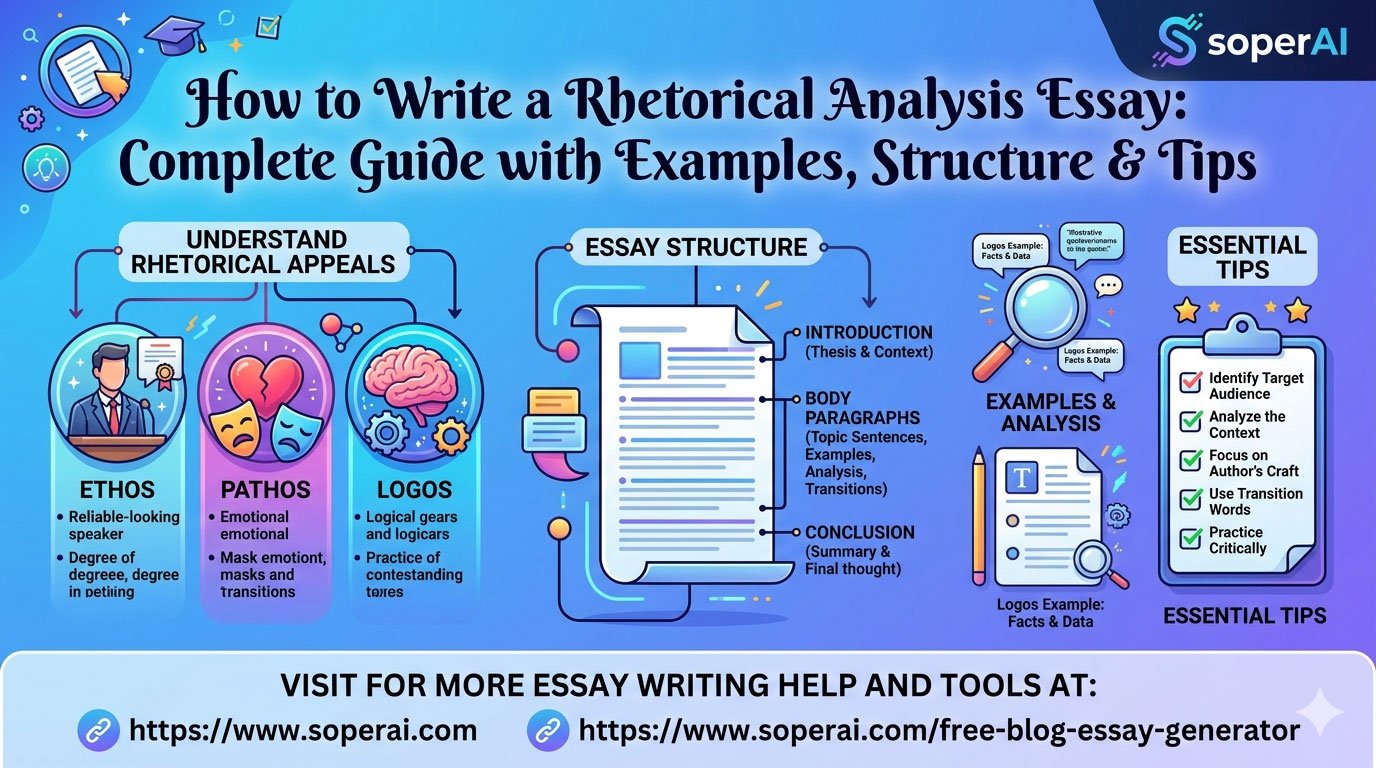
Before we get into structure, you need to understand the engine of persuasion. Aristotle identified three modes of appeal that every persuasive communicator must balance. These aren't academic theory — they're the practical tools you'll use to fill out every section of your outline.
Research in communication studies suggests the most persuasive speeches spend roughly 40% on ethos/credibility building, 40% on logical evidence (logos), and 20% on emotional appeal (pathos). Too much emotion without substance comes across as manipulation; too much logic without emotion puts people to sleep.
The Proven 7-Part Persuasive Speech Structure
Now that you understand the engine, let's look at the vehicle. Every effective persuasive speech follows a structure, and knowing that structure is the foundation of knowing how to make a persuasive speech outline.
The classic structure has been refined by communication researchers, debate coaches, and professional speechwriters for decades. Here are its seven parts:
Step-by-Step: Building Your Persuasive Speech Outline from Scratch
Now let's get practical. Here's how to actually make a persuasive speech outline from a blank page, one step at a time.
Step 1: Define Your Specific Purpose and Audience
Before you write a single outline heading, answer these two questions with ruthless specificity:
- What do I want my audience to believe or do after this speech? Not "understand climate change" — too vague. Something like "vote yes on Proposition 47 at the next town meeting."
- Who exactly is my audience, and what do they currently believe? An audience that already leans your way needs a different strategy than a skeptical one.
Writing a persuasive speech "for a general audience" is the fastest way to persuade nobody. The more specifically you define your audience, the more targeted — and powerful — your arguments will be.
Step 2: Choose Your Thesis Statement
Your thesis is the single sentence that your entire speech argues for. It should be:
- Arguable — not a fact. "Air pollution is bad" is not a thesis. "The federal government should mandate catalytic converters on all new vehicles by 2027" is a thesis.
- Specific — narrow enough that you can defend it in the time you have.
- Debatable — a reasonable person could disagree.
Step 3: Brainstorm Your Main Arguments
Don't start by researching. Start by brainstorming. Ask yourself: what are the 5–8 best reasons someone should agree with my thesis? Write them all down quickly, without judgment. Then evaluate: which 2–4 are most defensible with evidence? Those become your main points.
Step 4: Find and Assign Evidence
For each main argument, you need at least two pieces of supporting evidence. Strong evidence includes:
- Peer-reviewed studies or official statistics
- Expert testimony (quoted directly or paraphrased)
- Concrete real-world examples or case studies
- Personal anecdotes (used sparingly — they build pathos, not logos)
- Historical precedents
If you're stuck on structuring your research into a coherent outline, the SoperAI Free Outline Generator can take your topic and thesis and generate a complete, structured outline in seconds — ready for you to fill in with your own evidence and voice.
Step 5: Plan Your Counterargument Section
This is the step most beginners skip, and it's the one that separates mediocre speeches from truly persuasive ones. Acknowledge the strongest argument against your position, then explain why it doesn't hold up. This builds enormous credibility with your audience.
Step 6: Design Your Hook and Introduction
Once your arguments are solid, go back and design your opening. The best persuasive speech hooks include:
- A shocking statistic ("Every 40 seconds, someone dies by suicide — that's the time it took you to read this sentence.")
- A vivid, brief story that puts a human face on the issue
- A bold, provocative statement that creates immediate disagreement
- A rhetorical question that plants your thesis in the audience's mind
Step 7: Write Your Call to Action
Your call to action (CTA) is the most underappreciated part of a persuasive speech. After all your hard work, you need to tell the audience exactly what you want them to do — and make it as easy as possible for them to do it. A strong CTA is:
- Specific and actionable ("Sign the petition at the table in the back" — not "support this cause")
- Achievable by this specific audience right now
- Emotionally resonant, connecting the action to the values you've been building throughout
Monroe's Motivated Sequence: The Gold Standard Framework
If you've researched persuasive speaking at all, you've likely come across Monroe's Motivated Sequence. Developed by Purdue professor Alan Monroe in the 1930s, it remains the most research-supported framework for persuasive speech outlining.
What makes Monroe's Motivated Sequence so powerful is that it mirrors how the human brain actually makes decisions. It doesn't just present information — it moves people through the psychological stages from awareness to motivation to action.
Complete Persuasive Speech Outline Template
Here's a complete, ready-to-use template. This is the same framework used in competitive debate, professional advocacy, and academic speechmaking.
Persuasive vs. Informative Speech Outlines: Full Comparison
One of the most common sources of confusion for students is the difference between persuasive and informative speech outlines. They look similar on the surface but have fundamentally different purposes.
| Feature | Persuasive Speech Outline | Informative Speech Outline |
|---|---|---|
| Primary Goal | Change beliefs or behaviors | Increase understanding or knowledge |
| Thesis type | Arguable position ("X should/must/ought to...") | Statement of fact or topic ("This speech will explain...") |
| Counterargument section | Required — ignoring opposition destroys credibility | Usually omitted — no "side" to argue |
| Emotional appeals | Central — pathos is a strategic tool | Minimal — used to maintain engagement, not persuade |
| Call to Action | Essential — what do you want them to DO? | Absent — no action implied |
| Speaker's position | Explicit — you take a clear side | Neutral — you present all perspectives |
7 Common Mistakes That Ruin Persuasive Speech Outlines
✅ Do This
- ✓ Have one clear, specific thesis statement
- ✓ Use 2–4 well-supported main points
- ✓ Address the strongest counterargument
- ✓ End with a specific, actionable CTA
- ✓ Vary your evidence types
- ✓ Link each point explicitly back to your thesis
- ✓ Analyze your audience before outlining
❌ Avoid This
- ✗ Multiple vague thesis statements
- ✗ 5+ main points (dilutes impact)
- ✗ Ignoring or strawmanning opposition
- ✗ Ending with "so that's my speech"
- ✗ Only statistics or only stories
- ✗ Arguments that could support any thesis
- ✗ Assuming the audience already agrees
Mistake #1: The Vague Thesis Trap
The single most common mistake is a thesis like "we should do more to protect the environment." This isn't a thesis — it's a sentiment. Compare: "The federal government should ban single-use plastic packaging by 2028." That's a thesis you can actually argue.
Mistake #2: Skipping the Counterargument
Many speakers fear that acknowledging the other side makes them look weak. The research shows exactly the opposite. Presenting both sides increases persuasiveness with educated audiences because it signals honesty and confidence in your own position.
Mistake #3: Leading with Your Weakest Argument
Memory research is clear: audiences remember what comes first and last most strongly (the primacy and recency effects). Structure your main points accordingly: strongest first, second strongest last, weakest in the middle.
Mistake #4: A Weak or Missing Call to Action
"So, let's all work together to make a difference" is not a call to action. It's a platitude. Your CTA must be specific, immediate, and achievable.
Mistake #5: Evidence Without Explanation
Dropping a statistic isn't enough. The magic structure is: Claim → Evidence → Explanation → Link. If you skip the explanation, smart audience members will draw their own conclusions.
Mistake #6: Ignoring Audience Analysis
Persuasion is not a monologue — it's a relationship. Build your outline for your specific audience, not for a hypothetical general public.
Mistake #7: Treating the Outline as Optional
Even TED Talk speakers work from detailed outlines during preparation. The goal of the outline is not to produce a script; it's to engineer the logic of your argument.
How AI Can Build Your Persuasive Speech Outline in Minutes
Outline generation is one of the most tedious parts of speech preparation. That's exactly why AI tools like the SoperAI Free Outline Generator are genuinely useful — not as a replacement for your thinking, but as a starting scaffold that you then customize and make your own.
Use the AI-generated outline as a first draft, not a final product. Take every AI-suggested argument and ask: "Can I find real evidence for this?" Replace or strengthen anything that doesn't hold up. The outline is your roadmap; your research and voice are what make the speech yours.
Real-World Persuasive Speech Outline Examples
Example 1: School Policy Speech (Beginner Level)
Topic: Should smartphones be banned in high school classrooms?
Thesis: High schools should implement a complete ban on smartphone use during instructional hours to improve academic performance and mental health.
- Hook: "Studies show the average high school student checks their phone 150 times a day. During a 6-hour school day, that's one interruption every 2.4 minutes."
- Main Point 1: Smartphones in classrooms significantly reduce academic performance. [Evidence: Stanford study on digital distraction; Norwegian school ban results]
- Main Point 2: Classroom smartphone use correlates with increased anxiety and social comparison. [Evidence: Jean Twenge research; JAMA Pediatrics data]
- Main Point 3: Phone-free policies have been successfully implemented with positive results. [Evidence: France's 2018 school phone ban outcomes; UK pilot programs]
- Counterargument: "Smartphones can be educational tools." Rebuttal: Dedicated educational devices can serve this purpose without the distraction risks of personal smartphones.
- CTA: "Sign the petition on the table asking our school board to pilot a phone-free policy for the spring semester."
Example 2: Environmental Advocacy Speech (Intermediate Level)
Topic: Corporate responsibility for carbon emissions
Thesis: The federal government should impose a mandatory carbon tax of $65 per ton on all industrial emitters above 25,000 metric tons annually.
- Hook: "The 100 largest corporations are responsible for 71% of global carbon emissions — while individuals get lectured about reusable straws."
- Main Point 1: Voluntary corporate climate pledges have consistently failed. [Evidence: CDP tracking data; IPCC reporting]
- Main Point 2: Carbon pricing has demonstrably worked in countries that have implemented it. [Evidence: British Columbia's carbon tax results; EU ETS data]
- Main Point 3: The economic benefits of carbon pricing outweigh the costs. [Evidence: World Bank economic modeling; IRENA employment reports]
- Counterargument: "It will hurt economic competitiveness." Rebuttal: Border carbon adjustments eliminate this disadvantage.
- CTA: "Contact your Congressional representative today — the link is on the handout in your seats — and ask them to co-sponsor the CLEAN Future Act."
Pre-Submission Outline Checklist
Before you finalize your persuasive speech outline, run through this checklist:
- ✓ My thesis is specific, arguable, and stated in one sentence
- ✓ I have 2–4 main points (not 1, not 5+)
- ✓ Each main point has at least 2 pieces of evidence
- ✓ I have both a claim and an explanation for each piece of evidence
- ✓ I have a counterargument section that treats the opposition fairly
- ✓ My introduction includes a hook, relevance statement, and credibility statement
- ✓ My conclusion includes a specific, immediate call to action
- ✓ I have used all three rhetorical appeals (Ethos, Pathos, Logos)
- ✓ My strongest argument is first or last, not in the middle
- ✓ Every point connects back to my thesis
10 Frequently Asked Questions
Conclusion: Your Outline Is Your Competitive Advantage
Most people underestimate the outline. They see it as a necessary hoop to jump through before they get to the "real" work of writing and practicing. The truth is the opposite: the outline is the real work. Everything else — the writing, the delivery, the polish — is execution.
If there's one thing to take from this guide, it's this: a persuasive speech isn't about making noise — it's about making moves. Every section of your outline should be designed to move your audience from where they are to where you need them to be.
Take the framework, the template, the checklists, and the examples from this guide. Apply them to your specific topic and audience. And if you want a fast-track to your first draft, use the SoperAI Free Outline Generator to get a complete structural framework in under a minute — then make it your own.
The audience is waiting. Give them something worth remembering.
Written by the SoperAI Editorial Team
The SoperAI team creates research-backed guides to help students, professionals, and advocates communicate more effectively. Our tools and resources are built on decades of rhetorical research and real-world speech coaching experience. Explore our full resource library at soperai.com.