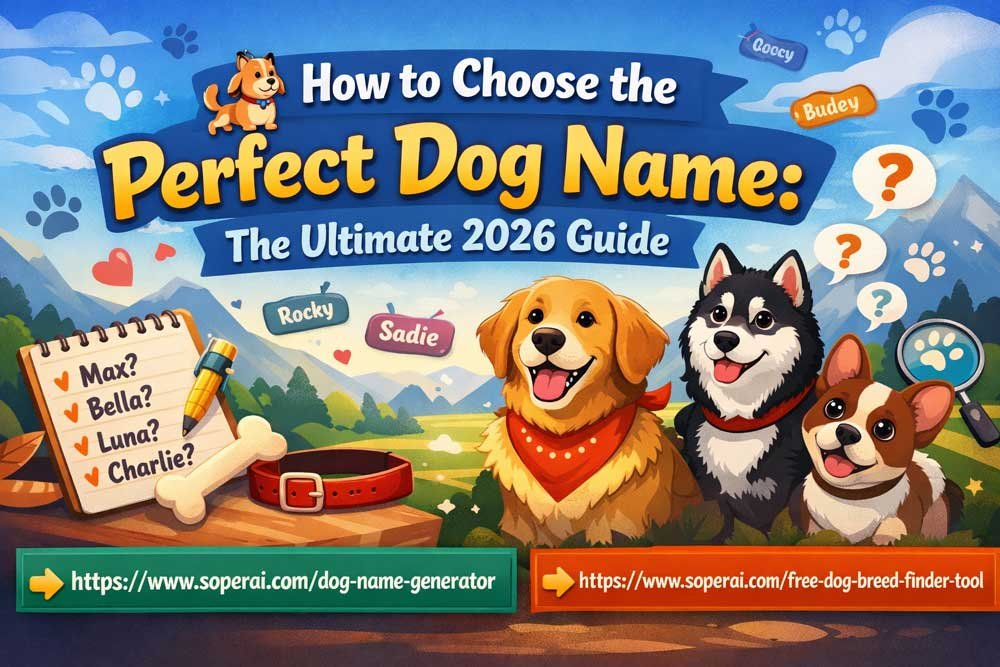
🐕 How to Choose the Perfect Dog Name: The Ultimate 2026 Guide
Expert strategies, creative ideas, and proven methods to find a name your dog will love and respond to
Choosing the perfect name for your new furry friend is one of the most exciting and important decisions you’ll make as a dog owner. A dog’s name isn’t just a label—it’s a fundamental part of their identity, a tool for training, and a reflection of your bond together. Whether you’ve just welcomed a playful puppy into your home or adopted a rescue dog looking for a fresh start, finding the right name requires thoughtful consideration.
In this comprehensive guide, we’ll explore everything you need to know about choosing a dog name that both you and your canine companion will love for years to come. From understanding the science behind name recognition to exploring creative naming strategies and cultural traditions, we’ve got you covered with expert insights, practical tips, and hundreds of inspiring name ideas.
📊 Dog Naming Statistics 2026
Understanding the Science of Dog Name Recognition
Before diving into naming strategies, it’s crucial to understand how dogs process and respond to their names. Unlike humans, dogs don’t understand names as personal identifiers in the same way we do. Instead, they learn to associate specific sounds with attention, rewards, and interaction. This fundamental difference shapes how we should approach the naming process.
How Dogs Learn Their Names
Dogs are remarkably intelligent creatures with exceptional hearing capabilities. They can distinguish between different sounds, tones, and patterns far better than we often give them credit for. When you call your dog’s name, they’re responding to a combination of factors: the specific sound pattern, your tone of voice, your body language, and the context in which the name is used.
Research in canine cognition shows that dogs process names through associative learning. Every time you say their name followed by something positive—a treat, a belly rub, playtime, or an excited greeting—their brain creates a stronger connection between that sound and positive outcomes. This is why consistency in using their name is so important during the training phase.
The process typically takes between two to four weeks for a dog to fully recognize and respond to a new name. Puppies generally learn faster than older dogs, but with patience and positive reinforcement, dogs of any age can learn to respond enthusiastically to their name. For detailed guidance on this process, check out our guide on how to get a dog to recognize its name.
Phonetic Characteristics That Matter
Not all sounds are created equal when it comes to dog name recognition. Certain phonetic characteristics make names easier for dogs to distinguish and respond to. Understanding these acoustic principles can help you choose a name that your dog will recognize quickly and reliably.
Most Effective Sound Patterns for Dog Names
Hard consonant sounds like ‘K’, ‘T’, and ‘P’ are particularly effective because they create sharp, distinct sounds that cut through background noise. This is why names like “Tucker,” “Max,” “Bella,” and “Cooper” are so popular and effective. These crisp sounds are easier for dogs to distinguish from the ambient sounds of everyday life.
Essential Guidelines for Choosing the Perfect Dog Name
Now that we understand the science, let’s explore the practical guidelines that will help you select a name that works perfectly for both you and your dog. These proven principles come from veterinary behaviorists, professional dog trainers, and years of research into canine learning and behavior.
The Two-Syllable Sweet Spot
Professional dog trainers consistently recommend two-syllable names as the ideal choice for several compelling reasons. Two-syllable names strike the perfect balance between being short enough for quick recognition and long enough to be distinctive from common commands.
Single-syllable names like “Max” or “Ace” can work well, but they sometimes get lost in conversation or confused with common words and commands. Three or more syllables can become cumbersome in training situations where quick communication is essential. Two syllables—think “Bailey,” “Charlie,” “Luna,” or “Rocky”—provide the optimal length for consistent use in all situations.
Keep It Distinct
Choose a name that doesn’t sound like common commands such as “sit,” “stay,” “no,” or “come.” Avoid names like “Kit” (sounds like sit) or “Flo” (sounds like no).
Test the Shout Factor
Imagine calling this name across a dog park or in an emergency. Can you shout it comfortably? Does it feel natural? Will you be embarrassed calling it in public?
Consider Longevity
That puppy will grow up! Ensure the name works for both an adorable puppy and a dignified adult dog. “Tiny” might not suit a Great Dane in two years.
Avoid Trends Overload
While trendy names are popular for a reason, consider whether you’ll still love it in five or ten years. Classic names often have more staying power.
Sound Patterns and Phonetics
The acoustic properties of a name significantly impact how quickly and reliably your dog will respond to it. Names with hard consonants create clear, sharp sounds that dogs can easily distinguish even in noisy environments. This is particularly important if you plan to take your dog to parks, beaches, or other areas with lots of background noise.
Names ending in vowel sounds, especially the long ‘e’ sound (as in “Bailey,” “Charlie,” “Molly,” or “Buddy”), have a natural upward inflection that dogs find particularly engaging. This rising tone mimics the enthusiastic, attention-getting sounds we naturally use when interacting with dogs, making these names inherently more appealing to canine ears.
Comprehensive Name Categories and Ideas
Finding inspiration for your dog’s name can come from countless sources. Whether you’re drawn to classic choices, modern trends, or something completely unique, exploring different categories can help spark the perfect idea. Let’s dive into some of the most popular and creative naming categories for 2026.
Classic and Timeless Names
Some names never go out of style. Classic dog names have proven their worth over generations because they’re easy to say, pleasant to hear, and work well for dogs of all breeds and sizes. These names have stood the test of time and continue to be popular choices among dog owners worldwide.
Classic Male Names
- Max
- Charlie
- Buddy
- Rocky
- Duke
- Cooper
- Tucker
- Bear
- Jack
- Oliver
Classic Female Names
- Bella
- Lucy
- Daisy
- Molly
- Sadie
- Sophie
- Maggie
- Bailey
- Chloe
- Ruby
Nature-Inspired
- River
- Willow
- Storm
- Sage
- Aspen
- Luna
- Sky
- Clover
- Maple
- Ocean
Food-Inspired
- Pepper
- Ginger
- Cookie
- Biscuit
- Peanut
- Mocha
- Oreo
- Honey
- Muffin
- Nugget
Breed-Specific Naming Considerations
Different breeds often inspire different naming approaches. A tiny Chihuahua might suit a delicate or playful name, while a majestic German Shepherd might call for something more powerful. Consider your dog’s breed characteristics, heritage, and typical personality traits when brainstorming names.
For help identifying your dog’s breed characteristics and finding names that match their specific traits, try our Free Dog Breed Finder Tool. This innovative tool can help you understand your dog’s breed makeup and suggest names that align with their genetic background and typical breed characteristics.
| Breed Type | Naming Style | Example Names | Why It Works |
|---|---|---|---|
| Large Breeds (German Shepherd, Great Dane) | Strong, commanding names | Thor, Atlas, Titan, Freya | Reflects their imposing presence and strength |
| Small Breeds (Chihuahua, Pomeranian) | Cute, playful names | Pixie, Bean, Pip, Tiny | Matches their adorable, compact size |
| Sporting Dogs (Labrador, Golden Retriever) | Active, friendly names | Scout, Ranger, Chase, Dash | Reflects their energetic, outdoorsy nature |
| Working Breeds (Husky, Malamute) | Strong, nordic names | Kodiak, Blitz, Storm, Arctic | Honors their working heritage and resilience |
| Toy Breeds (Maltese, Yorkshire Terrier) | Elegant, refined names | Coco, Paris, Winston, Duchess | Matches their sophisticated appearance |
Modern and Trendy Names for 2026
Dog naming trends evolve just like human baby name trends. In 2026, we’re seeing a surge in names inspired by pop culture, mythology, technology, and contemporary social movements. These modern names often reflect our current cultural moment while still maintaining the phonetic qualities that make them effective for dogs.
Popular culture continues to heavily influence dog names, with characters from streaming shows, movies, and video games inspiring countless pet parents. We’re also seeing an increase in gender-neutral names, reflecting broader social trends toward inclusivity and flexibility in naming conventions.
Cultural and Heritage-Based Naming
Many dog owners find meaningful inspiration by looking to their cultural heritage, family history, or the breed’s country of origin. This approach not only results in unique names but also creates a deeper connection between you and your pet through shared cultural significance.
International Name Ideas
Drawing from different languages and cultures can yield beautiful, distinctive names that carry special meaning. Japanese names like “Hoshi” (star) or “Yuki” (snow), Spanish names like “Luna” (moon) or “Fuego” (fire), Irish names like “Finn” (fair) or “Roisin” (little rose)—all of these offer rich cultural resonance while being phonetically clear for dogs to recognize.
When choosing a name from another language, make sure to verify its pronunciation and meaning. You want to ensure the name has positive connotations and that you can pronounce it consistently, as consistency is key for dog name recognition.
Names Based on Breed Origin
Honoring your dog’s breed heritage can be a wonderful naming approach. For example, French Bulldogs might suit French names like “Pierre” or “Coco,” while Shiba Inus could wear Japanese names like “Akira” or “Sakura” beautifully. German Shepherds might carry names like “Fritz” or “Greta” with appropriate gravitas.
Creative Naming Strategies and Techniques
Sometimes the best names come from thinking outside the conventional categories. Creative naming strategies can help you find a truly unique name that perfectly captures your dog’s individuality and your relationship with them.
Personality-Based Naming
One of the most personal and meaningful approaches is to spend a few days with your new dog before settling on a name. Observe their unique quirks, habits, and personality traits. Is your puppy particularly vocal? Names like “Echo” or “Aria” might fit. Do they have boundless energy? “Zoom,” “Dash,” or “Rocket” could be perfect. Are they calm and gentle? “Zen,” “Harmony,” or “Peace” might suit them beautifully.
This approach requires patience, as you’ll need to wait and observe rather than naming immediately. However, many owners find that names chosen this way feel more authentic and create a stronger bond because the name truly reflects who their dog is rather than just how they look.
Appearance-Based Inspiration
Physical characteristics provide endless naming inspiration. Color-based names are classic choices: “Shadow” for black dogs, “Snowball” for white ones, “Copper” for reddish coats, or “Pepper” for salt-and-pepper coloring. Unique markings can inspire names too—a dog with a patch over one eye might be “Patch” or “Pirate,” while a dog with distinctive spots could be “Domino” or “Speckle.”
Size-based names work well when used with humor or irony. Naming a tiny dog “Tank” or “Moose” creates a fun contrast, while calling a Great Dane “Peanut” brings smiles. Just ensure the ironic name still has those important phonetic qualities we discussed earlier.
🎨 Need Help Finding the Perfect Name?
Our AI-powered tools can generate personalized name suggestions based on your dog’s breed, personality, and appearance!
Try Free AI Dog Name Generator Explore All Free AI ToolsUsing AI Tools for Name Generation
Technology has revolutionized how we approach dog naming. AI-powered name generators like the Free AI Dog Name Generator can analyze thousands of names and suggest options based on your specific preferences, your dog’s characteristics, and current naming trends.
These tools work by processing multiple variables—breed type, color, size, personality traits, and your naming style preferences—to generate customized lists of names that you might never have considered otherwise. They can also check name popularity, ensuring you find something unique if that’s important to you, or help you discover the most popular choices if you prefer a tried-and-true option.
Common Naming Mistakes to Avoid
Learning from others’ mistakes can save you from regret down the road. Here are the most common pitfalls dog owners encounter when naming their pets, and how to avoid them.
Names Too Similar to Commands
This is perhaps the most frequent mistake new dog owners make. Choosing a name that sounds like a common command creates confusion during training and can undermine your dog’s responsiveness. Names like “Kit” (sounds like “sit”), “Bo” (sounds like “no”), “Ray” (sounds like “stay”), or “Shay” (sounds like “stay”) will make training significantly more challenging.
| Problematic Name | Sounds Like | Better Alternative | Why It’s Better |
|---|---|---|---|
| Kit | Sit | Kira, Koda | Distinct sound pattern, no command confusion |
| Bo | No | Boomer, Bodhi | Additional syllable creates clear distinction |
| Joe | No | Joey, Jojo | Two syllables prevent command confusion |
| Ray | Stay | Reese, Riley | Different vowel sounds avoid confusion |
| Flo | No | Flora, Flower | Longer form eliminates similarity to command |
Overly Complicated or Long Names
While “Sir Fluffington the Third” might seem charming and whimsical, it’s completely impractical for daily use. You need a name you can say quickly and clearly, especially in situations requiring immediate attention or in emergencies. If you love a long, formal name, that’s fine for official purposes like vet records, but develop a short nickname for everyday use.
Names that are difficult to pronounce also create problems. If family members, friends, dog walkers, or veterinary staff struggle to say your dog’s name consistently, it will hinder name recognition training. Consistency in pronunciation is crucial for helping your dog learn their name quickly and respond reliably.
Embarrassing Names in Public Settings
What seems hilarious at home can become awkward in public. Before committing to a name, imagine calling it loudly at a crowded dog park or saying it repeatedly at the veterinarian’s office. Names that reference bodily functions, inappropriate content, or controversial topics might get laughs initially but can create uncomfortable social situations.
Similarly, names that could be mistaken for insults or commands to other people can cause problems. Shouting “Come here, Stupid!” across a park, even if “Stupid” is your dog’s name (please don’t name your dog this), creates obvious social awkwardness.
The Training Process: Teaching Your Dog Their Name
Once you’ve chosen the perfect name, the real work begins—teaching your dog to recognize and respond to it enthusiastically. This process is fundamental to building effective communication with your dog and forms the foundation for all future training.
Step-by-Step Name Recognition Training
Name recognition training should begin the moment your dog enters your home. The process is straightforward but requires consistency, patience, and positive reinforcement. Here’s a detailed breakdown of the most effective training approach used by professional dog trainers.
Week One: Building Initial Association
During the first week, your goal is simply to create a positive association between the sound of your dog’s name and good things happening. Say your dog’s name in a cheerful, upbeat tone, and immediately follow it with something your dog loves—a small treat, enthusiastic praise, a favorite toy, or affectionate petting.
Start in a quiet, distraction-free environment like your living room. Say the name once, clearly and enthusiastically. When your dog looks at you (even accidentally at first), immediately mark the behavior with “yes!” or use a clicker, then give a reward. Repeat this 10-15 times per session, conducting 3-5 sessions throughout the day.
Week Two: Adding Distance and Mild Distractions
Once your dog is reliably looking at you when you say their name in a quiet environment, gradually increase the difficulty. Take a step or two away before calling their name. Practice in different rooms of your house. Add mild distractions like having the television on or practicing when another family member is nearby.
Continue rewarding every successful response generously. At this stage, you want to maintain a very high success rate—if your dog isn’t responding at least 80% of the time, you’ve progressed too quickly and should return to easier conditions.
Weeks Three and Four: Real-World Application
Now you can begin practicing in more challenging environments. Call your dog’s name during backyard play sessions, on walks (in safe, enclosed areas initially), and when mild distractions are present. Vary your tone and volume to help them generalize the name across different contexts.
For comprehensive guidance on this entire process, including troubleshooting common problems and advanced techniques, visit our detailed guide on how to get a dog to recognize its name.
🎯 Keys to Successful Name Training
Common Training Pitfalls and Solutions
Even with the best intentions, dog owners frequently make mistakes during name training that slow progress or create bad habits. Understanding these common pitfalls helps you avoid them from the start.
Repeating the Name Multiple Times: Many owners fall into the trap of saying their dog’s name repeatedly—”Max, Max, Max, Maaaaax!”—when the dog doesn’t respond immediately. This teaches your dog that they don’t need to respond the first time they hear their name. Instead, say the name once, wait a few seconds, and if there’s no response, create some interest (make a noise, move to a different location) and try again.
Using the Name When Correcting: Never use your dog’s name when scolding or correcting behavior. “Bad dog, Max!” or “Max, no!” creates a negative association with the name. Instead, use a generic correction like “ah-ah” or “no” without the name, and save the name exclusively for positive interactions.
Inconsistent Pronunciation: Everyone in your household needs to pronounce the dog’s name the same way. If mom calls the dog “CHAR-lee,” dad says “CHAR-lay,” and the kids say “Chuck,” the poor dog won’t know what sound to respond to. Hold a family meeting to ensure everyone is on the same page.
Special Considerations for Rescue and Adopted Dogs
Adopting a rescue dog often means inheriting their existing name, which raises important questions. Should you keep it? Change it? How do you make that decision, and if you do change it, how do you retrain an older dog?
When to Keep the Original Name
If your rescue dog already responds well to their current name and it doesn’t violate any of the naming principles we’ve discussed, there’s often no reason to change it. Many dogs find name changes confusing, especially if they’re already dealing with the stress of a new home environment.
Keep the original name if it’s appropriate, easy to say, distinct from commands, and if the dog shows positive associations with it. Some rescue organizations and shelters provide information about how well the dog knows their current name, which can guide your decision.
When and How to Change a Rescue Dog’s Name
There are valid reasons to change a rescue dog’s name. If the name is inappropriate, difficult to pronounce, sounds like a command, or if the dog has negative associations with their old name (perhaps due to abuse or neglect), a fresh start can be beneficial.
The good news is that dogs are remarkably adaptable. While it may take slightly longer than training a puppy, adult dogs can absolutely learn new names. The key is using a transition method that builds on their existing knowledge.
Start by using both names together: “Max-Buddy, come!” Using the old name first, then the new name, creates a bridge. Over a period of two to three weeks, gradually emphasize the new name more while fading out the old one: “Max-Buddy… Buddy!” Eventually, you’ll use only the new name, but you’ve given the dog time to make the connection.
Regional and Cultural Naming Trends
Dog naming preferences vary significantly across different regions, countries, and cultures. Understanding these trends can provide inspiration and help you appreciate the diverse ways people around the world approach naming their canine companions.
North American Trends
In the United States and Canada, dog naming trends closely mirror human baby name trends, often with a lag of 5-10 years. Classic human names like “Charlie,” “Lucy,” “Oliver,” and “Sadie” dominate the popularity charts. There’s also a strong tradition of food-based names, outdoor and nature names, and pop culture references.
Regional variations exist too. Southern U.S. states show preferences for names like “Dixie,” “Scout,” and “Beau,” while Western states lean toward outdoor-inspired names like “Aspen,” “Dakota,” and “Sierra.” Urban areas tend toward trendier, more human-like names, while rural areas often favor traditional dog names.
European Naming Traditions
European dog owners often draw from their rich linguistic and cultural heritage. In France, elegant names like “Bijou” (jewel) and “Fleur” (flower) are common. German dog owners might choose strong names like “Kaiser” or “Greta.” Italian pet parents favor melodious names like “Bella,” “Stella,” or “Romeo.”
The United Kingdom shows interesting trends toward both extremely posh names (“Reginald,” “Penelope”) and working-class names (“Bert,” “Ethel”), often chosen with tongue-in-cheek humor. There’s also a British tendency toward names inspired by their famous literary tradition—”Austen,” “Bronte,” “Dickens.”
Asian Naming Approaches
In Japan, dog names often come from anime and manga characters, or use names with meanings related to desirable qualities. Names like “Hana” (flower), “Sakura” (cherry blossom), and “Kuma” (bear) are popular. Many Japanese dog owners also use English names, viewing them as modern and sophisticated.
Chinese dog owners frequently choose names based on the dog’s color or appearance, or select names with auspicious meanings according to traditional beliefs. Korean naming trends show strong Western influence, particularly toward cute, diminutive names that match the country’s “aegyo” (cute) aesthetic.
The Psychology Behind Our Naming Choices
The name we choose for our dog reveals a lot about our own psychology, values, and relationship with our pet. Understanding these unconscious factors can help us make more intentional, meaningful naming choices.
Anthropomorphization and Human Names
The trend toward giving dogs human names reflects our increasingly close relationships with our pets. When we name a dog “Robert” or “Elizabeth,” we’re signaling that we view them as family members with personalities and individual identities, not just animals or property.
Research in human-animal bonds shows that people who use human names for their dogs tend to report stronger emotional attachments and are more likely to include their pets in family decisions and activities. This naming choice reflects and reinforces the dog’s status as a genuine family member.
Ironic and Humorous Names
Naming a tiny Chihuahua “Goliath” or a massive Saint Bernard “Mouse” reflects our love of irony and humor. These names serve multiple psychological functions: they’re conversation starters, they display our wit and personality, and they can make us smile every time we use them.
However, humor in naming requires care. What’s funny initially needs to have staying power. Will the joke still amuse you in five years? Will it age well as your dog matures? Consider whether the humorous name works in all contexts, including serious ones like veterinary emergencies.
Technology and Modern Naming Resources
The digital age has brought powerful new tools to the dog naming process. Beyond traditional baby name books and breed guides, we now have access to sophisticated AI systems, vast online databases, and interactive tools that can revolutionize how we approach this important decision.
AI-Powered Name Generation
Artificial intelligence has made remarkable strides in understanding language patterns, cultural trends, and personal preferences. Modern AI dog name generators don’t just randomly select from a database—they analyze your inputs, consider phonetic principles, check current trends, and generate personalized suggestions that align with your specific criteria.
The AI Dog Name Generator at SoperAI represents the cutting edge of this technology. By inputting information about your dog’s breed, personality, appearance, and your naming preferences, the AI can generate hundreds of creative, appropriate suggestions you might never have considered on your own.
These tools are particularly valuable when you’re feeling stuck or overwhelmed by options. They can break through creative blocks and introduce you to names outside your usual cultural or linguistic sphere. Many users report that while they didn’t use the AI’s first suggestion, the tool sparked ideas that led them to their perfect choice.
Online Communities and Social Feedback
Social media and online forums provide unprecedented access to feedback and inspiration. Platforms like Reddit’s dog communities, Facebook groups, and Instagram hashtags showcase thousands of real dogs with creative names. You can see which names are trending, get feedback on your shortlist, and even poll your social network for opinions.
However, be cautious about relying too heavily on others’ opinions. Your dog’s name is ultimately a personal choice that should reflect your relationship and preferences. Use community feedback as one input among many, not as the deciding factor.
🔍 Discover More Free AI Tools
Explore our complete suite of AI-powered tools designed to help you with every aspect of dog ownership!
Browse Free AI Tools Try Breed Finder ToolNames for Specific Life Stages and Situations
Different life situations call for different naming considerations. Whether you’re naming a puppy, an adult dog, or a senior rescue, understanding the unique factors involved helps you make the best choice.
Naming Puppies
When naming a puppy, you have the luxury of a blank slate but also the challenge of predicting how they’ll develop. That fluffy little bundle will grow and change dramatically over their first year. Consider choosing a name that will suit both puppy and adult versions of your dog.
For puppies, energy level and breed tendencies can guide your choice. A high-energy breed like a Border Collie or Jack Russell Terrier might suit active names like “Dash,” “Bolt,” or “Ziggy.” Calmer breeds might wear names like “Sage,” “Zen,” or “Cloud” more naturally.
Naming Adult Dogs
Adult dogs often have established personalities that make naming easier in some ways—you know exactly who they are. Whether you’re adopting an adult dog or need to rename one, you can choose based on their actual characteristics rather than guesses about breed tendencies.
Observe your adult dog for a few days. Notice their quirks, preferences, energy patterns, and unique behaviors. Does your dog love water? “River” or “Marina” might fit. Are they gentle and calm? “Peaceful” or “Serene” could work beautifully.
Senior Dogs and Special Needs Considerations
Senior dogs and those with special needs deserve names that honor their dignity and unique circumstances. If adopting an older dog, changing their name might be more disruptive than it’s worth unless there’s a compelling reason. These dogs have spent years with their identity, and maintaining that continuity can provide comfort during the transition to a new home.
For dogs with hearing impairments, visual signals will replace verbal name calls, but having a name is still important for vet records, introduction to new people, and your own sense of connection. Choose a name that feels right to you, as you’ll be using it primarily in writing and when talking about your dog rather than calling them directly.
Multi-Dog Households: Coordinating Names
If you’re adding a second, third, or fourth dog to your family, name coordination becomes an important consideration. You want names that are distinct enough that each dog knows when you’re addressing them specifically, but you might also appreciate some cohesion among the names.
Ensuring Distinct Sound Patterns
The most important principle for multi-dog names is distinctiveness. Names that sound too similar will cause confusion. “Bella” and “Stella” might be beautiful names individually, but using them in the same household will lead to constant mix-ups. Similarly, “Max” and “Rex” share too many sound similarities.
Aim for names with different starting sounds, different vowel patterns, and different lengths. “Cooper” and “Luna” work well together—completely different sound profiles. “Bailey” and “Dakota” offer good distinction with different emphasis patterns and vowel sounds.
Theme-Based Naming Approaches
Many multi-dog families enjoy theme-based naming. This might mean choosing all nature names (River, Willow, Storm), all food names (Pepper, Biscuit, Mocha), names from the same fictional universe (Frodo and Sam, Rey and Finn), or names with a common cultural origin (Italian names like Bella and Romeo).
Themes add fun and coherence without sacrificing the individuality of each name. They also make for great conversation starters when people ask about your dogs. Just ensure that the thematic connection doesn’t override practical considerations like sound distinctiveness and ease of use.
Legal and Practical Considerations
While naming your dog might seem like a purely personal decision, there are some legal and practical aspects worth considering, especially regarding registration, official documentation, and public spaces.
Registration Names vs. Call Names
If you have a purebred dog that you’re registering with a kennel club, you’ll need an official registration name. These are often quite formal and lengthy, incorporating the breeder’s kennel name and other identifying information. However, your dog’s official name doesn’t have to be their everyday call name.
Many show dogs have elaborate registered names like “Champion Silverstream’s Midnight Majesty” but answer to simple call names like “Shadow” in daily life. This gives you the best of both worlds—a distinguished official name for documentation and a practical, easy-to-use name for everyday interactions.
Cultural Sensitivity and Appropriateness
In our interconnected world, cultural sensitivity in naming deserves consideration. While borrowing names from cultures not your own isn’t inherently wrong, it’s worth researching the meaning and significance of names from other languages and traditions. Ensure that names don’t have offensive meanings or mock sacred concepts.
Similarly, avoid names that might be offensive to certain groups or that reference controversial historical figures. Your dog’s name will be spoken in public spaces where others will hear it, and a name that seems edgy or humorous to you might genuinely offend others.
The Future of Dog Naming: Trends to Watch
As we move through 2026 and beyond, several emerging trends are shaping how we name our dogs. Understanding these trends can help you decide whether to embrace them or intentionally choose a more timeless approach.
Sustainability and Nature-Inspired Names
With growing environmental awareness, nature-inspired names are surging in popularity. Names like “Eco,” “Terra,” “Forrest,” “Meadow,” and “Ocean” reflect our cultural concern with environmental issues and our desire to connect with the natural world.
This trend extends beyond simple nature words to include names of endangered species, weather phenomena, and geological features. Expect to see more dogs named after national parks, environmental heroes, and natural wonders as this trend continues to evolve.
Technology-Inspired Names
As technology becomes more integrated into our lives, tech-inspired names are emerging. Names like “Pixel,” “Byte,” “Nova,” “Cosmo,” and “Tesla” reflect our digital age. Some owners are even naming their dogs after AI assistants, programming languages, or favorite apps.
This trend particularly appeals to younger generations who have grown up with technology as a natural part of their environment. It’s a way of marking the era in which the dog joined the family, much like how names from previous decades reflect their time periods.
Gender-Neutral Naming
The move toward gender-neutral names in human naming is influencing dog naming as well. Names like “Charlie,” “Riley,” “Bailey,” “Casey,” “Quinn,” and “River” work for dogs of any sex, giving owners more flexibility and reflecting broader social conversations about gender.
This trend also makes practical sense—many of the best dog names work equally well for males and females because they’re based on phonetic qualities rather than gendered associations.
Projected Naming Trends 2026-2028
Expert Tips from Professional Dog Trainers
Professional dog trainers have spent years working with thousands of dogs and their names. Their insights can save you from common mistakes and help you optimize your choice for training success. Here’s what the experts recommend based on decades of combined experience.
Karen Pryor’s Click and Treat Method for Names
Renowned animal trainer Karen Pryor emphasizes the importance of positive associations with your dog’s name. She recommends never using the name in a negative context and always pairing it with something wonderful. This classical conditioning approach ensures your dog develops an automatic positive emotional response to their name.
According to Pryor’s research, dogs who have strong positive associations with their names show 40% faster response times in emergency situations compared to dogs whose names have been used in mixed or negative contexts. This underscores why preserving the name as a purely positive cue is so crucial.
Cesar Millan’s Energy and Tone Considerations
Dog behaviorist Cesar Millan emphasizes that how you say your dog’s name matters as much as what you choose. Names that naturally lend themselves to confident, assertive pronunciation help you project the calm, authoritative energy that dogs respond to best.
Millan suggests choosing names that you can say with genuine enthusiasm and positive energy hundreds of times a day without it feeling forced or silly. If a name feels awkward to say or doesn’t naturally flow with an upbeat intonation, it may not be the right choice for daily use.
Victoria Stilwell’s Science-Based Approach
Positive reinforcement trainer Victoria Stilwell focuses on the acoustic properties we discussed earlier. Her research-backed recommendations emphasize hard consonants, two-syllable structures, and names ending in vowels. She’s documented that dogs learning names that follow these principles achieve reliable name recognition 25% faster than dogs with names that don’t follow these guidelines.
Stilwell also emphasizes the importance of consistency across all family members and the dangers of using nicknames too early in the training process. She recommends sticking to one name exclusively for at least the first two months before introducing variations or nicknames.
Comprehensive FAQ Section
Most dogs learn to recognize their name within 2-4 weeks of consistent training. Puppies typically learn faster than adult dogs, often showing recognition within 7-10 days. However, the timeline varies based on several factors including the dog’s age, previous training experience, the consistency of training, and how phonetically distinct the name is. Using positive reinforcement techniques and practicing 3-5 short sessions daily will accelerate the learning process. For detailed training steps, check our comprehensive guide on how to get a dog to recognize its name.
This depends on several factors. Keep the original name if the dog responds well to it, it doesn’t violate naming best practices (sounds like commands, is inappropriate, etc.), and the dog has positive associations with it. Change the name if it’s problematic, the dog doesn’t respond to it, or if you suspect negative associations due to past trauma. If changing, use a transition method where you pair the old and new names together for 2-3 weeks before phasing out the old name entirely. Adult dogs are perfectly capable of learning new names with patience and positive reinforcement.
The best names for training are two syllables long, contain hard consonant sounds (K, T, P, D), end in vowel sounds (especially the long ‘e’ sound), and are distinctly different from common commands. Examples include “Koda,” “Bailey,” “Charlie,” “Lucy,” “Tucker,” and “Molly.” These names are easy for dogs to distinguish from background noise, simple for humans to say clearly and consistently, and create sharp, attention-getting sounds that facilitate quick recognition and response.
Absolutely! Human names for dogs are increasingly popular and reflect the close bond between dogs and their owners. Many of the most popular dog names like Charlie, Max, Bella, and Lucy are traditional human names. The only consideration is ensuring the name doesn’t cause confusion if you have human family members or close friends with the same name. Otherwise, human names work just as well as traditional pet names and often carry additional personal or cultural significance for the owner.
Create a shortlist of your top 3-5 favorites and test them practically. Say each name out loud multiple times—does it flow naturally? Call each name loudly as if in a dog park—does it feel comfortable? Try each name in different contexts: giving commands, introducing your dog to others, at the vet’s office. Spend a day or two using each name with your dog and observe both your comfort level and your dog’s response. You can also use the Free AI Dog Name Generator to get additional perspectives on each option. Often, one name will naturally feel more right after this testing period.
One-syllable names can work well, especially if they contain hard consonants and distinct sounds. Names like “Max,” “Duke,” “Rex,” and “Ace” are popular and effective. However, two-syllable names generally have a slight advantage because they’re less likely to be confused with common single-word commands (“sit,” “stay,” “come,” “down”) and they create a more distinct sound pattern that stands out in noisy environments. If you love a one-syllable name, just ensure it doesn’t sound similar to any commands you’ll be using in training.
If your dog isn’t responding to their name after several weeks of training, review these common issues: Are you using the name in negative contexts (scolding)? Are family members pronouncing it consistently? Does the name sound too similar to commands? Are you rewarding response generously enough? Are you practicing in environments with too many distractions too soon? Try going back to basics: practice in a quiet, distraction-free environment, use extremely high-value treats, say the name once and wait patiently for any acknowledgment, then reward generously. If problems persist despite consistent training, consult with a professional dog trainer who can observe and identify specific issues.
While it’s fine to have a formal registered name and a casual call name (like “Champion Silverstream’s Majesty” vs. “Misty”), using multiple call names in daily life can confuse your dog and slow training progress. Once your dog has solidly learned their primary name (usually after 2-3 months), you can gradually introduce nicknames, but these should be phonetically similar to the original name. For example, “Charlie” could become “Chuck” or “Charlie-Bear,” but switching between completely different names like “Charlie” and “Buddy” will undermine name recognition. For the first few months especially, consistency is crucial.
While all dogs respond to the same acoustic principles (hard consonants, two syllables, etc.), some owners find that names matching a breed’s heritage create a satisfying thematic connection. German Shepherds might wear German names like “Fritz” or “Greta” well, while Shiba Inus might suit Japanese names like “Hiro” or “Sakura.” However, this is purely aesthetic—a German Shepherd will respond just as well to “Luna” as to “Heidi” if trained properly. The Free Dog Breed Finder Tool can help you identify your dog’s breed characteristics and suggest culturally appropriate names if you’re interested in this approach.
Naming your dog after a favorite character, celebrity, or cultural icon is perfectly fine and very popular! Names like “Loki,” “Khaleesi,” “Arya,” “Simba,” or “Bowie” can be meaningful and fun. Just ensure the name meets the practical criteria we’ve discussed—easy to say, phonetically distinct, not embarrassing in public. Also consider the longevity of the reference. Some pop culture moments fade quickly while others become classics. If you’ll still appreciate the reference in 10-15 years (your dog’s potential lifespan), then it’s a great choice. You can explore pop culture inspired names using the AI Dog Name Generator which can suggest names from various entertainment genres.
Final Thoughts: Making Your Decision with Confidence
Choosing your dog’s name is a significant decision, but it shouldn’t be overwhelming or stressful. Armed with the knowledge from this comprehensive guide, you now understand the science behind name recognition, the practical considerations that matter most, and the creative possibilities that await you.
Remember that there’s no single “perfect” name—there are many wonderful options that could work beautifully for your dog. The key is finding one that resonates with you, suits your dog’s personality and characteristics, follows the acoustic principles we’ve discussed, and feels natural and comfortable to use hundreds of times a day.
Trust your instincts. If a name makes you smile every time you say it, if it feels right when you call it across the backyard, if it captures something essential about your relationship with your dog—that’s your answer. The emotional connection you feel to the name matters because it will influence how enthusiastically and consistently you use it, which in turn affects how quickly and reliably your dog learns to respond to it.
Your Next Steps
Now that you’re equipped with expert knowledge about dog naming, here’s how to move forward:
- Create your shortlist: Based on your dog’s appearance, personality, breed, and your personal preferences, narrow down to 3-5 top choices. Use the categories and ideas in this guide as inspiration, or try the Free AI Dog Name Generator for personalized suggestions.
- Test them practically: Spend a day or two with each name. Say it out loud repeatedly, call it enthusiastically, use it in sentences. Which one feels most natural? Which one gets the best response from your dog (if you’ve already brought them home)?
- Verify distinctiveness: Make sure your chosen name doesn’t sound like commands you’ll use (“sit,” “stay,” “no,” “come,” “down”). If you have other pets, ensure it’s sufficiently different from their names.
- Get family consensus: Everyone in your household should be comfortable with the name and able to pronounce it consistently. Hold a family discussion to ensure buy-in from all members.
- Commit and stay consistent: Once you’ve chosen, stick with it. Consistency is crucial for the first 2-3 months of name training. Avoid using multiple nicknames or variations until your dog has solidly learned their primary name.
- Begin training immediately: Start positive name recognition training from day one using the methods outlined in this guide. Visit our detailed guide on how to get a dog to recognize its name for step-by-step training instructions.
Embracing the Journey
Your dog’s name will become one of the most frequently spoken words in your household. It will be called out in moments of joy, whispered during quiet cuddles, shouted in play, and spoken with love countless times throughout your years together. This name will become inseparable from your memories of your beloved companion.
Some of the best stories dog owners tell involve how they chose their dog’s name or how perfectly it ended up suiting their pet’s personality. Maybe you’ll discover that your “Chaos” is actually incredibly calm, or that your “Tiny” grows into a gentle giant, or that your “Lucky” truly was the luckiest thing that ever happened to you. These stories become part of your shared history with your dog.
Don’t second-guess yourself once you’ve made your choice. Dogs are remarkably adaptable, and almost any well-chosen name will work wonderfully with proper training and consistent use. The perfect name isn’t about finding some mythical ideal—it’s about creating a positive association between a sound and your beloved companion.
Additional Resources and Tools
To support you throughout your dog naming and training journey, take advantage of these valuable free resources:
AI Dog Name Generator
Get personalized name suggestions based on your dog’s breed, appearance, and personality. Our advanced AI analyzes thousands of names to find perfect matches for your unique companion.
Try It Free →Dog Breed Finder
Identify your dog’s breed characteristics and discover names that match their heritage and traits. Perfect for mixed breeds and rescue dogs.
Discover Breeds →Free AI Tools Suite
Explore our complete collection of AI-powered tools designed to help with every aspect of dog ownership, from naming to training to health care.
Explore Tools →Training Resources
Access comprehensive guides on name recognition training, basic obedience, and building a strong bond with your new companion.
Learn More →Conclusion: Your Perfect Name Awaits
Choosing a name for your dog is more than a practical necessity—it’s an opportunity to express your creativity, honor your dog’s unique personality, and establish the foundation for a lifetime of communication and connection. Whether you choose a classic name that’s stood the test of time, a trendy option that reflects current culture, a meaningful name from your heritage, or something completely unique that just feels right, the most important factor is the love and intention behind your choice.
This comprehensive guide has walked you through the science of canine name recognition, the phonetic principles that make names effective, practical considerations for daily life, creative inspiration across dozens of categories, training techniques from professional behaviorists, and troubleshooting advice for common challenges. You now have all the knowledge you need to make an informed, confident decision.
Remember that millions of dogs have thrived with an incredibly diverse array of names. From “Spot” to “Sir Fluffington,” from “Max” to “Nebula,” from “Bella” to “Artemis”—what matters most isn’t finding some objectively perfect name, but choosing one that strengthens the bond between you and your dog. Your enthusiasm, consistency, and positive associations will transform whatever name you choose into the sweetest sound your dog knows.
As you embark on this exciting journey with your new companion, know that the name you choose today will echo through countless happy moments, adventures, and memories. It will be the word you say when you come home to an enthusiastic greeting, when you’re playing in the park on a beautiful day, when you’re cuddled together on the couch, and in all the small, precious moments that make up a life shared with a beloved dog.
Take your time, trust your instincts, use the tools and resources available to you, and most importantly—enjoy the process. Before you know it, you’ll be calling your dog’s name with confidence, watching them bound toward you with joy and recognition, and wondering how you ever considered any other option. That’s the magic of finding the perfect name: once you know, you know.
🎉 Ready to Find Your Dog’s Perfect Name?
Use our free AI-powered tools to discover the ideal name for your furry friend in minutes!
Generate Names Now Find Your Dog’s Breed Explore All Free ToolsAbout SoperAI: We’re dedicated to helping pet owners make informed decisions through innovative AI-powered tools and comprehensive educational resources. Explore our full suite of free AI tools designed specifically for dog owners.